



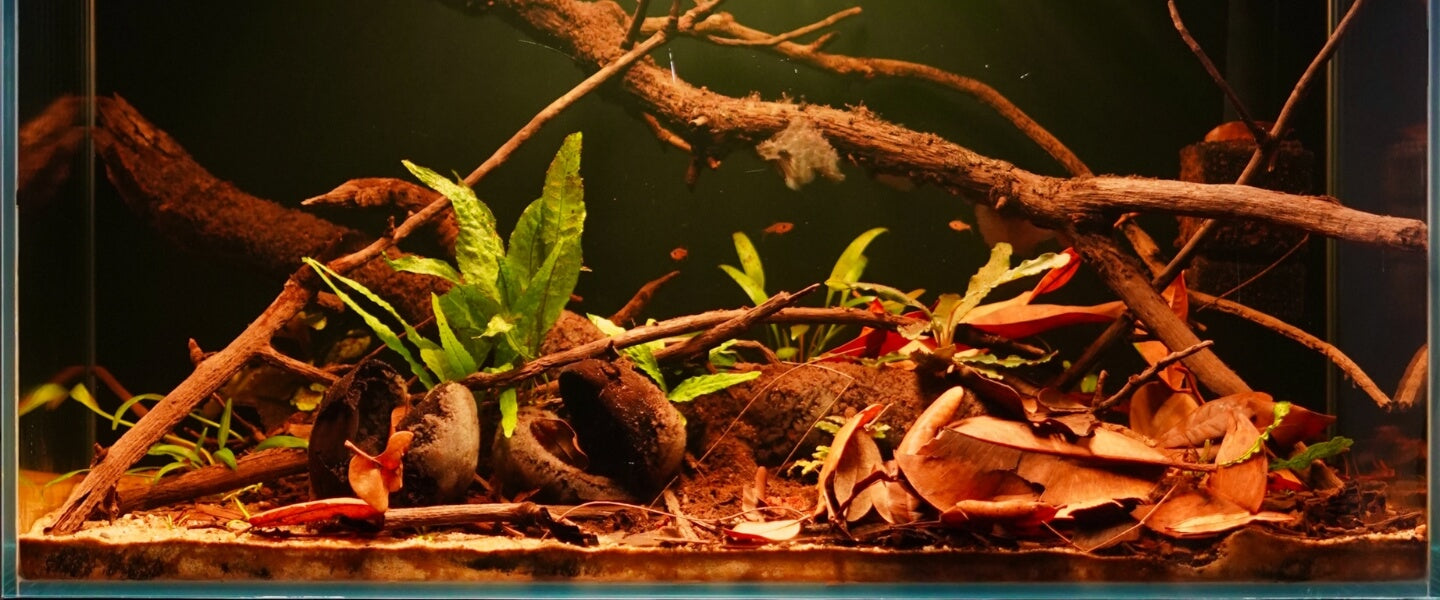
How to Build a Paludarium for Amazon Fringed Leaf Frogs (Cruziohyla craspedopus)
The following paludarium build for Cruziohyla craspedopus has been written for Ben's Aquarium Blog by Hayley Zimmermann (@siren_aquaria), one of our long-time #TanninBae Ambassadors and no stranger to this blog. If you caught her Emperor Newt paludarium last year, you already know her approach: patient, functionally aesthetic, and led by what the animal needs to thrive rather than what looks good through the front glass. This time she's taken on the Amazon Fringed Leaf Frog (Cruziohyla craspedopus), a canopy dweller from the jungles of South America that spends nearly all of its life above the waterline. Below, she walks through the full build, which includes the paludarium rockwork, a waterfall, substrate, botanicals, and the seven months of waiting that followed before the frogs settled in. I'll let her take it from here.

By Hayley Zimmermann (@siren_aquaria) — #TanninBae Ambassador
About a year ago, I purchased an 18"x18"x24" terrarium setup for a steal of a deal with no real vision in mind. For months it sat empty in my office, waiting for some sort of inspiration to spark. In September, a bunch of aquascaping friends and I converged at Aquashella NJ to compete. The number one message conveyed by those judging and overseeing the competition was to take chances and lean into bold ideas. It was truly a wonderful weekend filled with so many incredible memories. Placing third in my first live competition left me feeling not only a deep sense of gratitude, but also a real desire to build something a bit more intimidating.

In a matter of a few hours, I had begun planning and plotting, and within three days the initial layout was already complete.
Amazon Fringed Leaf Frog Care (Cruziohyla craspedopus)
First things first, let's give a brief introduction to the animal I decided to build this enclosure for. I always try to build and design based on the wants and needs specific to the animal I chose for it. I have a deep love for all amphibians, and I was looking to add something a bit more bespoke and unusual to my collection. The Amazon Fringed Leaf Frog, formally Cruziohyla craspedopus, is a species I have admired since I started keeping and breeding amphibians a few years ago.

They reside far up in tree canopies across several South American countries, and carry a few qualities that set them apart from other amphibians sharing the same regions. They are nocturnal, prefer climbing over jumping, and can rapidly shift color from a daytime bluish green to a deep burgundy at night. They are most comfortable at what most keepers would consider ambient room temperature (70 to 72 degrees Fahrenheit), but are sensitive to drastic swings during the winter and summer months. They also do best with consistently damp conditions rather than saturated ones, so humidity is something to manage carefully rather than maximize. Now, back to how I constructed their future digs.
Building a Rock and Spiderwood Paludarium Background for Amazon Fringed Leaf Frogs
After a quick mock-up drawing to put my thoughts on paper, I dug through my supplies and got to work. My goal was to coat the walls of the enclosure completely in rock, then use Spiderwood to mimic tree limbs reaching down toward the forest floor. The rock choice mattered here. I went with a lightweight feller stone for a few reasons: it's one of the lightest rocks used for hardscape, and it's fairly easy to break down.

I used a mallet and a set of chisels to break large rocks into small pieces, leaving a few larger accent pieces for character. It's worth saving every bit of rock that breaks off in the process, since the smaller fragments make excellent substrate to fill gaps between the larger pieces.

My favorite method for backgrounds like this is spray foam. It's been my go-to for securing rock and large wood pieces, and I've had consistent success with it (my newt paludarium is coming up on its third birthday — you can read the full build here on the blog).

Layer by layer, I built up the sides of the enclosure. After the first layer, I began adding small and medium Spiderwood to fill out the middle, making sure to leave ample perching locations throughout. I used three cans of foam to build the base of the background and secure the wood, then used aquarium-safe silicone to adhere the rock to the foam base. Attention to detail mattered here: I used a small paintbrush to work silicone into cracks, then sprinkled substrate powder over it to keep things looking flush. I added nozzles to tie this enclosure into my misting system, and the final step was using pieces of light diffuser to begin constructing the one part of this build that genuinely gave me anxiety: a water feature.
Adding a Water Feature to the Frog Paludarium
Why did a waterfall intimidate me? Beyond complicating the build process, it adds an entire layer of ongoing considerations: maintenance, pump placement, wire routing, and more. I knew it was necessary, though, since these frogs breed in small pools and creeks in the wild. The few keepers who have successfully bred this species all maintain permanent, constant water features in their enclosures.

I used a standard waterfall kit purchased on Amazon and modified the tubing to the right size. I created a dedicated slot for the return pump inside the foam and found a spot behind the rockwork that gave a good, steady flow of water down the rocks. After a few test runs, I secured it further by building a small foam wall around it. Once everything cured, I set the pump in place, filled the water portion, and turned it on. Seeing it run cleanly for the first time was a real relief.
Constructing the Forest Floor and Adding Botanicals to the Frog Paludarium
Using the same method I used for the waterfall, I adhered aquarium sponge to light diffuser to build the floor portion. I secured it at the right level using pegs typically used for saltwater frag racks, which was my first time trying this approach. It gives me real peace of mind knowing I can keep adding botanicals and leaf litter over time without much risk to the floor's structure. It's also removable, which matters, because at some point I plan to convert this paludarium into a rain chamber setup, the more typical breeding configuration for this species.

I added some prepped Betta Botanicals Willow Oak and Casho Leaves to the water portion, along with maroon-tinted water using the Maroon Betta Tea.
— We carry both leaf types used here: Willow Live Oak Leaf Litter and Casho Leaf Litter. The Maroon blend is one of three colors in our Betta Tea line.
After letting the water run and seeding it with live bacteria from an established filter, I added Black Tiger Badis (Dario sp. "Myanmar") to the water portion. They've been a great addition: feisty and bold for such a small fish.
Vivarium Plant Selection for Amazon Fringed Leaf Frogs
With the major components in place, it was time for one of my favorite parts of any build: adding plants. I like using species more commonly seen in aquariums in a terrestrial setting, and this build had room for a lot of my favorites. I featured several Anubias and Bucephalandra varieties for their leaf shape and color range, along with mini orchids and philodendron. For the wood, I wanted a mossy look, which I built using a mix of Coral Moss and Christmas moss. Trimming the moss weekly promotes faster, more uniform growth and a quicker spread rate.
Clean-Up Crew and Supplemental Feeding for Fringed Leaf Frogs
With everything running properly and the plants taking hold, it was time to add the clean-up crew that would handle whatever mess the frogs created over time. I added temperate springtails and Magic Potion isopods, both of which do a great job keeping mold in check while breaking down dying plant matter and frog waste. Neither insect interests the frogs, so there's no real risk of the populations depleting. I've found that seed pods give springtail cultures an ideal space to establish and repopulate, so I added an Orinoco Pod and a Cacao Pod, occasionally dusting them with fish flakes as a supplemental food source.

— We carry Cacao Pods individually or as part of our seed pod and botanical variety packs.
Seven Months Later: How the Fringed Leaf Frogs Are Settling In
And then I waited. Seven months, to be precise. Patience was genuinely tested here, but I stayed committed to the plan and didn't second-guess the build along the way. As with most things worth being patient for, it was worth the wait. The first few weeks with the trio, they were shy and noticeably thin. It's been about two months since they moved into their new digs, and their appetite has picked up considerably. They eat crickets and dubia roaches lightly dusted with a calcium and vitamin A blend about four times a week. They wait until dusk, then start cruising, perching, waiting, and quickly grabbing insects as they pass by. Watching their activity increase in the evening hours has been genuinely rewarding to observe. Every morning, I walk into my office and find all three of them back in the same spot they held the day before, resting on a leaf of their choice until daylight starts to fade again.

The next few months will go toward fine-tuning this scape for aquascaping contests in 2026, and enjoying the results of everything that went into bringing this build to life.
About the Author
Hayley Zimmermann (@siren_aquaria) is a #TanninBae Ambassador, aquascaper, and dedicated animal keeper whose love for nature began during childhood explorations in New Jersey's forests. She specializes in The Botanical Method Vivarium and Aquarium built around the needs of the animals living in them, with award-winning setups that combine detailed craftsmanship with a real respect for the species she keeps.

Inspire your friends:
Five Years of Betta Botanicals: The Origin Story, and Where We Go From Here