



Water Spangles | Salvinia Minima
Water Spangles on the Surface:
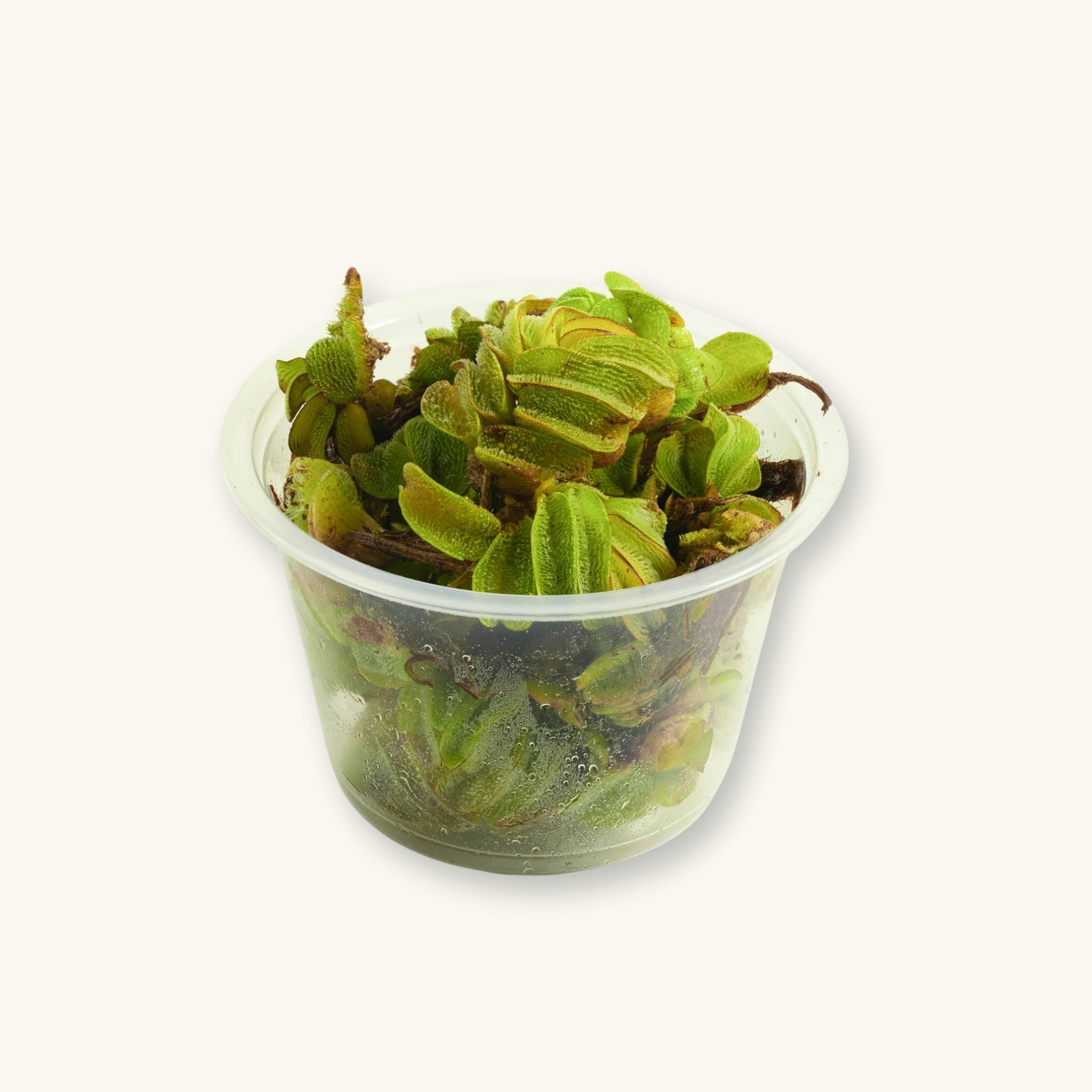
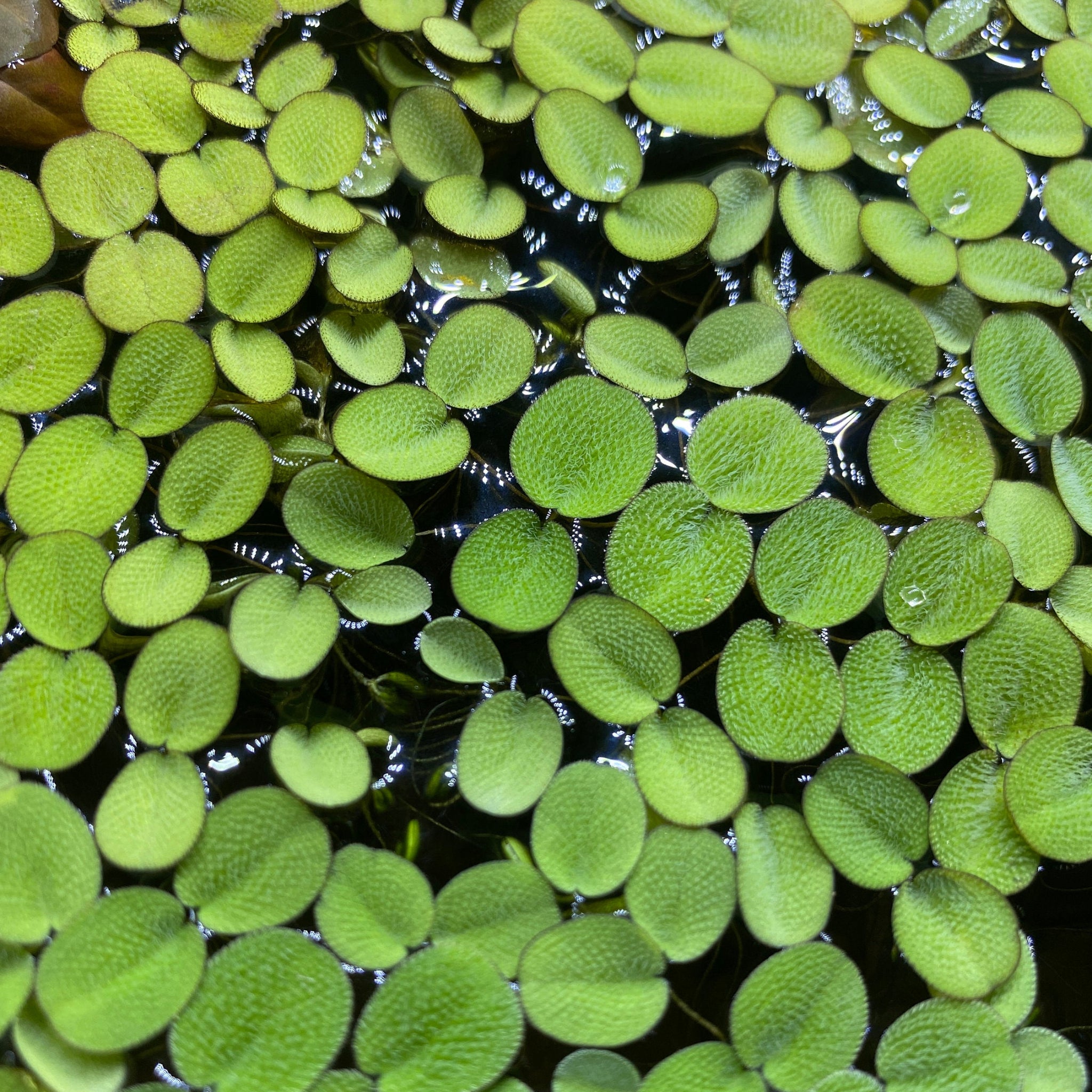
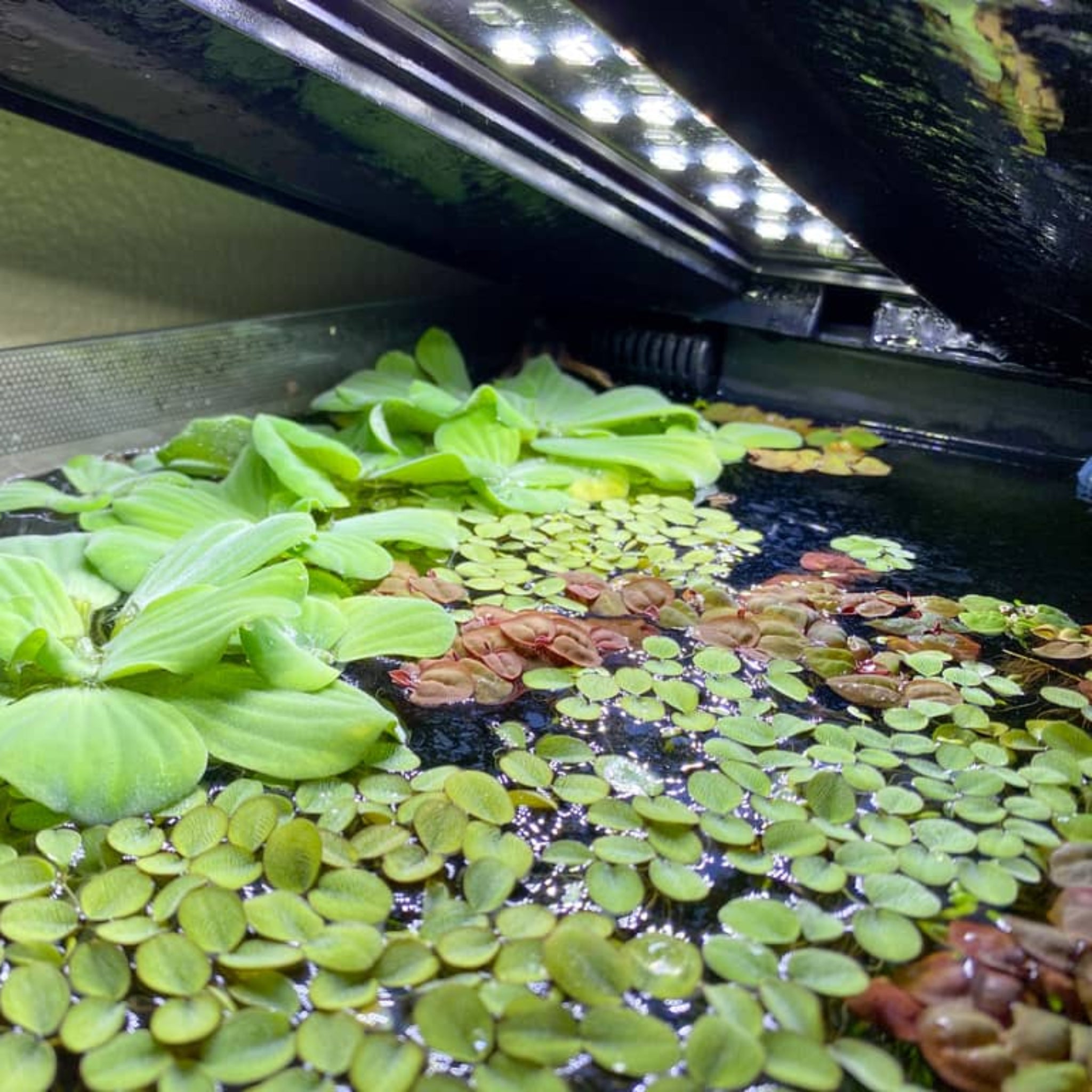
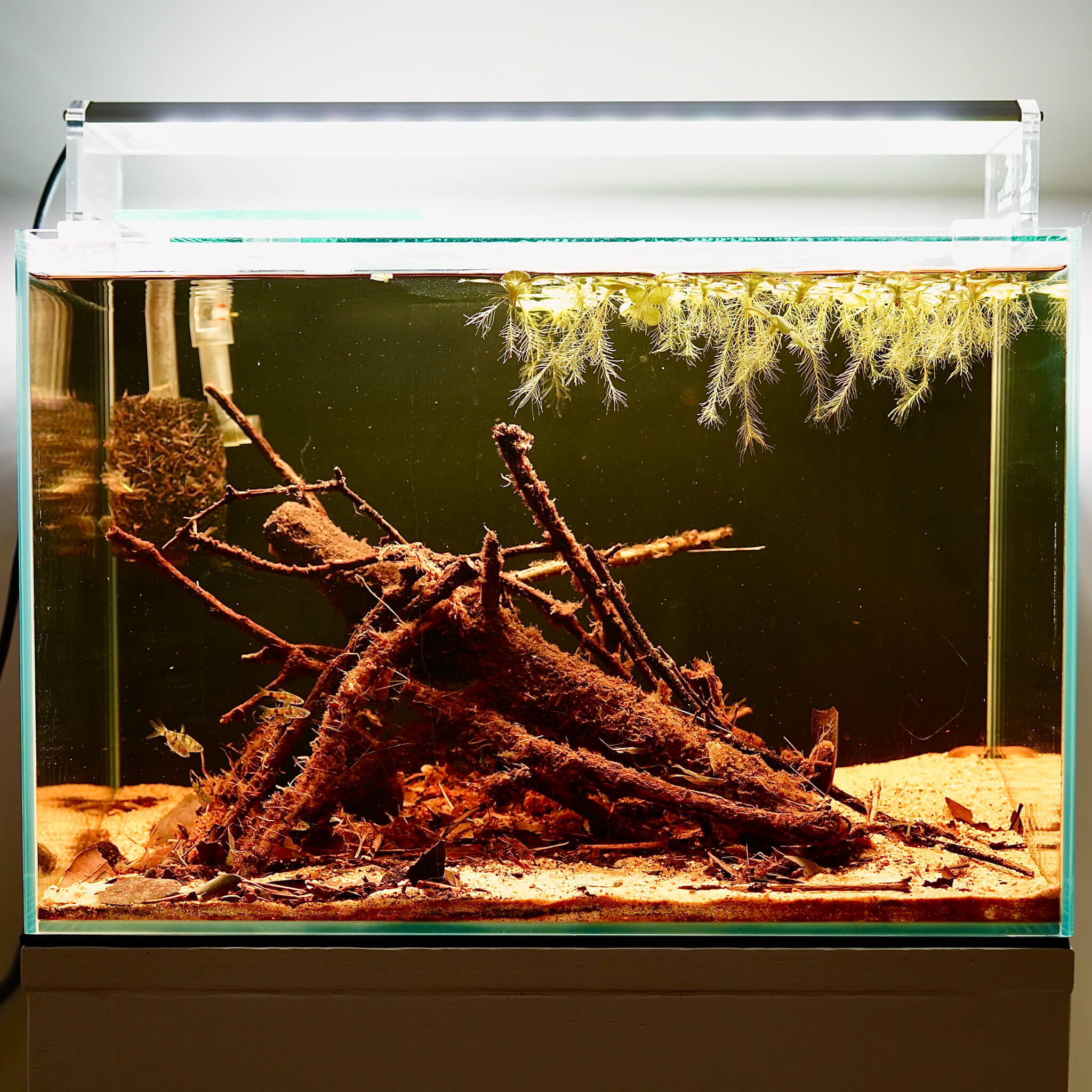
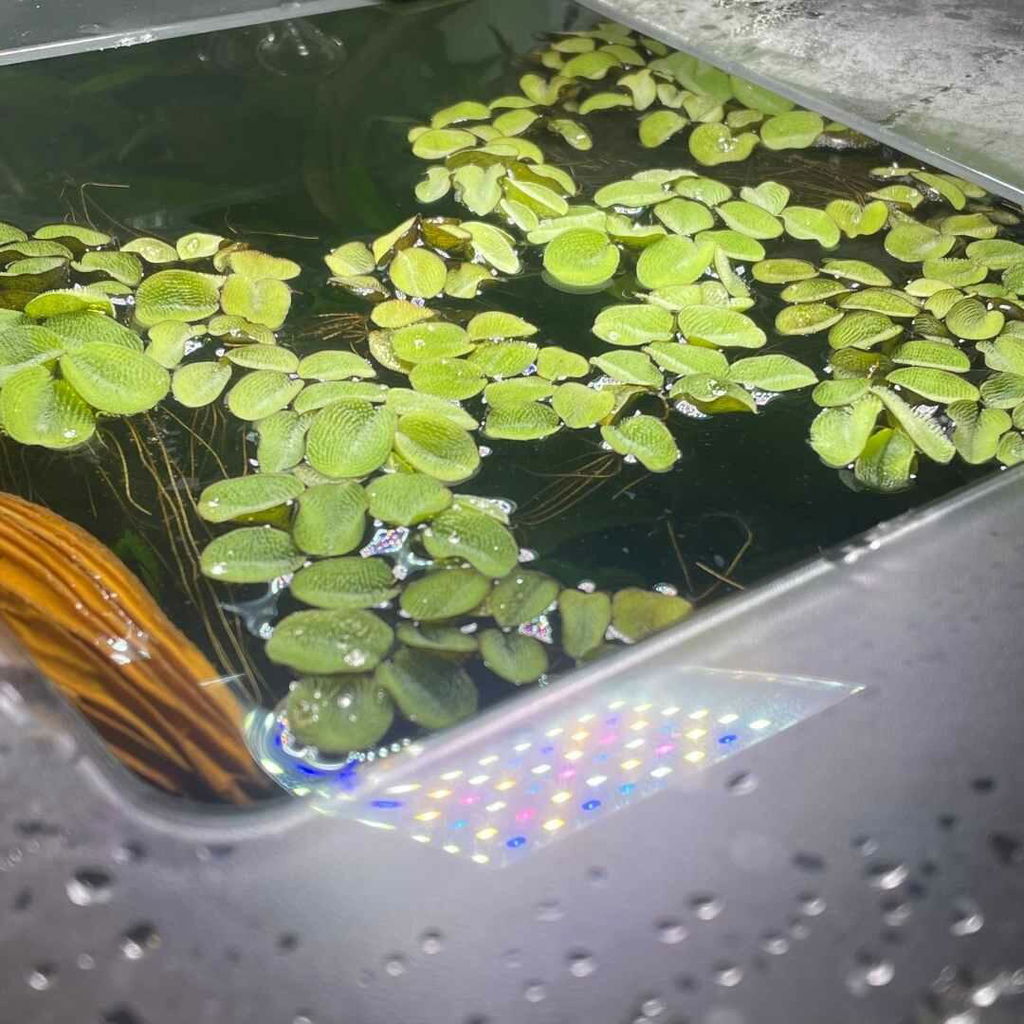
Water Spangles (Salvinia minima) is a free-floating fern ideal for betta fish, tetras, and dwarf cichlids, native to Central and South America, where it drifts in mats across still, nutrient-rich freshwater. Rather than true roots, it grows a finely divided, water-repellent leaf that hangs beneath the surface and functions like a root system, alongside a pair of oval floating leaves covered in fine hairs. In the Botanical Method Aquarium, it forms a fast-growing surface mat that absorbs excess nutrients and shades the water below to build habitat in its submerged leaf structures.
Essential Details
- Care Level: Easy
- Growth Habit: Fast, forms dense floating mats
- Light: Medium to High
- CO2: Not Necessary
- Propagation: Side shoots
- Tint Tolerance: Low to High
- Habitat Location: Central and South America
- Shipping Restrictions: Not legal to ship to Texas or Louisiana
- Optimal For: Betta fish, shrimp, and other species suited to floating cover and biofilm grazing surfaces in blackwater and biotope aquariums
- Use with Caution: Rinse before introducing; may carry beneficial hitchhiking snails, snail eggs, or duckweed from the grow-out ponds
- Size Range: Individual leaves under 3/4 inch; forms a spreading mat several inches across per portion
- Quantities: One portion, 10+ leaves in a 4 oz cup, a good start for a 10-gallon aquarium
Water Spangles for Planted Aquariums & Blackwater Biotopes
What looks like a root system on Water Spangles is actually a modified underwater leaf, finely divided and hanging below the floating pair above it. Still, it does the work a root would do in a rooted plant, providing a grazing surface of biofilm and giving shrimp, fry, and small fishes cover from predation at the surface of the aquarium. The floating leaves shade the water below, limiting the light available to algae the same way a mat of Red Root Floaters or Water Lettuce would.
Water Spangles grows fast, doubling its coverage in good conditions within a few days, so we thin it back regularly to keep light reaching the rest of the leaf litter zone of your Botanical Method Aquarium. Because of its growth rate, several states, including Texas and Louisiana, restrict its sale and shipment: outside its native range, Water Spangles has become a documented invasive species in parts of the southeastern United States, where it has crowded out native aquatic plants in slow-moving waterways. We never release aquarium plants, Water Spangles included, into local ponds, ditches, or waterways.
Because Water Spangles draws nutrients directly from the water column rather than the substrate, tint level has little impact on its growth. We can grow it in an aquarium tinted dark by leaf litter and seed pods or in clear, untinted water, and it grows the same either way. If we want to slow it down rather than remove excess growth by hand, lower light is the more effective lever than tint. We recommend a broad-spectrum fertilizer unless the substrate itself provides passive nutrient release.
Beneath the Leaves: Salvinia minima in the Wild
Salvinia minima is native to Central and South America, ranging from southern Mexico to northern Argentina and Brazil, where it drifts across still, warm, nutrient-rich freshwater and slow-moving backwaters. It reproduces quickly by vegetative fragmentation, and in its native range its population is kept in balance by natural grazers, seasonal flooding, and competition from other native flora.
Outside that range, without those checks, the same trait that makes it easy to grow in an aquarium has let it spread aggressively where it has escaped into the wild, which is the reason several states regulate where it can be shipped. Where a botanical contributes as it breaks down, an aquatic plant is living and contributes as it grows. So let them grow. Mother Nature leads the way.
Sustainability Note:
Please select a heat/cold pack if necessary. Check your local weather before ordering to avoid any shipment holds or cancellations. Salvinia minima cannot legally be shipped to Texas or Louisiana; if included in an order to either state, it will be removed before shipment. All Plants may contain snails or snail eggs. We keep them in all of our aquariums for the benefits they provide. Our blackwater aquarium plants are provided in cooperation with PNW Bettas in adherence to their Shipping and DOA Policies. Your curated selection will arrive in their packaging separate from your botanical, wood & merch orders.
Water Spangles | Salvinia Minima
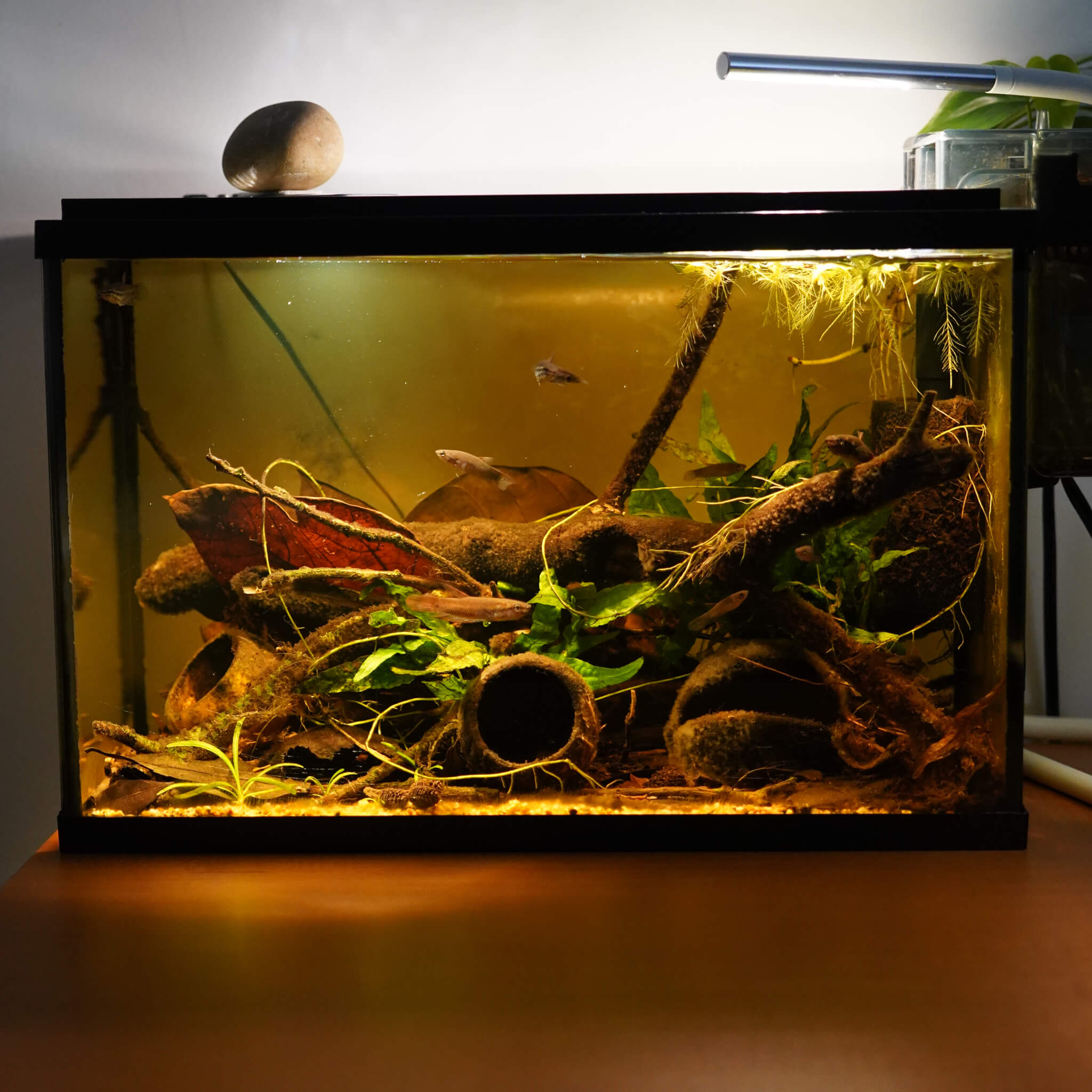
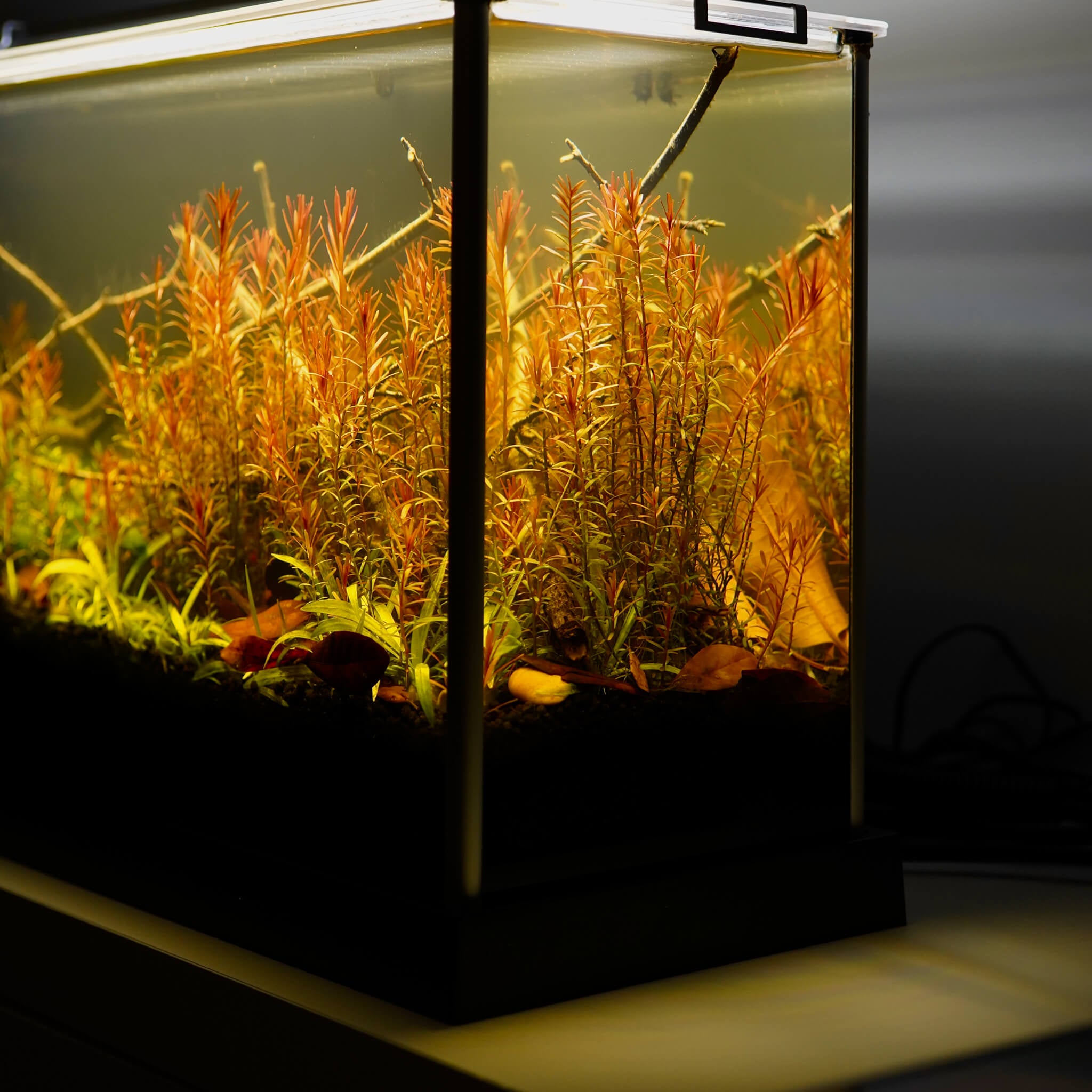
contrast the tint with greenery
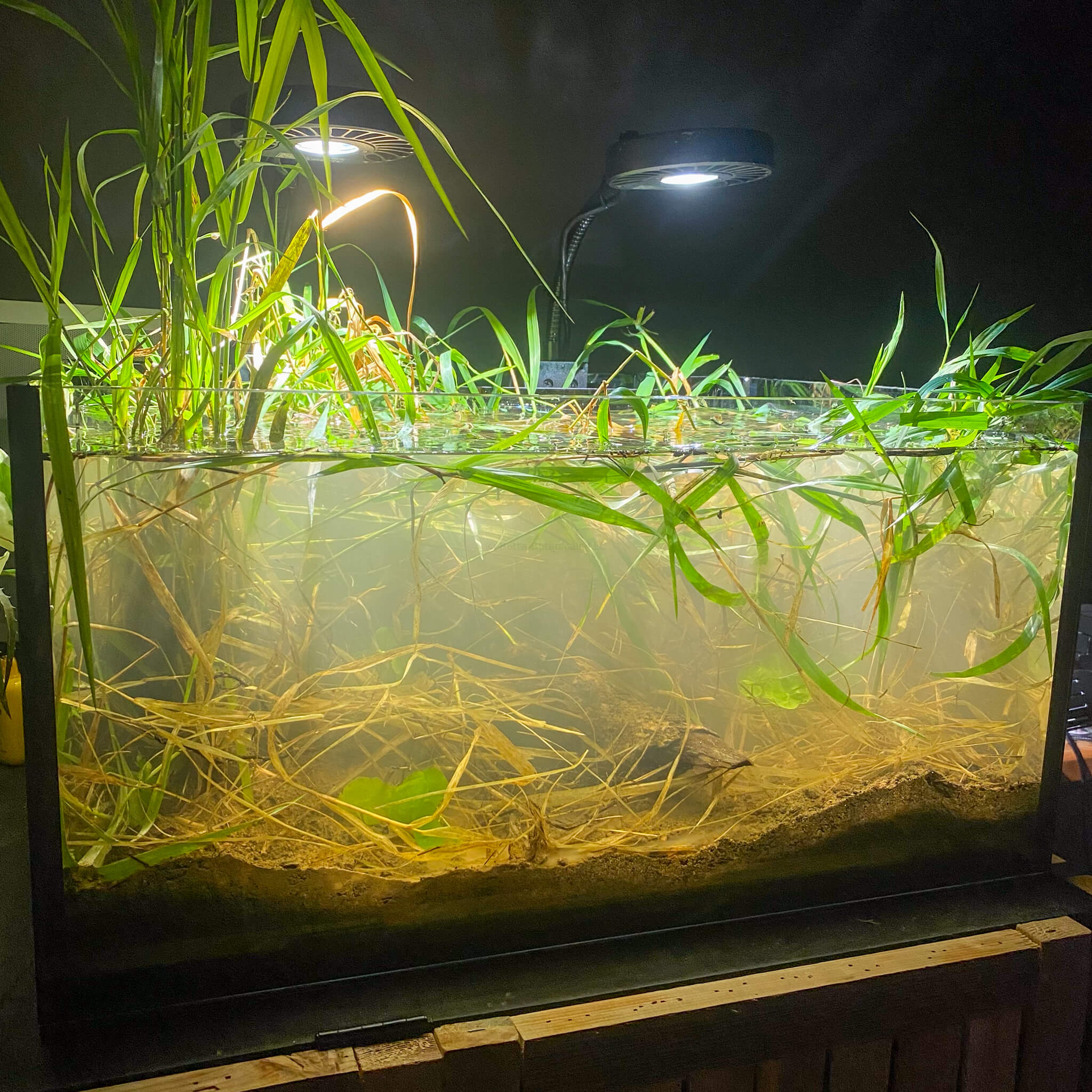
While the aesthetic appeal of tinted waters can be quite attractive to us, the recreation of nature—which includes both submerged and emersed plants—is the end goal. Flora helps to improve water conditions, feeding patterns, spawning displays, and territory building.
Aquatic Plant FAQs
DOA Policy
Please ensure that you add a heat pack or cold pack to your orders if temperatures in your area are above 90°F or below 40°F. Click for more info on our DOA Policy.
Are these plants duckweed and snail free?
All Plants may contain snails or snail eggs, small macroinvertebrates, and duckweed. We keep them in all of our tanks for the benefits they provide. We have experienced the presence of small snails, ostracods, daphnia, and beneficial detritus worms.
Are your plants only for tinted water conditions?
Nope! All of our plants will grow perfectly in untinted aquariums that have CO2 and aquasoils, or low-tech planted aquariums. Our selection, though, is optimized for emersed plant growth and low- to medium-tinted water environments.
What is your aquatic plant shipping schedule?
To ensure our aquatic plants ship under the best conditions, we are currently shipping our aquatic plants on Mondays. Please have your orders placed by 11:59 pm on Sundays. Aquatic plants usually arrive within 1-4 business days
How are your plants packaged?
All of our aquatic plants are shipped in sealed bags or cups, inside insulated mailers. Void fill is used to ensure plants stay secure during transit to your ecosystem. Heat & Cold Packs are available for purchase.
Are your plants just for bettas?
Nope! Our aquatic plants are safe for almost all aquariums, terrariums, vivariums, and paludariums. Many of our plants can be grown emersed in filter compartments, vivariums, or incorporated into wabikua.
What are Tannins?
Tannins are natural compounds released by leaves, seed pods, and bark as they decompose in water. They soften water, gently lower pH, and create the characteristic tea-stained tint found in blackwater habitats. But their role goes far beyond color—tannins fuel beneficial bacteria, fungi, and biofilms, which form the foundation of a healthy ecosystem. They also offer mild antifungal benefits and help reduce stress in fish by replicating the natural conditions they’ve evolved in. At their core, tannins are plant-derived antioxidants that connect your aquarium to the same processes at work in wild flooded forests and streams.
A few showed up dead, but other than that they’re doing great! I put this salvinia in all three of my tanks and they’re growing slow but steady!!
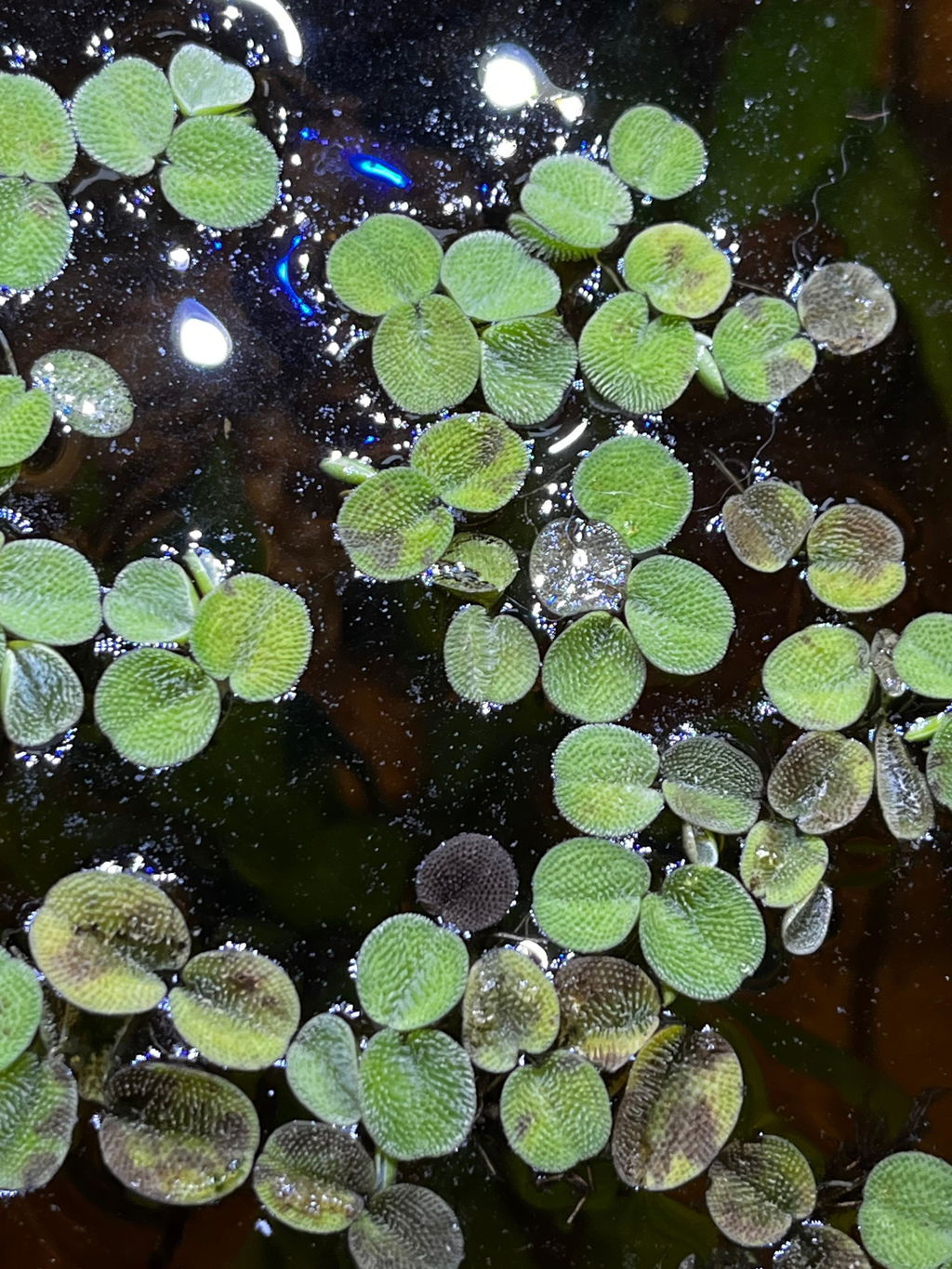
I was so pleasantly surprised with my order of a few botanicals and floating plants. I received a large quantity of plants in my order, and there were very few (2-5) yellow leaves to be picked off before adding. Everything was packaged thoughtfully as well! I would definitely order again.
Came in super healthy and there was way more than I expected!
Shipped great. A few dead pieces, but everything else was bright and healthy. There were a lot more than expected, so o was able to distribute through 3 tanks. They've been in a week, had a few more pieces die off, but nothing concerning. Do take note about snails, I did receive some with my order.
They came very healthy and happy! Would highly recommend.
Quick shipping and when there was issues the first time I ordered it, the problem was resolved swiftly with great communication and efficiency. nice plants in good health packaged well and not a single one was dead.
Came perfectly :) doing very well in my tank
The condition of my water spangles was perfect, they were all green! Under good lighting they grow like CRAZY! They are taking over my tank more than my duckweed! 10/10 recommend this product. If taken care of they will prosper. My bettas love swimming through the root systems they leave off as well.
My plants arrived looking perfect! Good amount for the price as well! I put them in a few hours ago, and my betta is already hovering beneath them.