



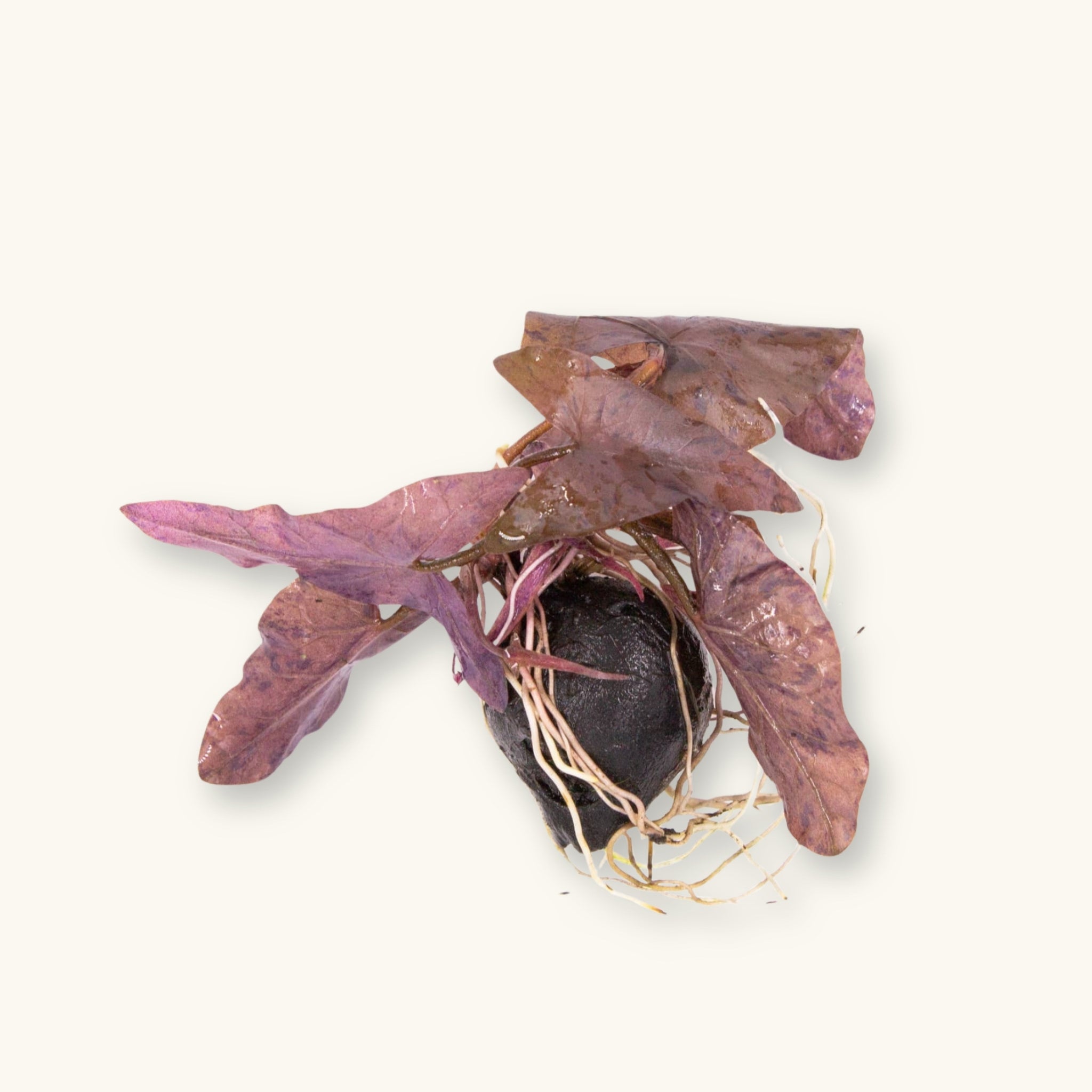
Red Tiger Lotus | Nymphaea zenkeri
Red Tiger Lotus on the Surface:
Red Tiger Lotus (Nymphaea zenkeri) is a tuberous aquatic plant native to slow-moving rivers and wetlands across West, Central, and East Africa, including the Nile River basin. It grows from a bulb rooted in the substrate, sending up broad, arrow-shaped leaves that redden as they mature and, if allowed to reach the surface, produce floating leaves and the chance of a fragrant flower. In the Botanical Method Aquarium, its root network draws nutrients from the substrate while its leaves build habitat; a nutrient-rich substrate is recommended, and the periodic use of root tab fertilization.
Essential Details
- Care Level: Easy
- Growth Habit: Tuberous, cycles through periodic dormancy
- Light: Medium to High
- CO2: Not Necessary
- Propagation: Daughter bulbs form at the base and can be separated once established
- Tint Tolerance: Low to High
- Habitat Location: West, Central, and East Africa, including the Nile River basin
- Optimal For: Betta fish, tetras, dwarf cichlids, and other species suited to a rooted centerpiece plant in blackwater and biotope aquariums, medium to large setups
- Use with Caution: Rinse before introducing; may carry beneficial hitchhiking snails, snail eggs, or duckweed
- Size Range: Bulb roughly 1 to 2 inches across; submerged leaves can spread 12 inches or more as the plant matures, with floating leaves reaching the surface in taller aquariums
- Quantities: Sold as a single bulb with leaves attached
Red Tiger Lotus for Planted Aquariums & Blackwater Biotopes
A Red Tiger Lotus's root network grows deep into the substrate and draws nutrients directly from it rather than the water column, the way we see in stem plants. As new leaves emerge from the bulb, each grows a little taller than the last, building habitat in stages, from compact reddish growth near the substrate to broader leaves that eventually reach the surface. Left untrimmed, surface leaves develop long stalks and can shade the water below them; trimming these leaves as they approach the surface keeps growth compact and redirects the plant's energy into denser submerged foliage.
Leaf color in a Red Tiger Lotus relates to the available light rather than water chemistry. Moderate light produces mixed green and reddish-brown leaves, while stronger light increases anthocyanin production in the leaf tissue, the pigment response that protects the plant from excess light exposure, deepening the red and darkening the tiger-stripe pattern across the leaf. Tint affects this plant the same way it affects a Dwarf Lily: submerged leaves need more light to pass through tinted water for photosynthesis and to produce those pigments, while leaves that reach the surface grow above the tint. In a heavily tinted Botanical Method Aquarium, stronger light at the substrate can cut through the tint to the submerged growth.
Propagation happens through daughter plants that form at the base of the main bulb and can be separated once they've rooted on their own. When planting or replanting, the crown of the bulb should stay above the substrate rather than being buried completely. A Red Tiger Lotus will periodically shed its leaves and enter a short dormant period, particularly at lower temperatures, before resuming growth; this is a normal part of its cycle, not a sign of decline, the same pattern we see in Dwarf Lily and our Cryptocorynes.
Beneath the Leaves: Nymphaea zenkeri in the Wild
Nymphaea zenkeri roots in slow-moving rivers, lakes, and wetlands across its native range, sending leaves up through the water column toward the light the same way it does in the aquarium. Reports of a Southeast Asian origin, common across the aquarium trade, trace to cultivated forms and confusion with other Nymphaea species rather than a documented wild population there. Where seasonal water levels rise and fall, the bulb's dormancy lets the plant persist through drought or flood by drawing on stored energy rather than growing continuously.
In the aquarium, that same broad-leafed structure becomes prime real estate. Dwarf cichlids, angelfish, and other substrate-spawning species favor the undersides of submerged leaves as spawning sites, and we've found Otocinclus consistently choose them over other plants in our own aquariums, drawn to the leaf's broad surface area and the biofilm it hosts, what we call supplemental nutrition.
Where a botanical contributes as it breaks down, an aquatic plant is living and contributes as it grows. So let them grow. Mother Nature leads the way.
Sustainability Note:
Please select a heat/cold pack if necessary. Check your local weather before ordering to avoid any shipment holds or cancellations. All Plants may contain snails or snail eggs. We keep them in all of our aquariums for the benefits they provide. Our blackwater aquarium plants are provided in cooperation with PNW Bettas in adherence to their Shipping and DOA Policies. Your curated selection will arrive in their packaging separate from your botanical, wood & merch orders.
Red Tiger Lotus | Nymphaea zenkeri
contrast the tint with greenery
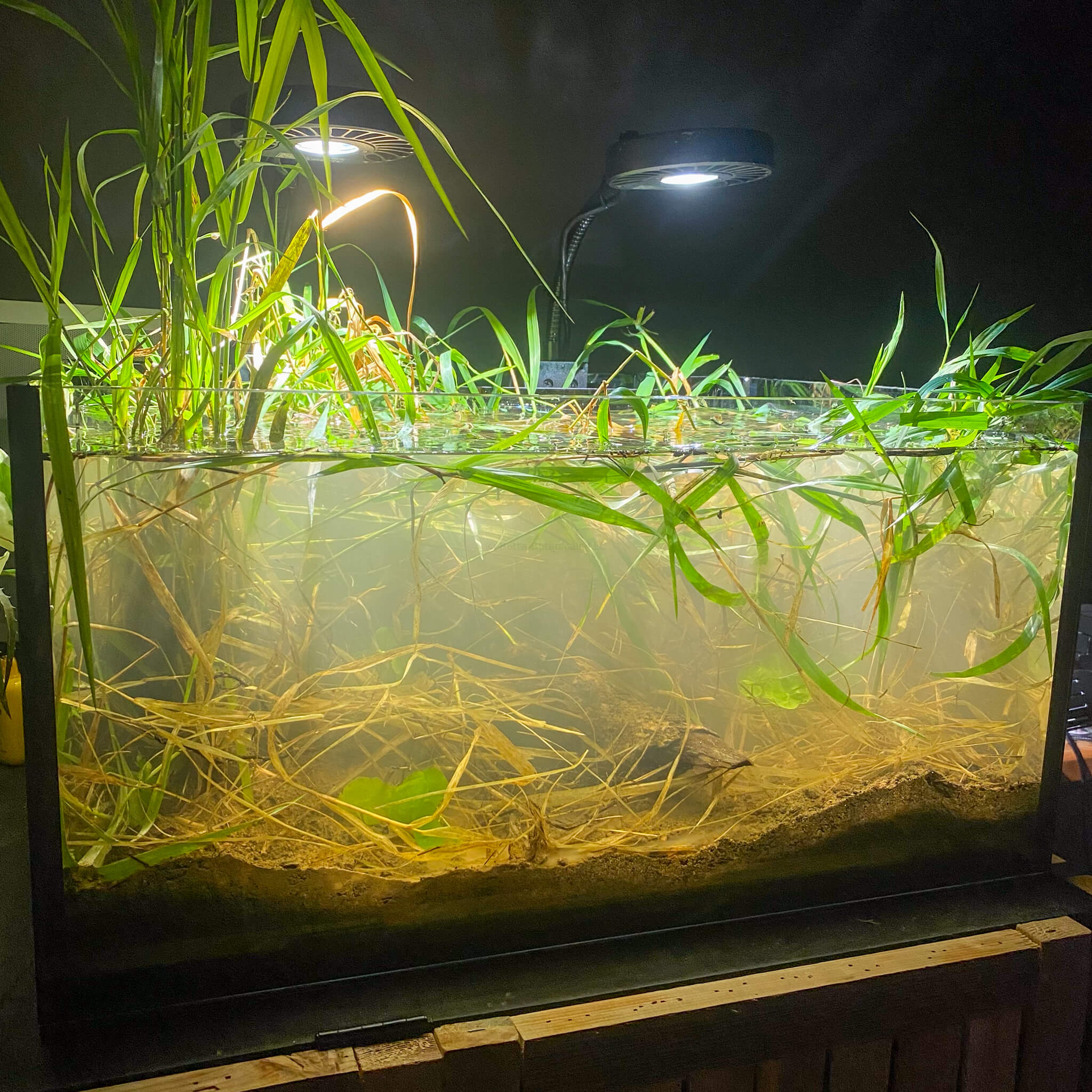
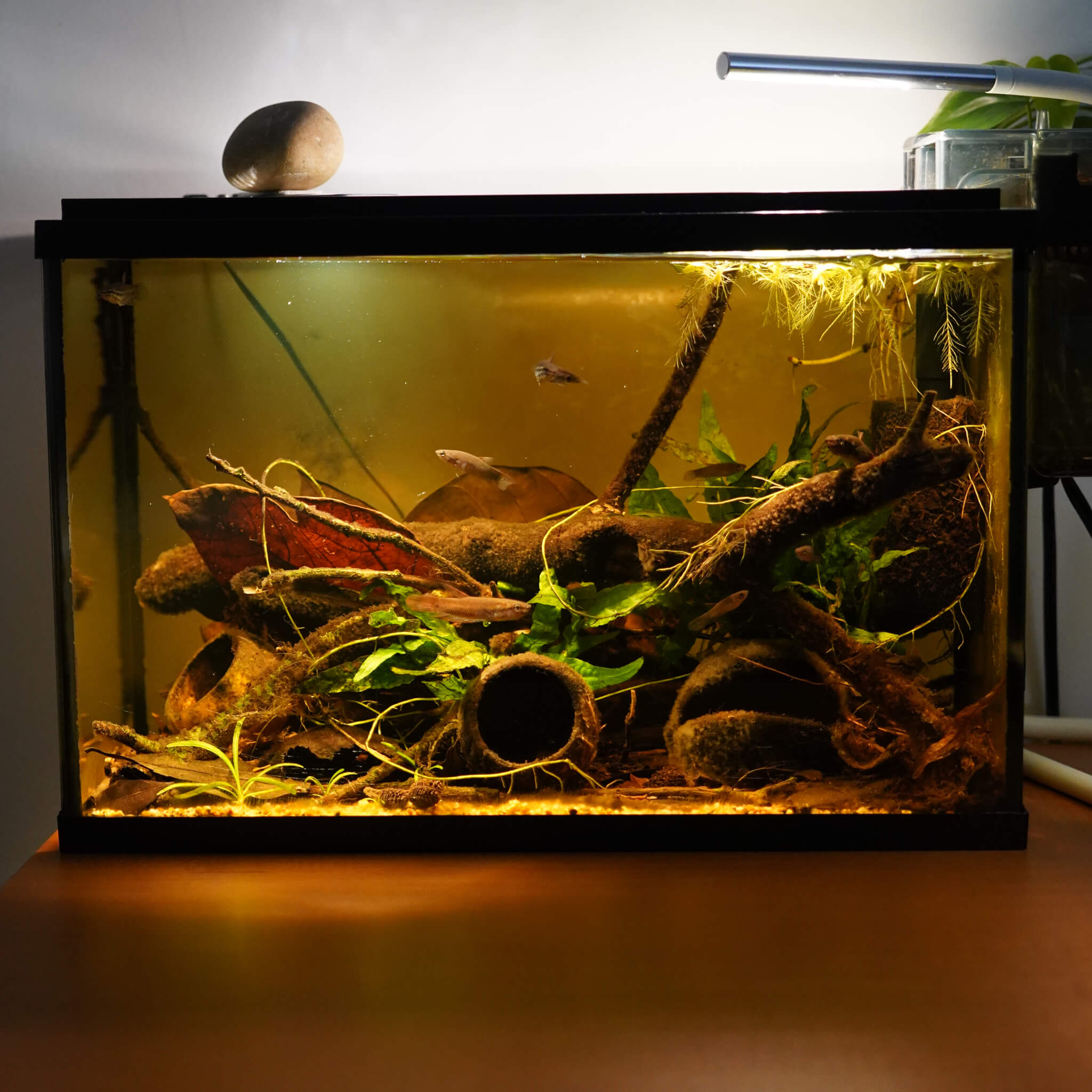
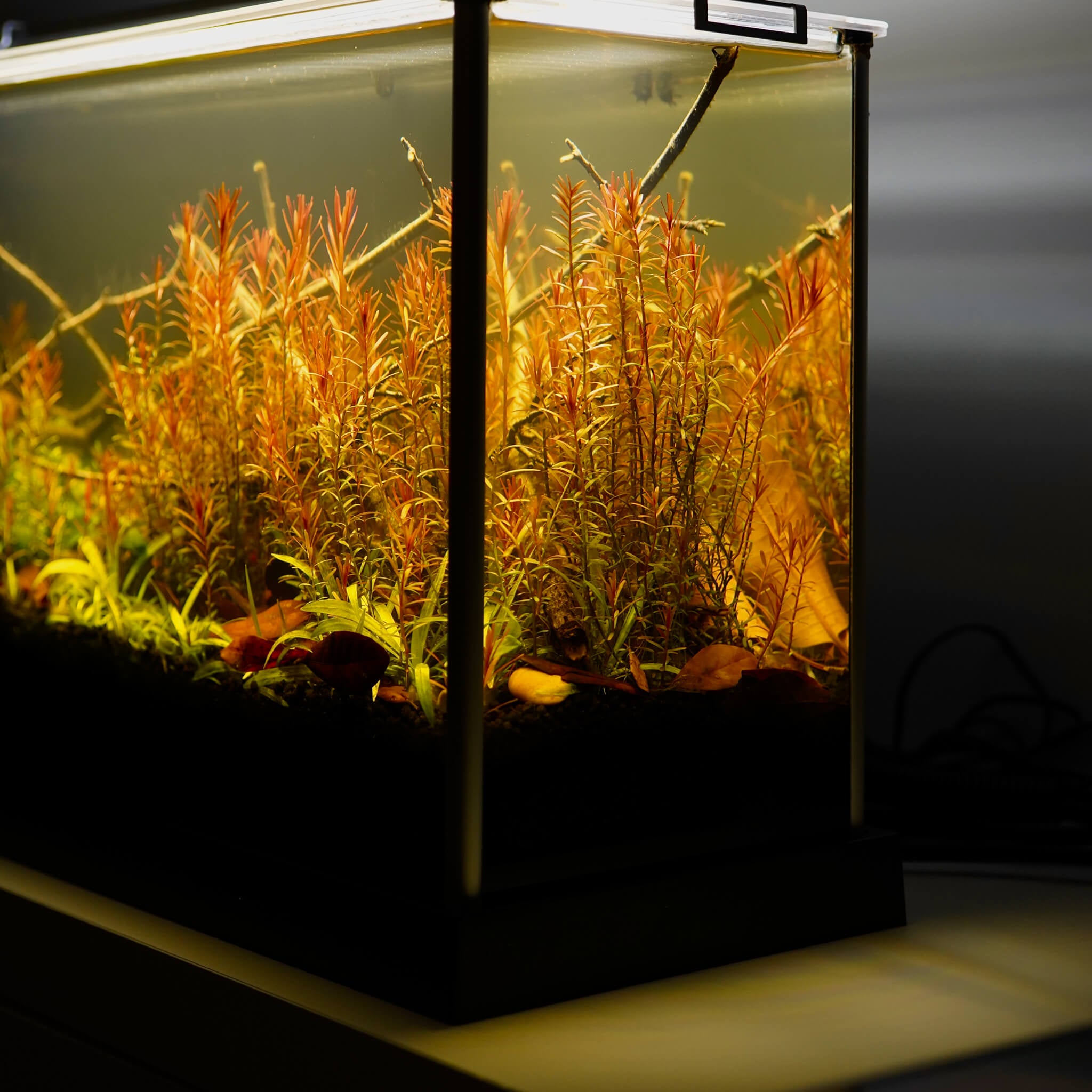
While the aesthetic appeal of tinted waters can be quite attractive to us, the recreation of nature—which includes both submerged and emersed plants—is the end goal. Flora helps to improve water conditions, feeding patterns, spawning displays, and territory building.
Aquatic Plant FAQs
DOA Policy
Please ensure that you add a heat pack or cold pack to your orders if temperatures in your area are above 90°F or below 40°F. Click for more info on our DOA Policy.
Are these plants duckweed and snail free?
All Plants may contain snails or snail eggs, small macroinvertebrates, and duckweed. We keep them in all of our tanks for the benefits they provide. We have experienced the presence of small snails, ostracods, daphnia, and beneficial detritus worms.
Are your plants only for tinted water conditions?
Nope! All of our plants will grow perfectly in untinted aquariums that have CO2 and aquasoils, or low-tech planted aquariums. Our selection, though, is optimized for emersed plant growth and low- to medium-tinted water environments.
What is your aquatic plant shipping schedule?
To ensure our aquatic plants ship under the best conditions, we are currently shipping our aquatic plants on Mondays. Please have your orders placed by 11:59 pm on Sundays. Aquatic plants usually arrive within 1-4 business days
How are your plants packaged?
All of our aquatic plants are shipped in sealed bags or cups, inside insulated mailers. Void fill is used to ensure plants stay secure during transit to your ecosystem. Heat & Cold Packs are available for purchase.
Are your plants just for bettas?
Nope! Our aquatic plants are safe for almost all aquariums, terrariums, vivariums, and paludariums. Many of our plants can be grown emersed in filter compartments, vivariums, or incorporated into wabikua.
What are Tannins?
Tannins are natural compounds released by leaves, seed pods, and bark as they decompose in water. They soften water, gently lower pH, and create the characteristic tea-stained tint found in blackwater habitats. But their role goes far beyond color—tannins fuel beneficial bacteria, fungi, and biofilms, which form the foundation of a healthy ecosystem. They also offer mild antifungal benefits and help reduce stress in fish by replicating the natural conditions they’ve evolved in. At their core, tannins are plant-derived antioxidants that connect your aquarium to the same processes at work in wild flooded forests and streams.
One of my most fav plants in my tank!