

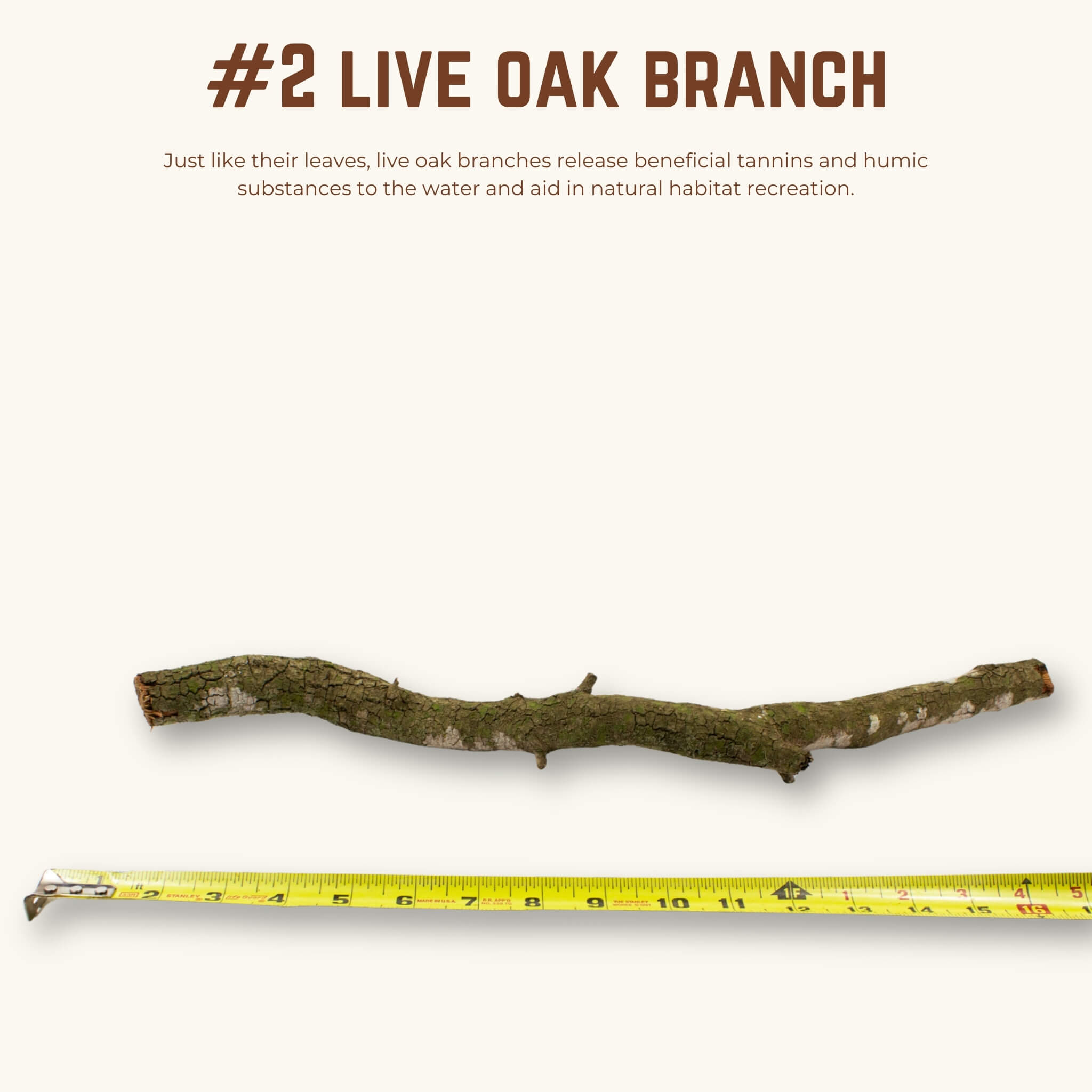
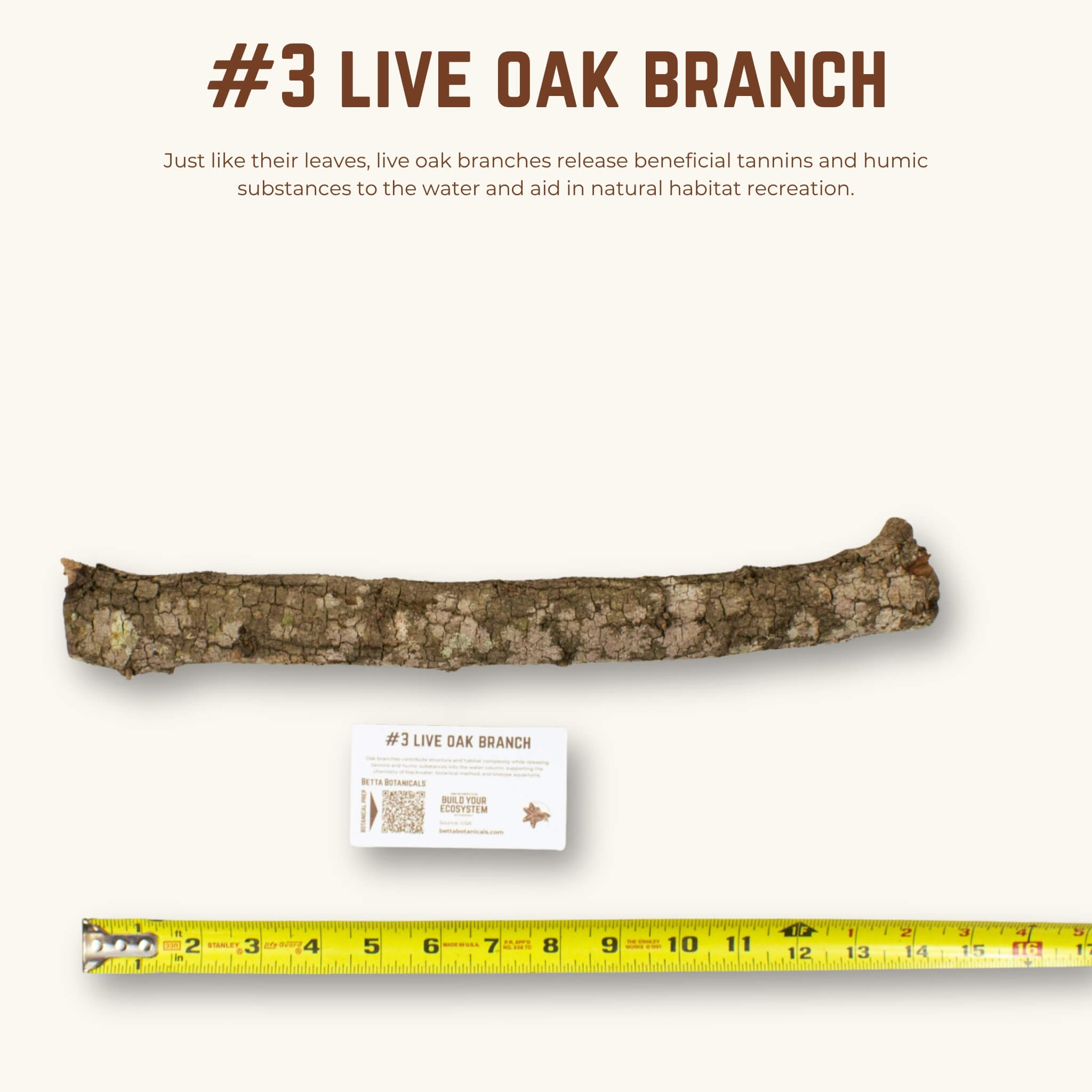
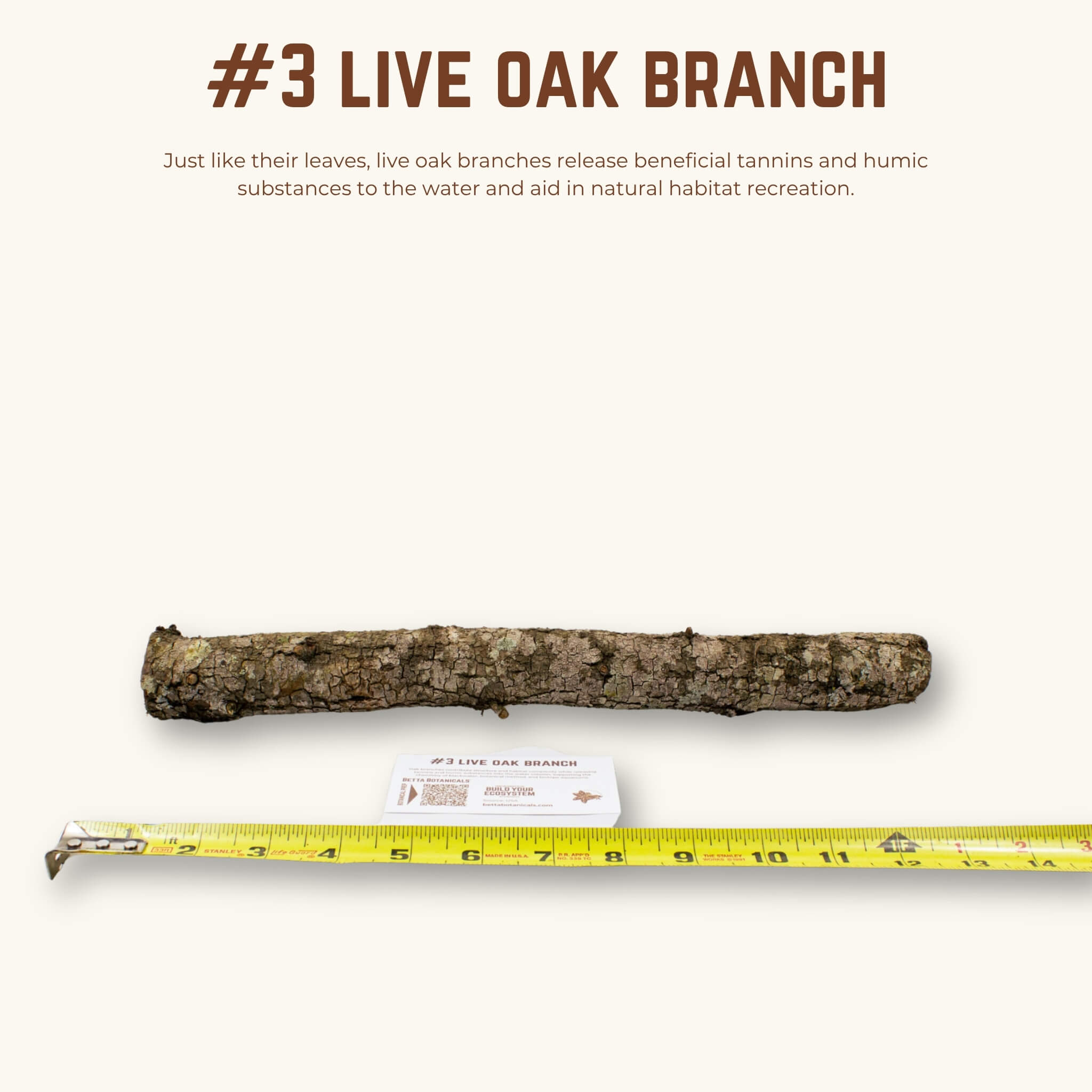
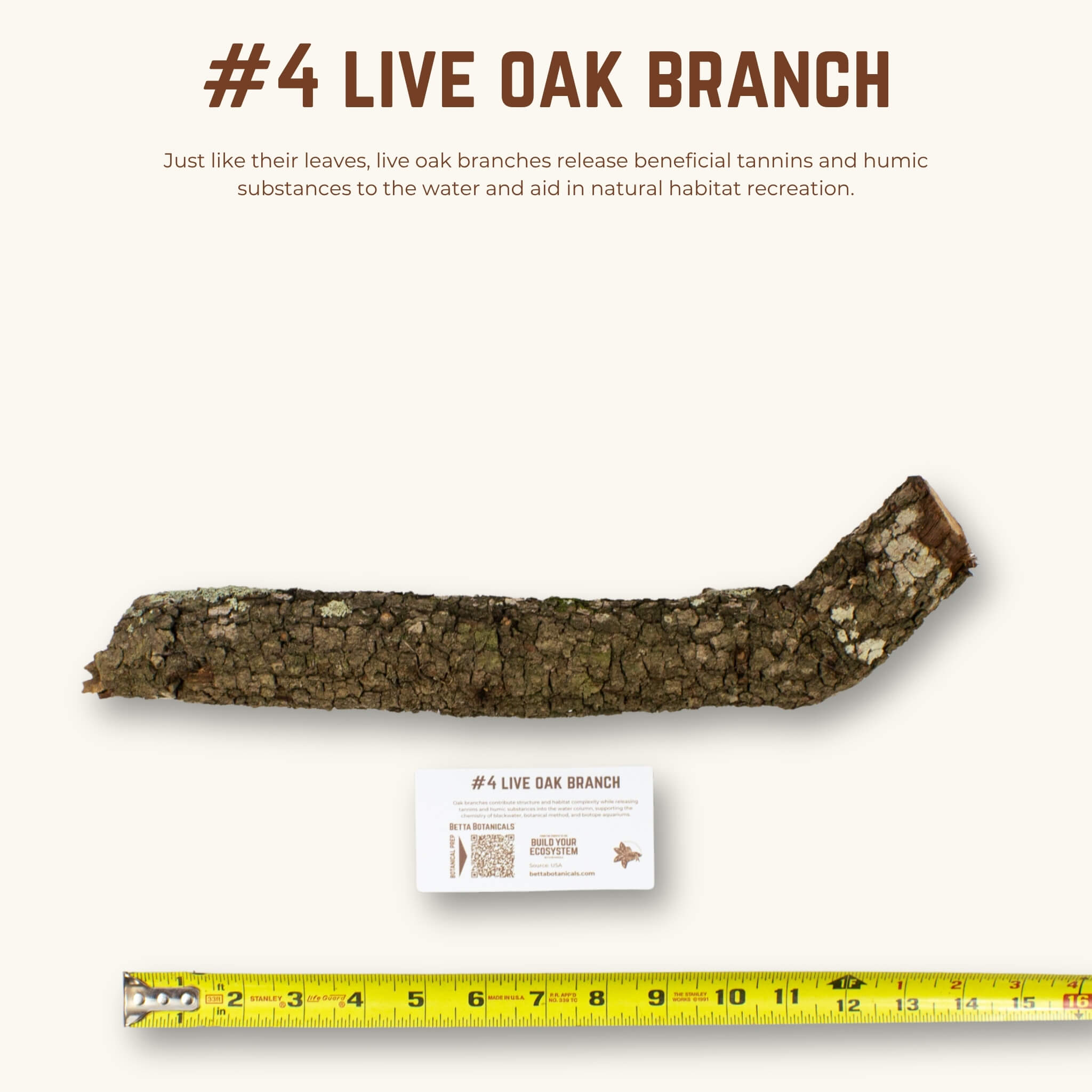
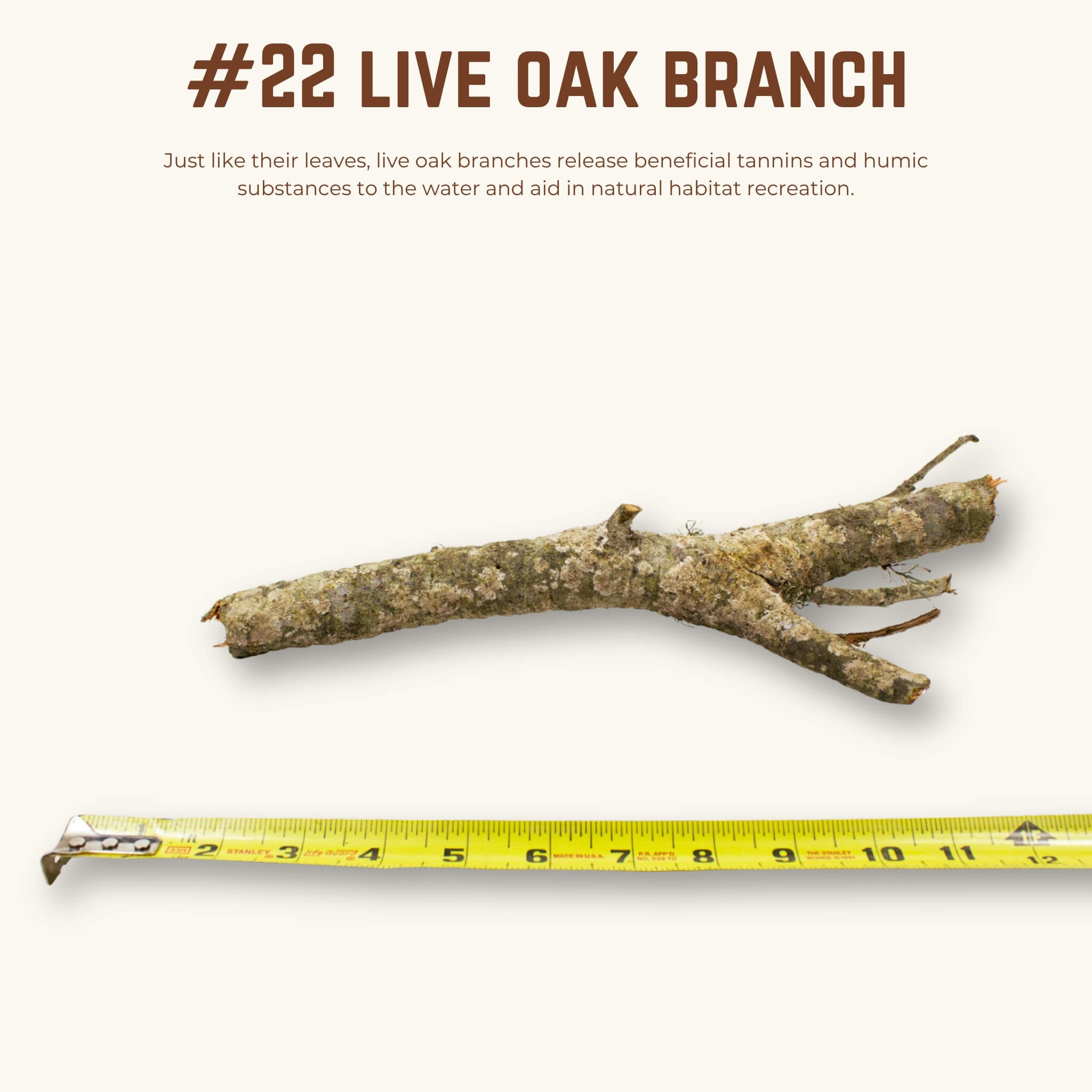
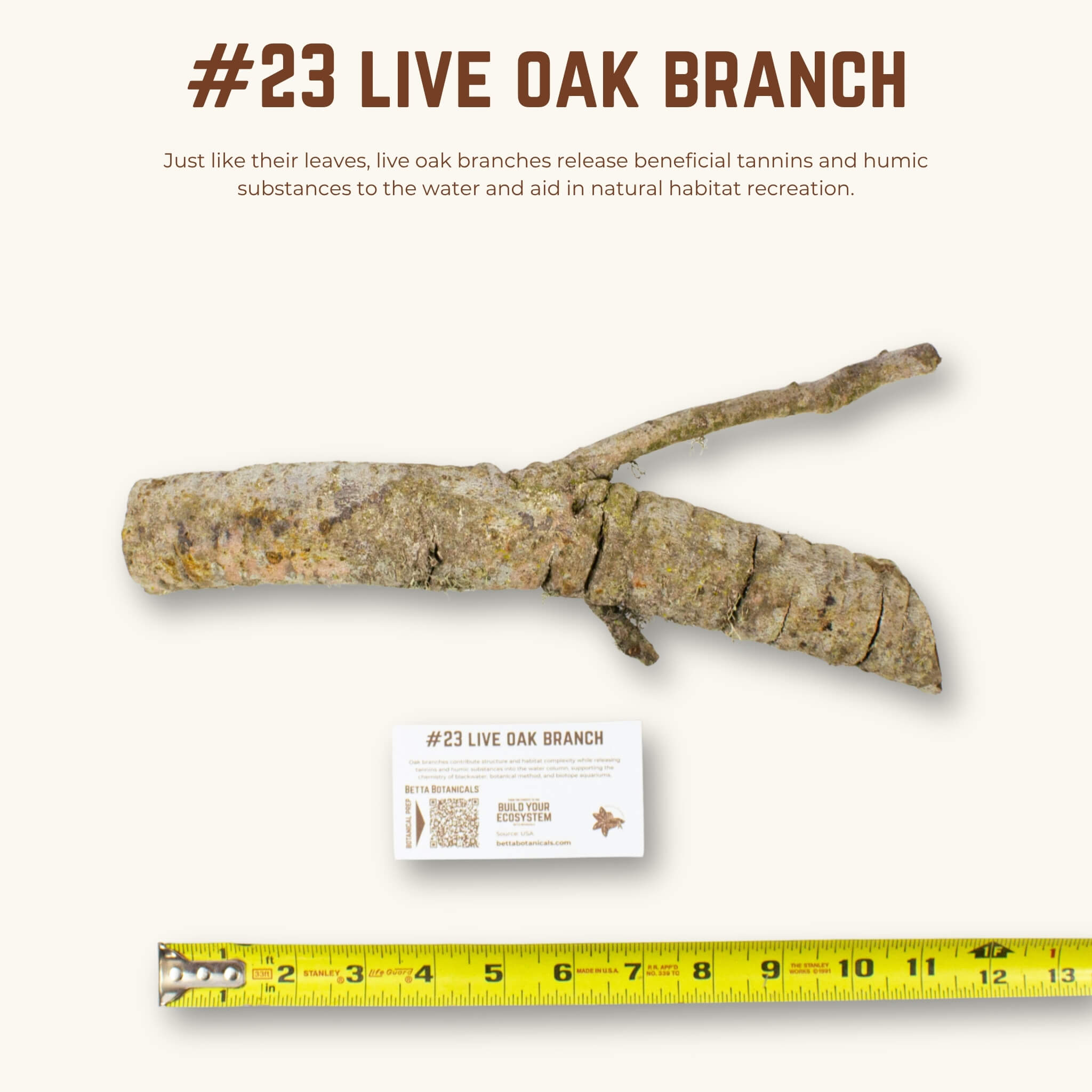
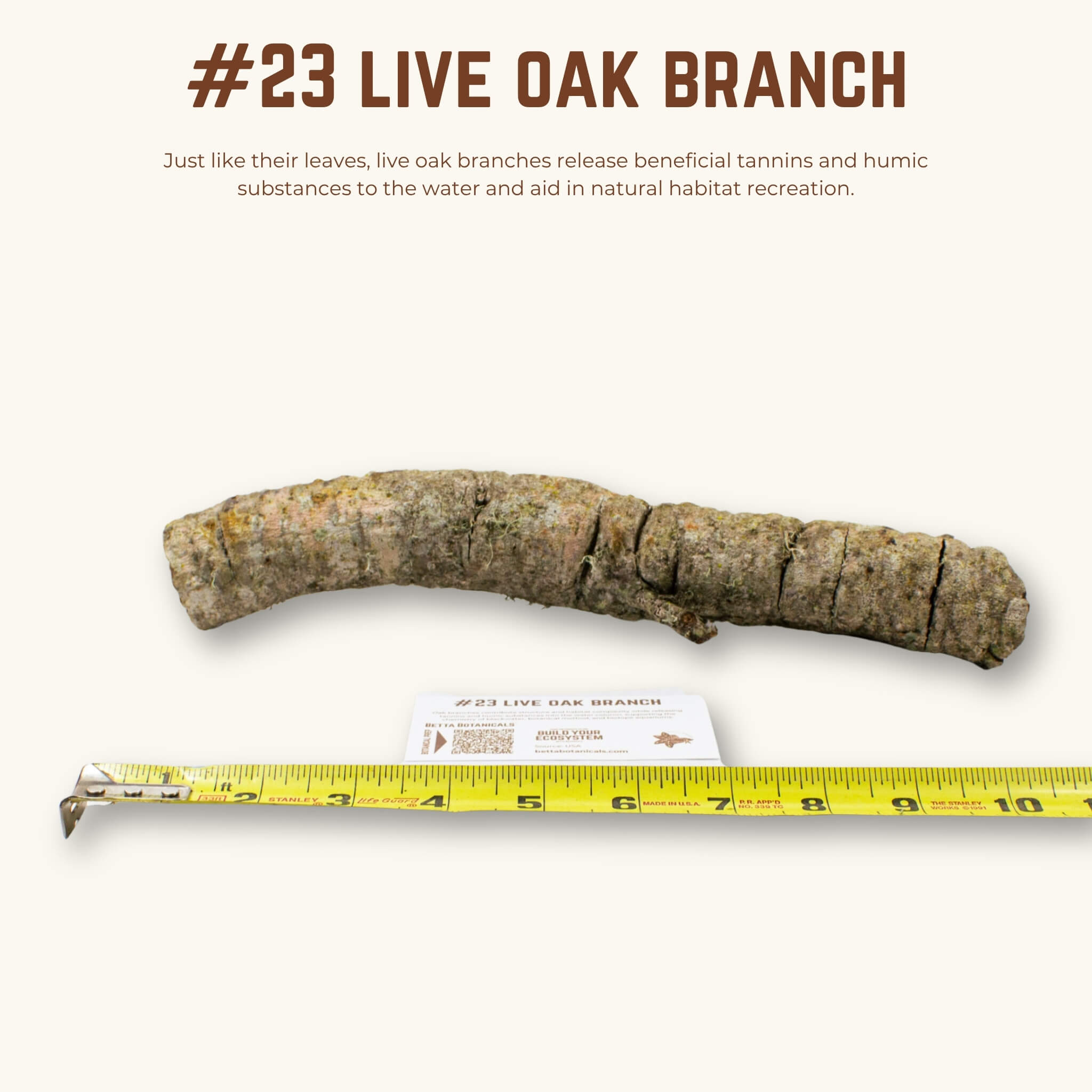
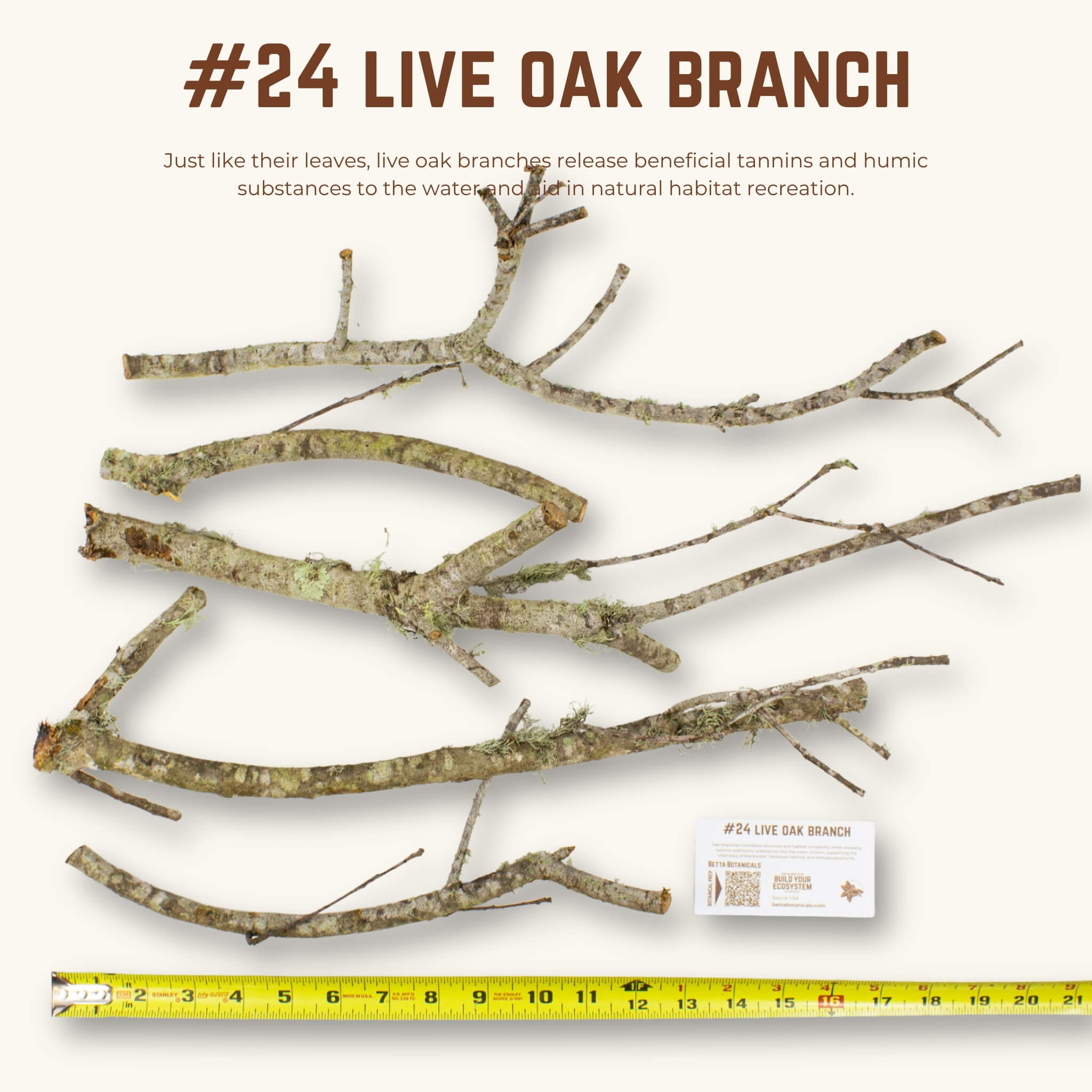
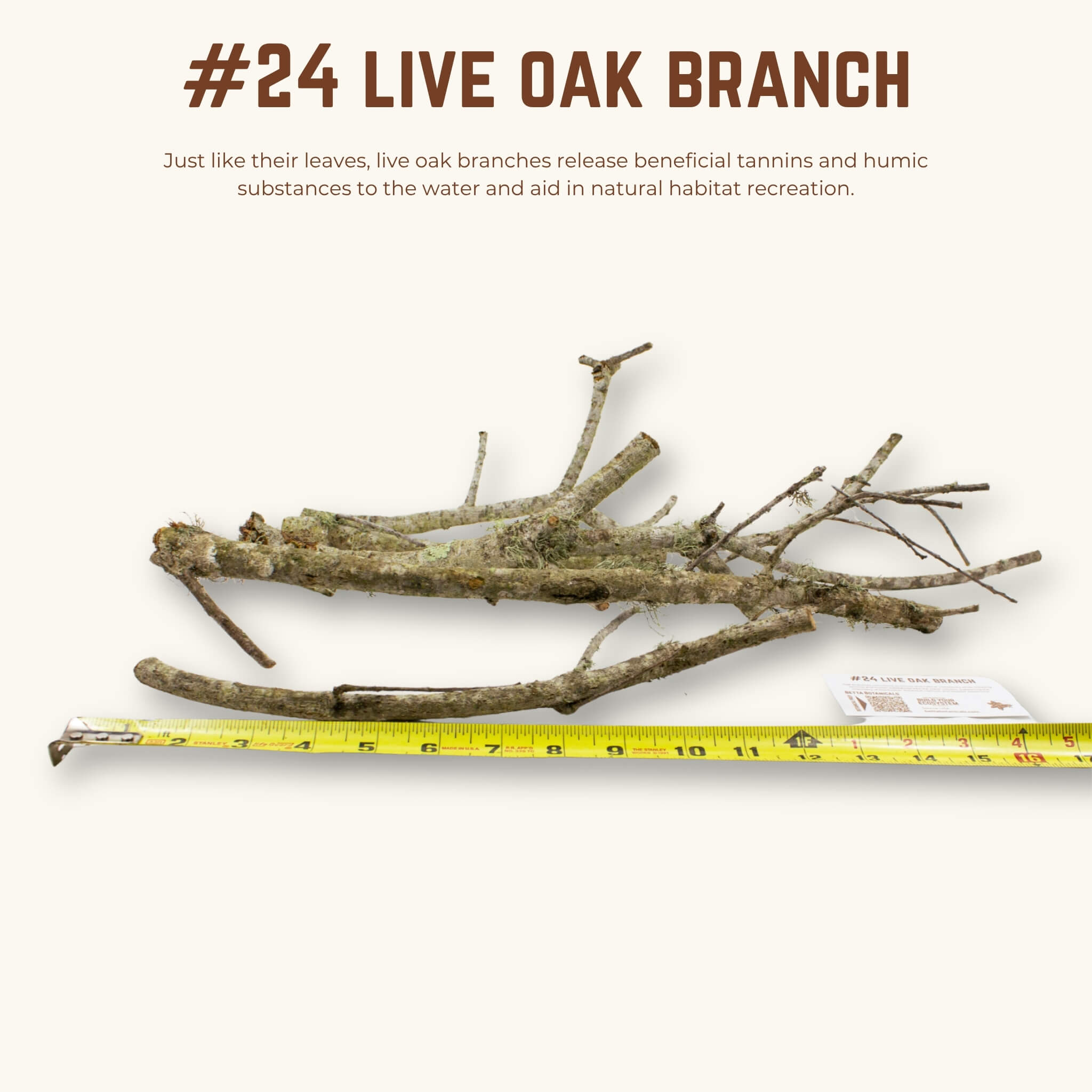
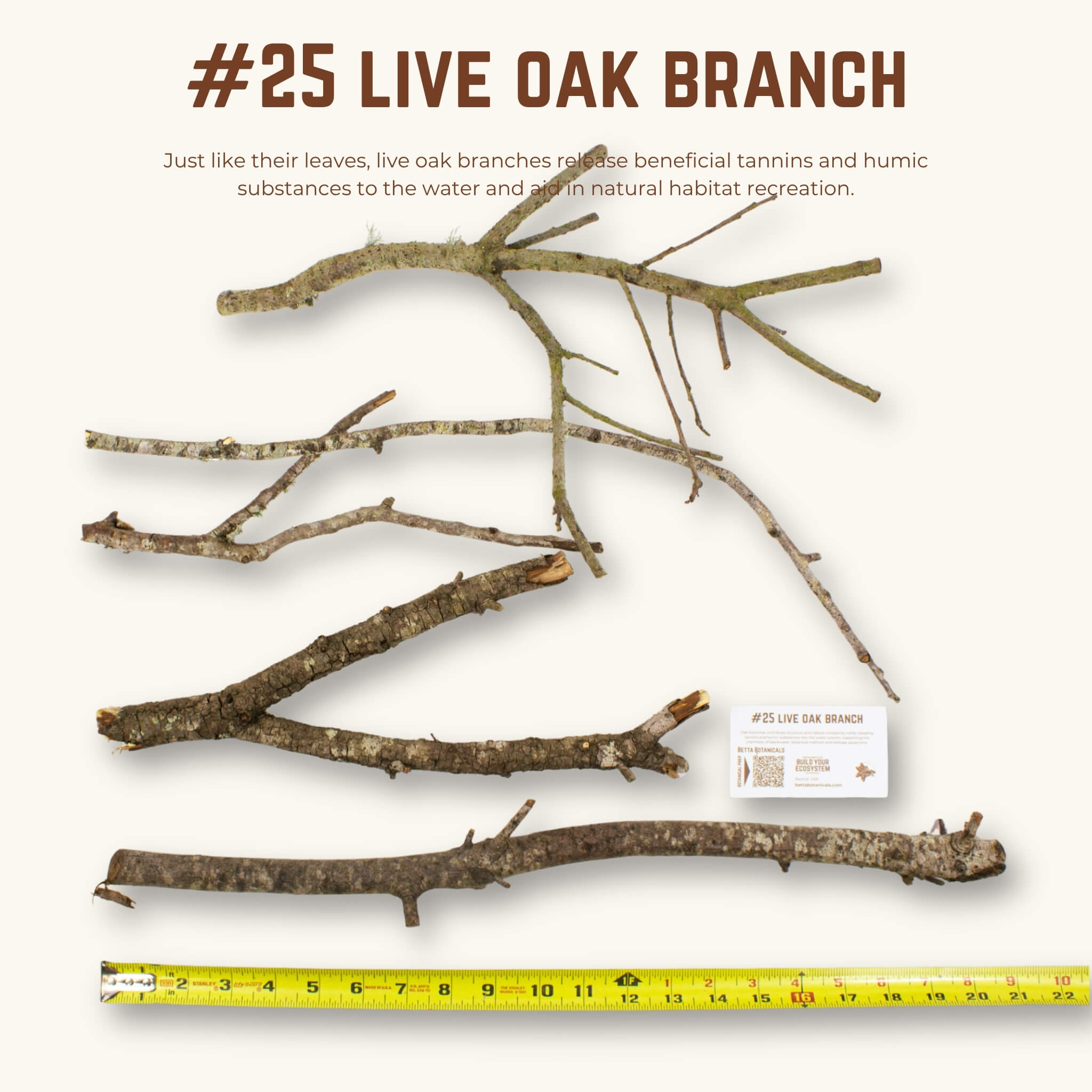
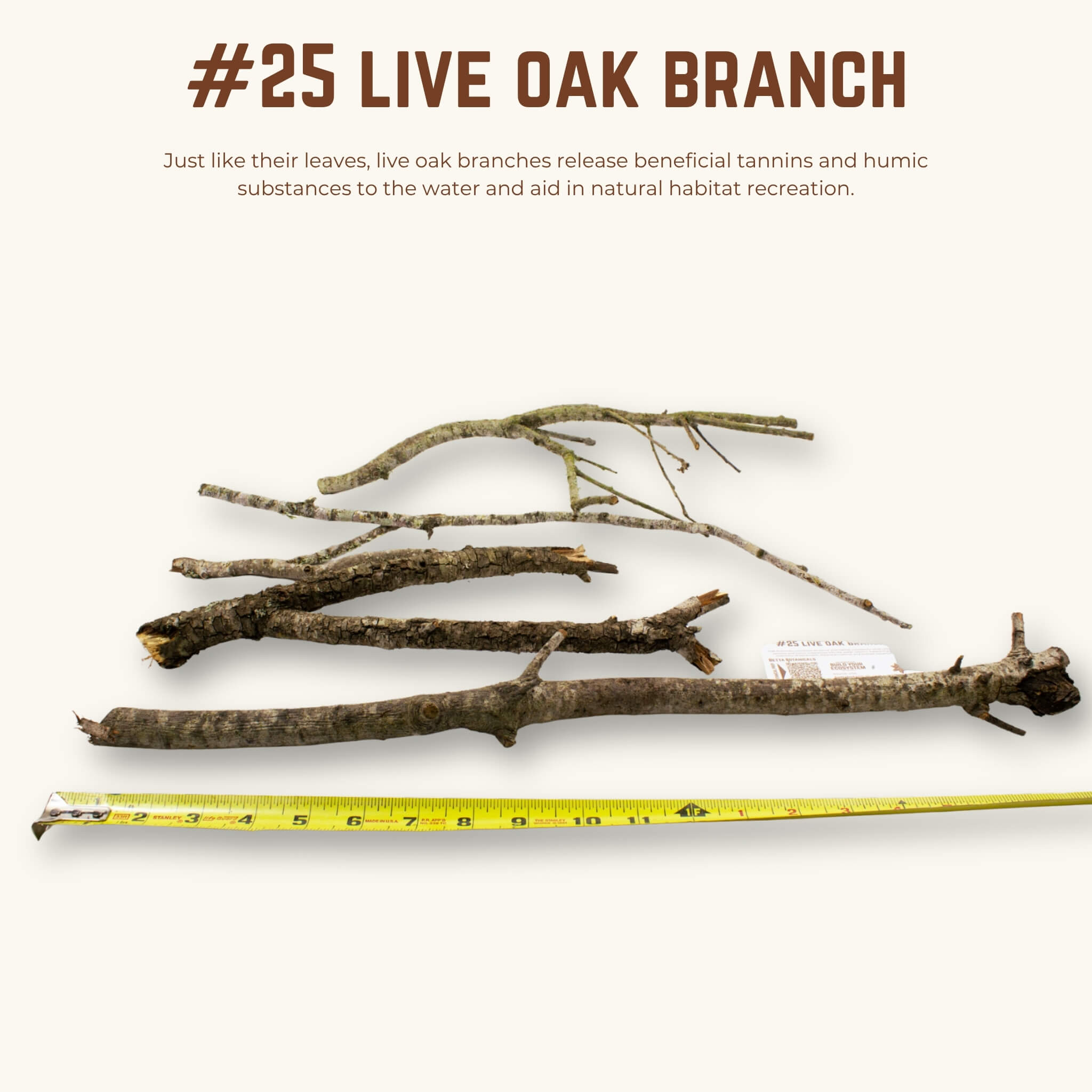
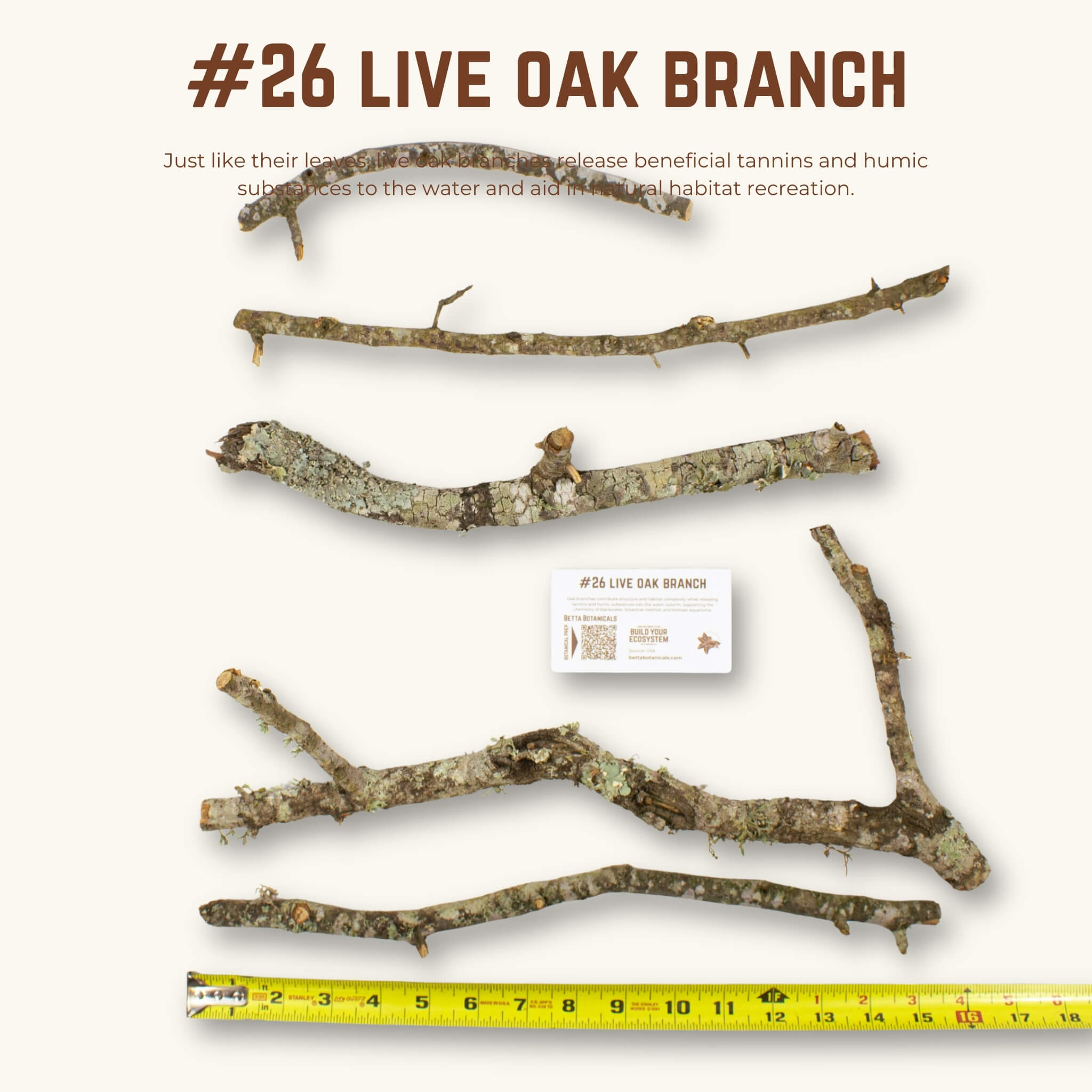
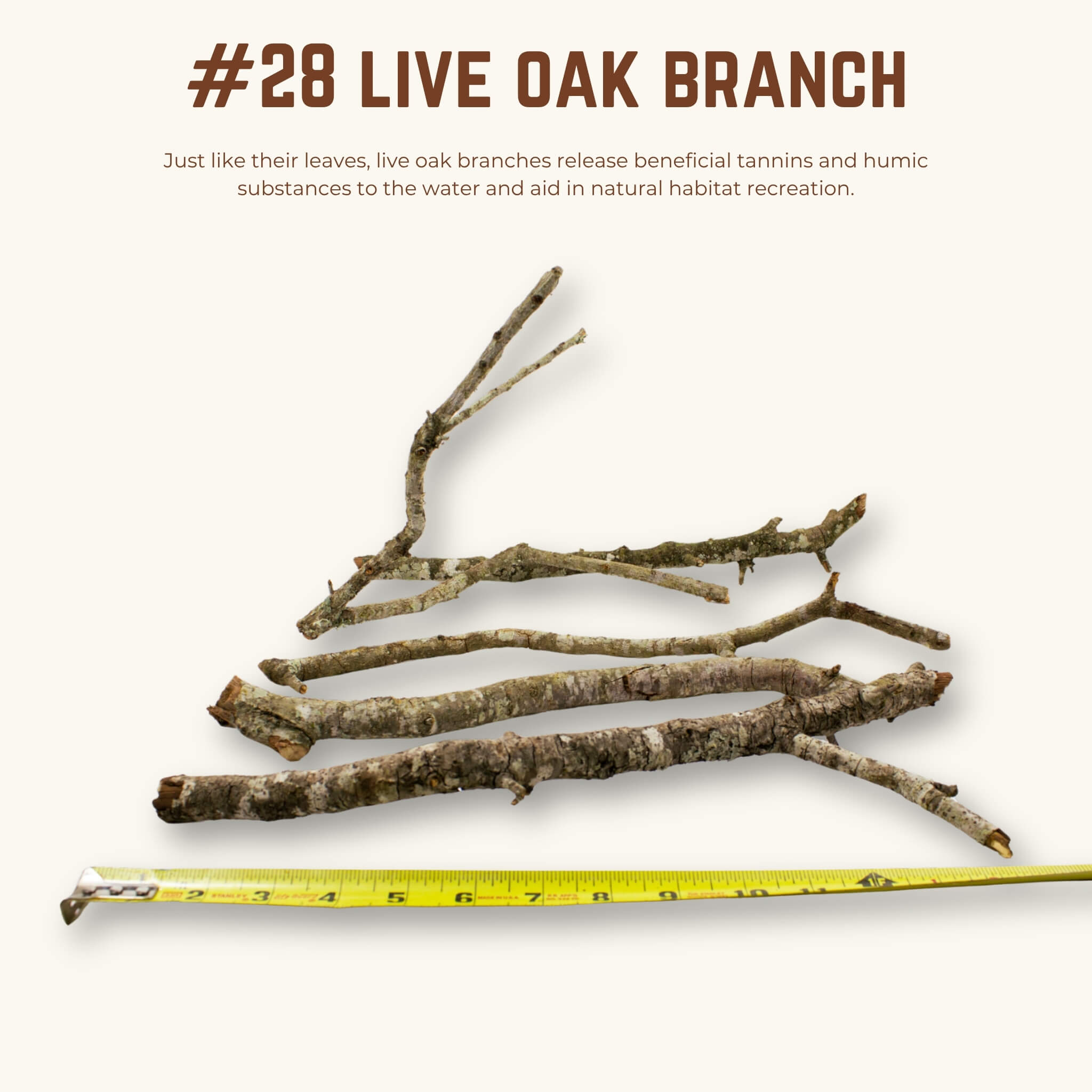
Live Oak Branches | WYSIWYG Pieces
Live Oak Branches on the Surface:
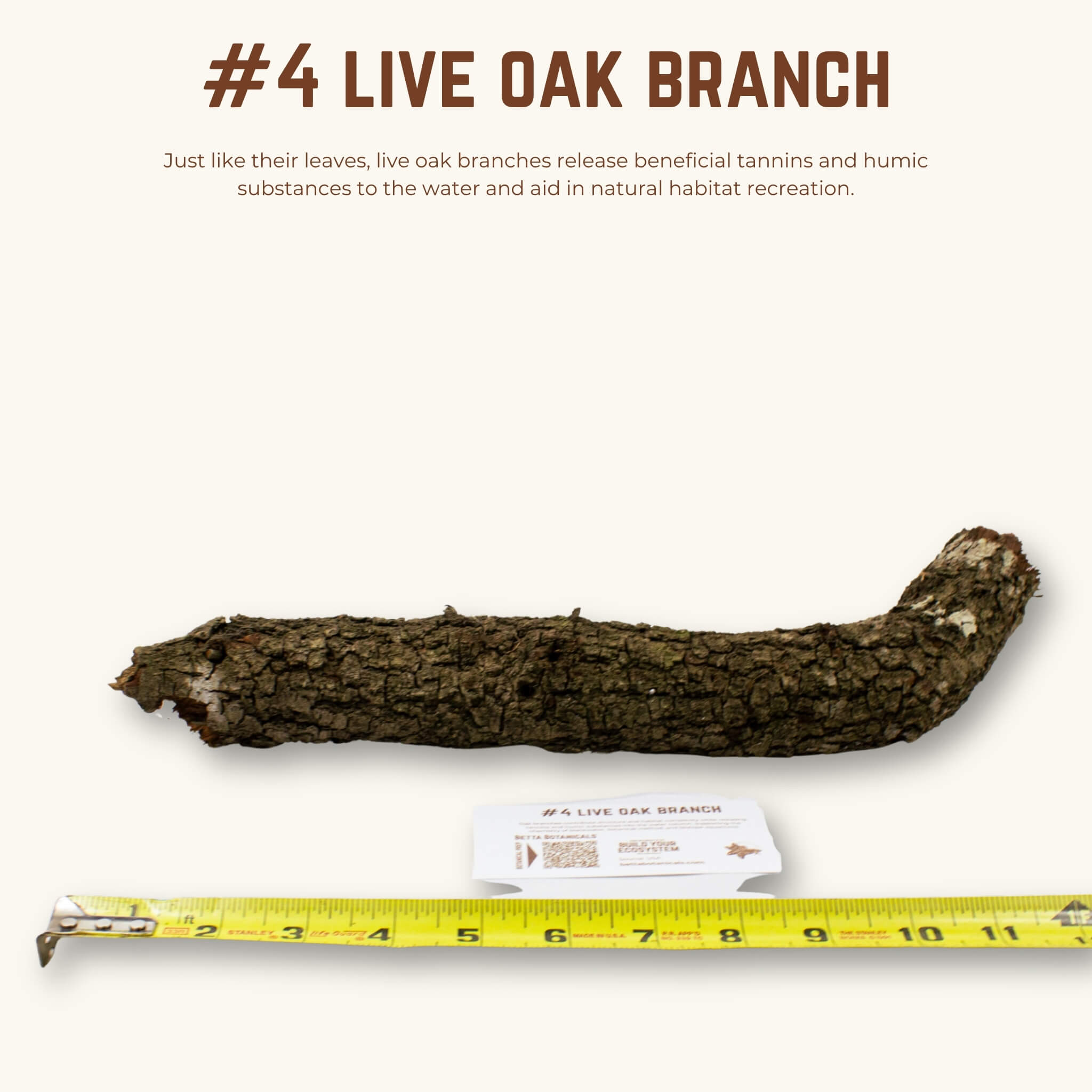
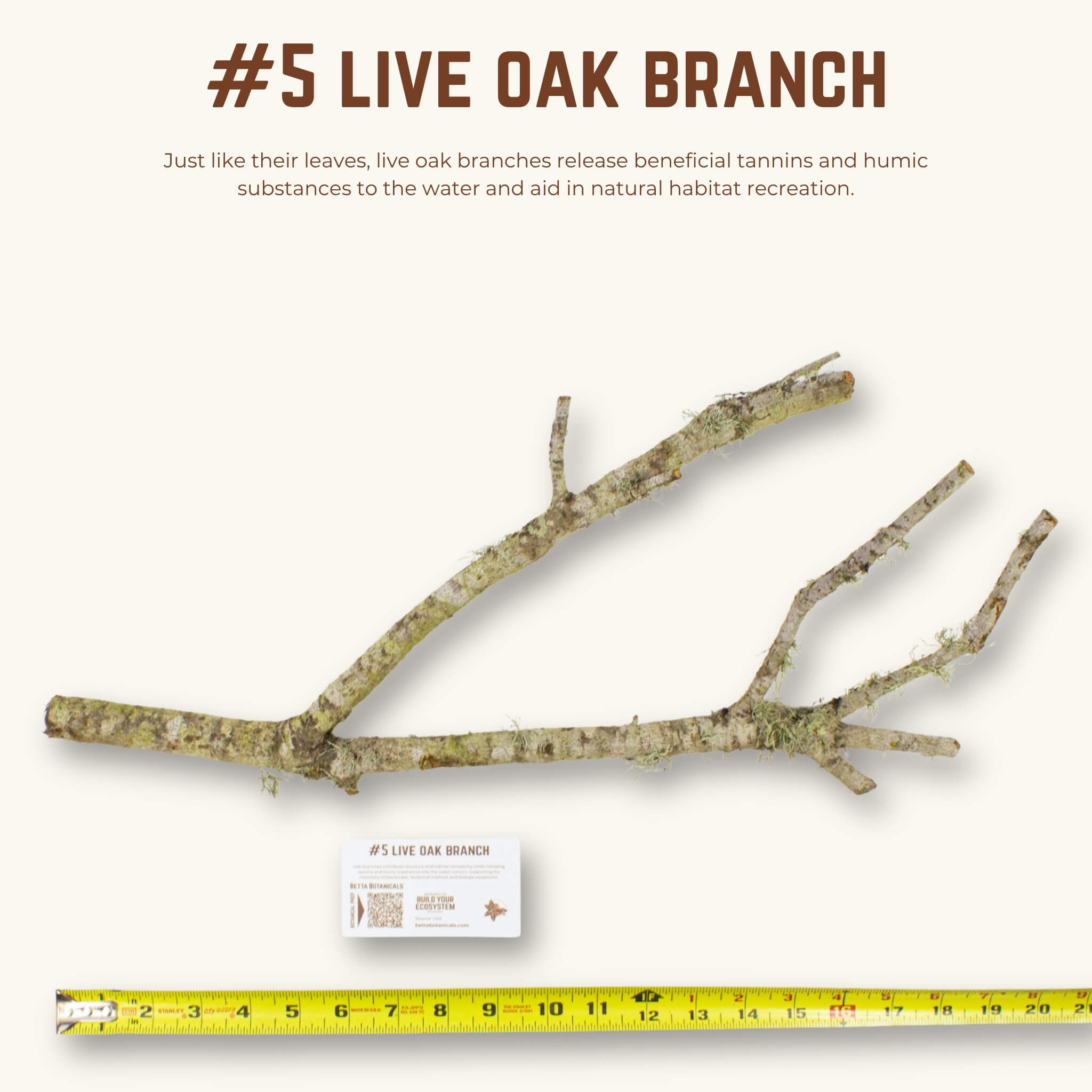
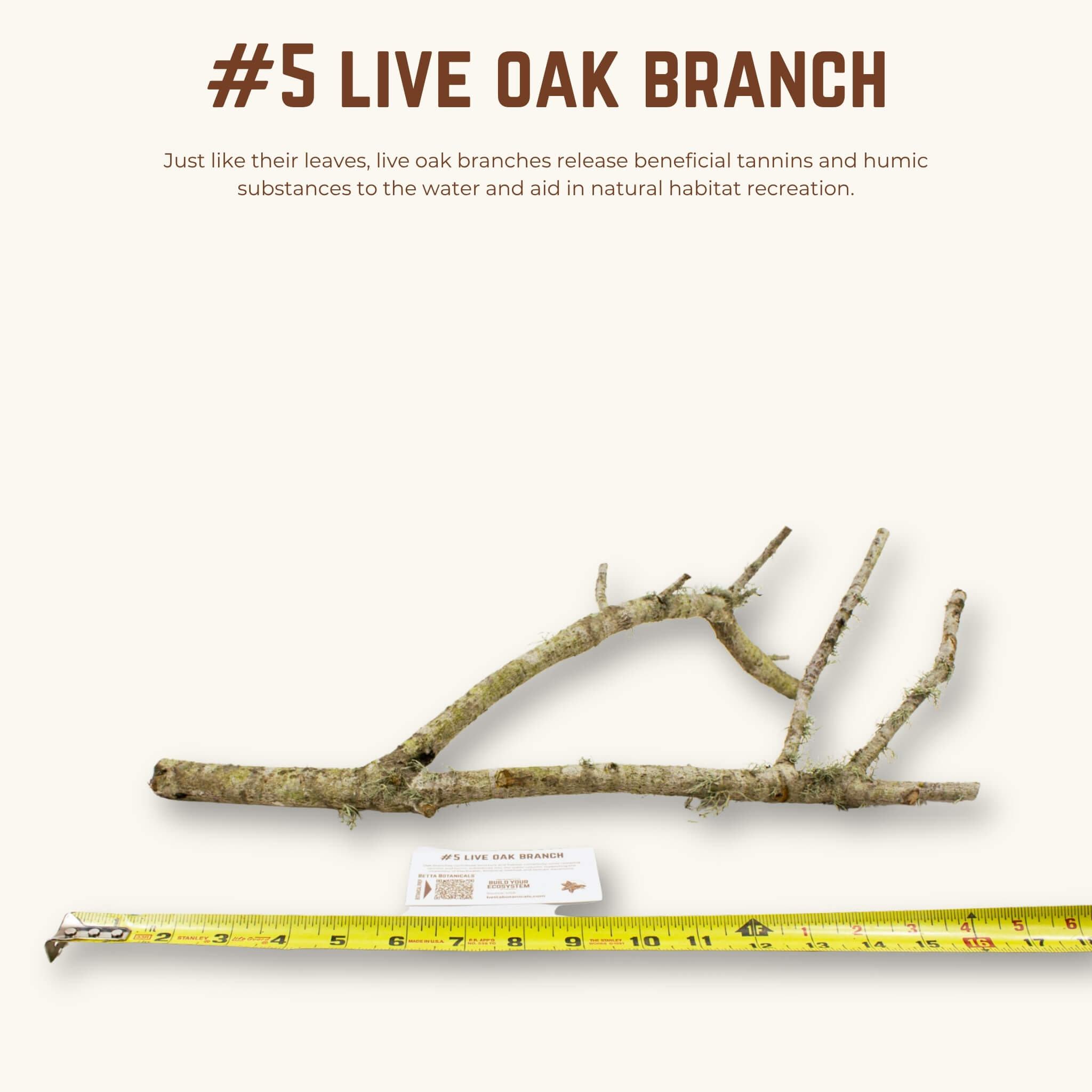
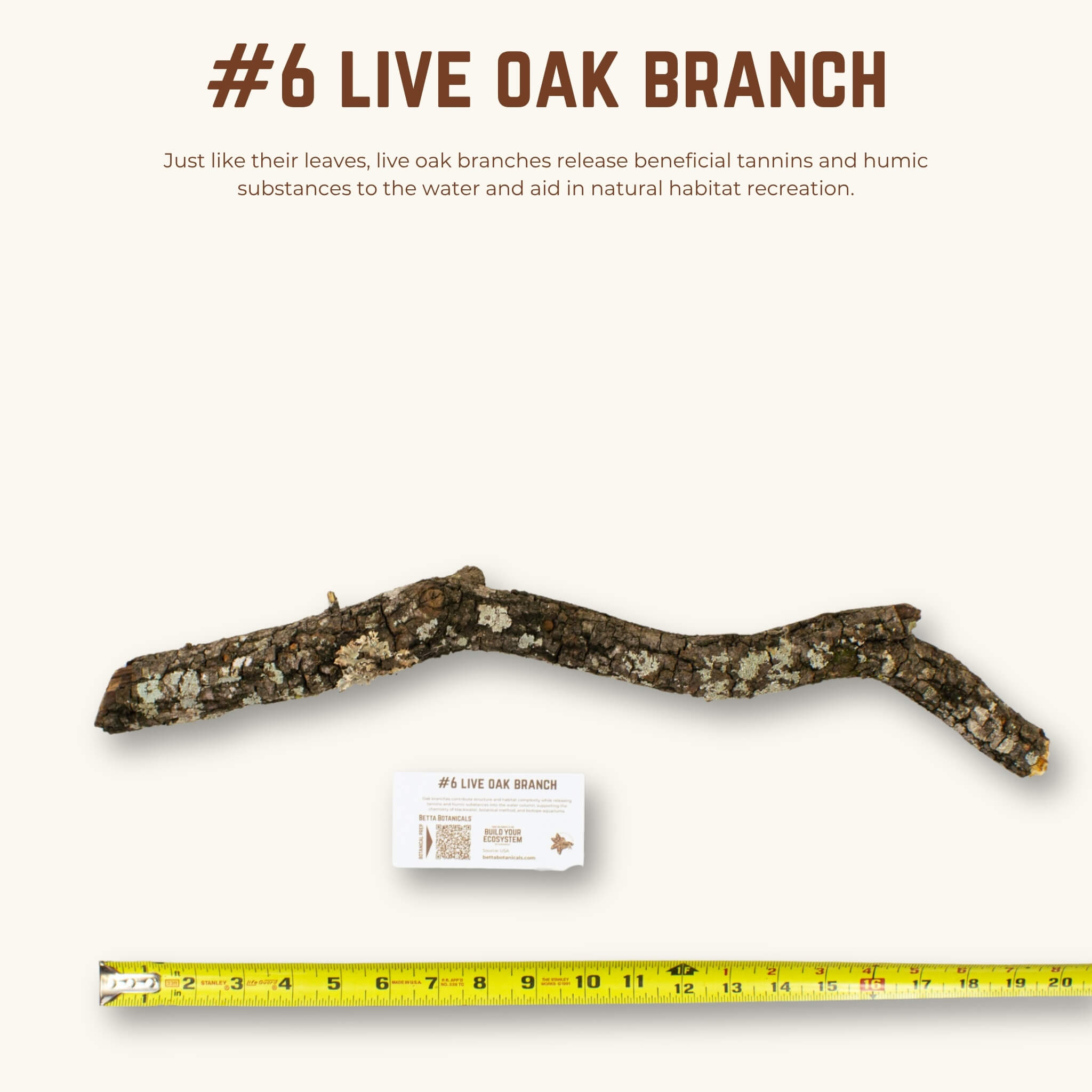
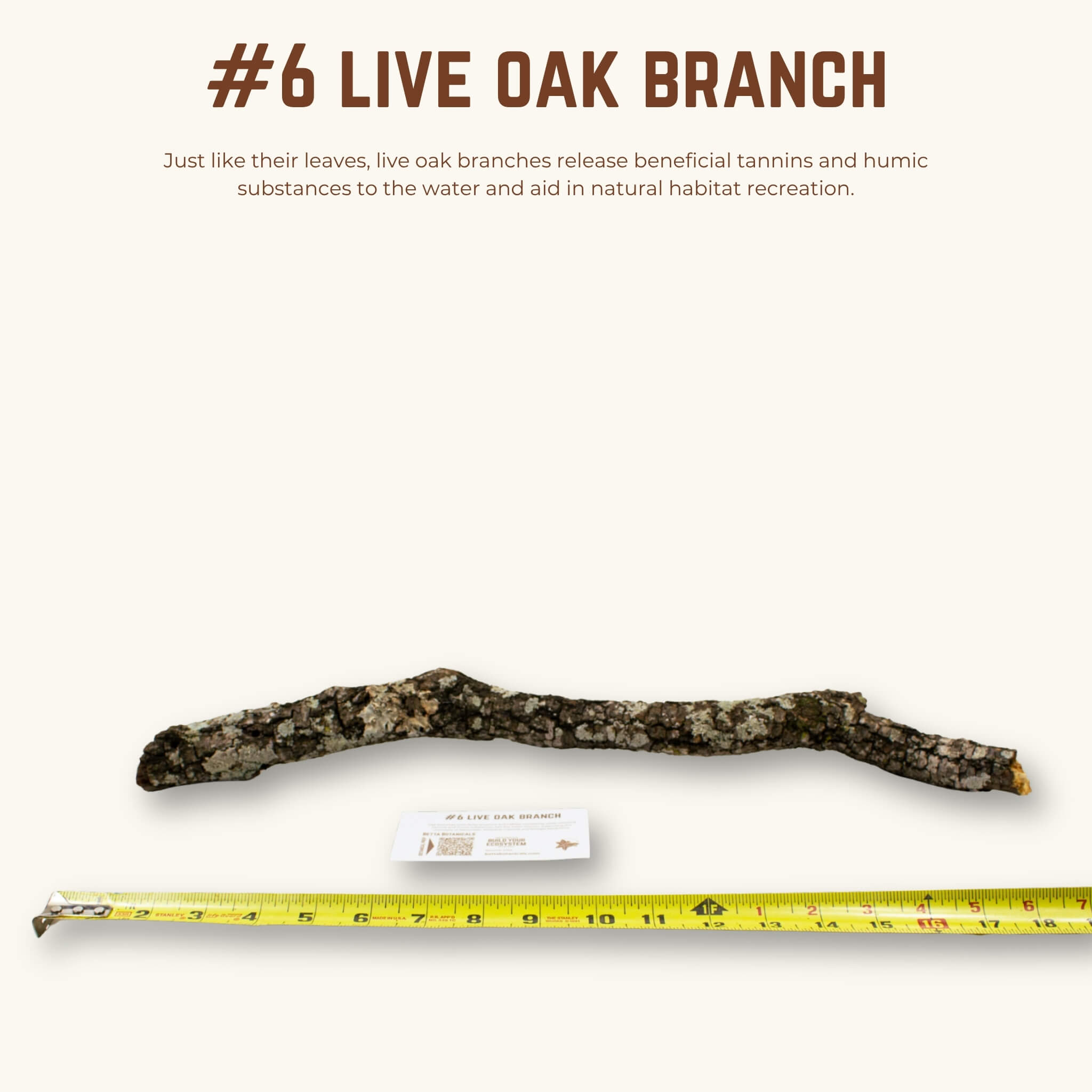
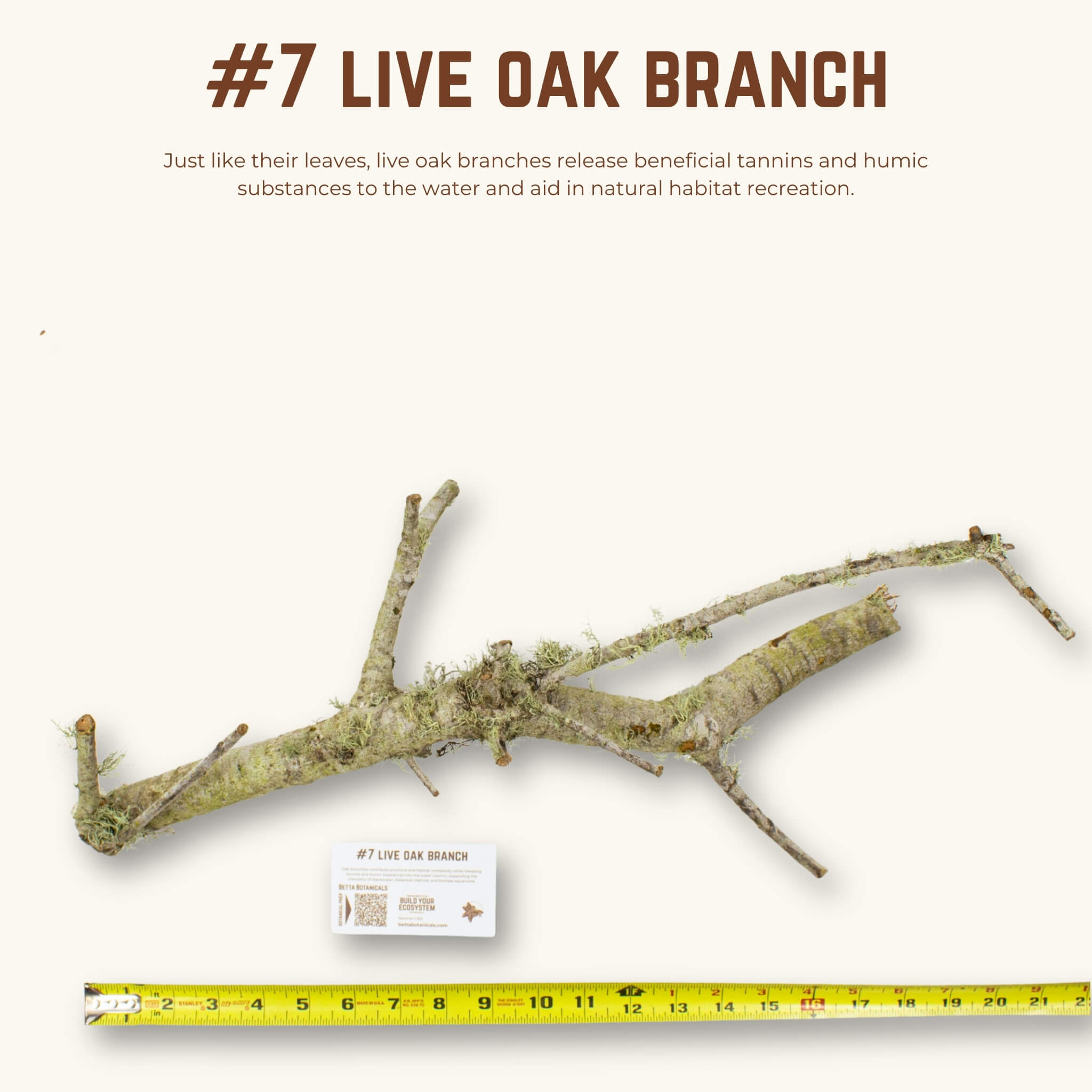
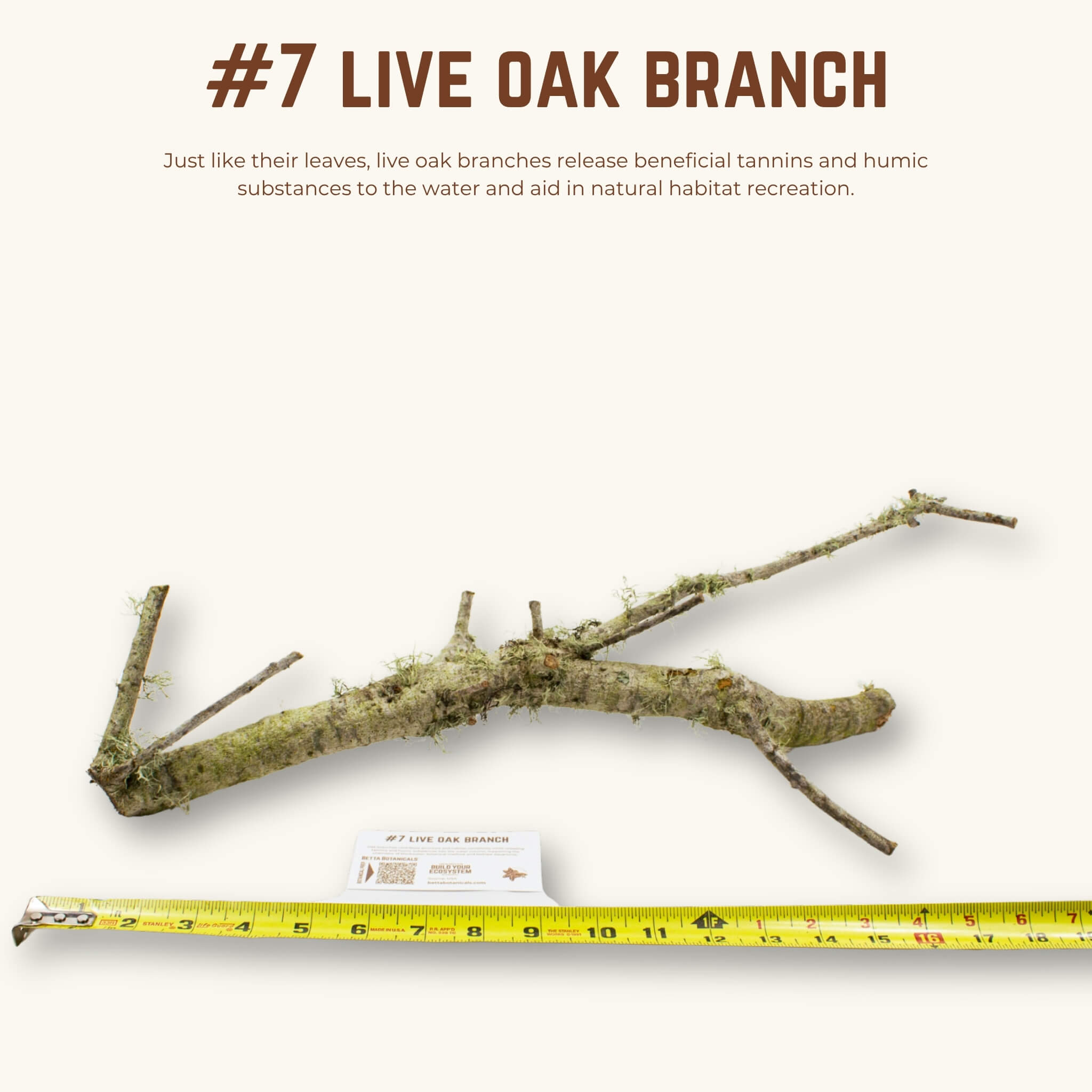
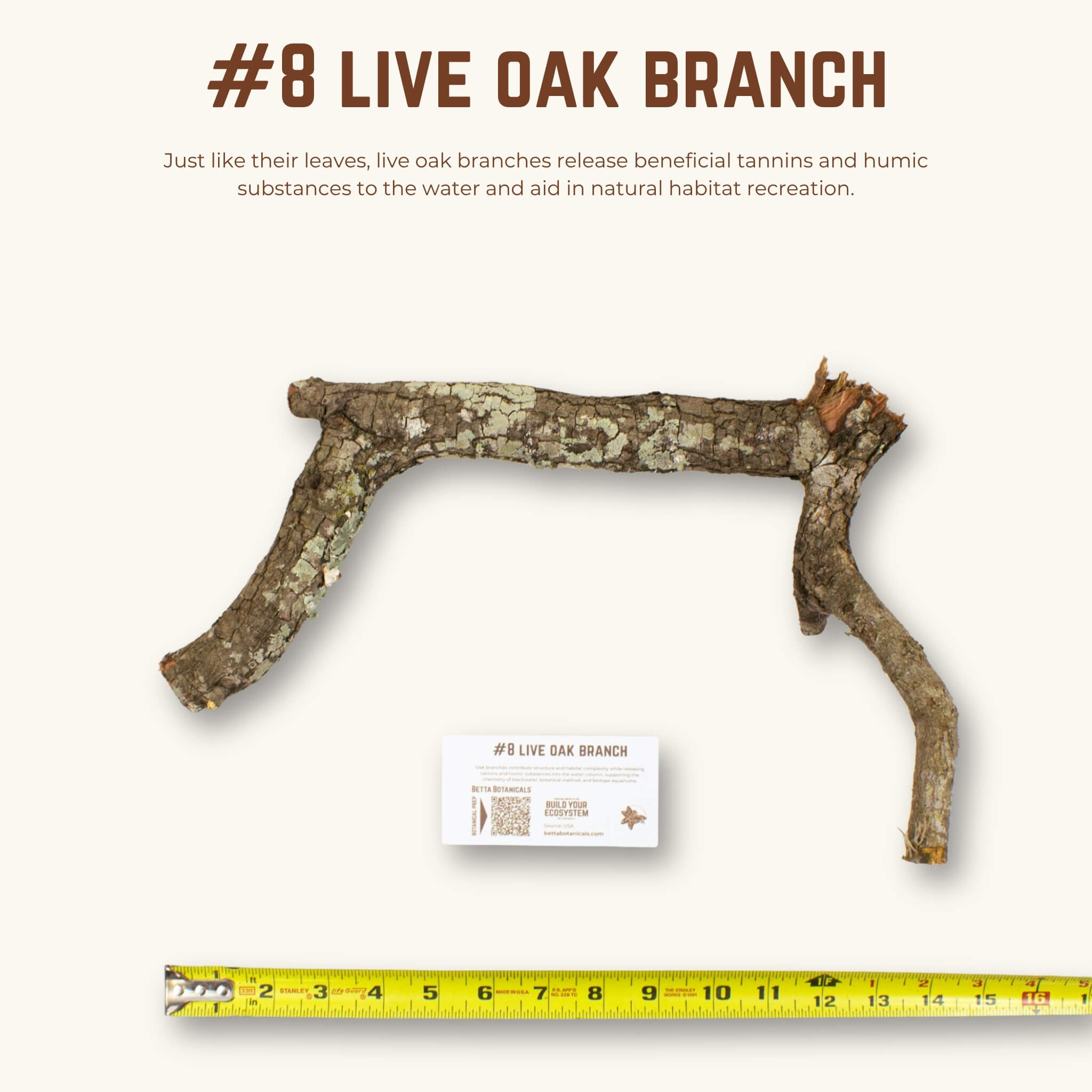
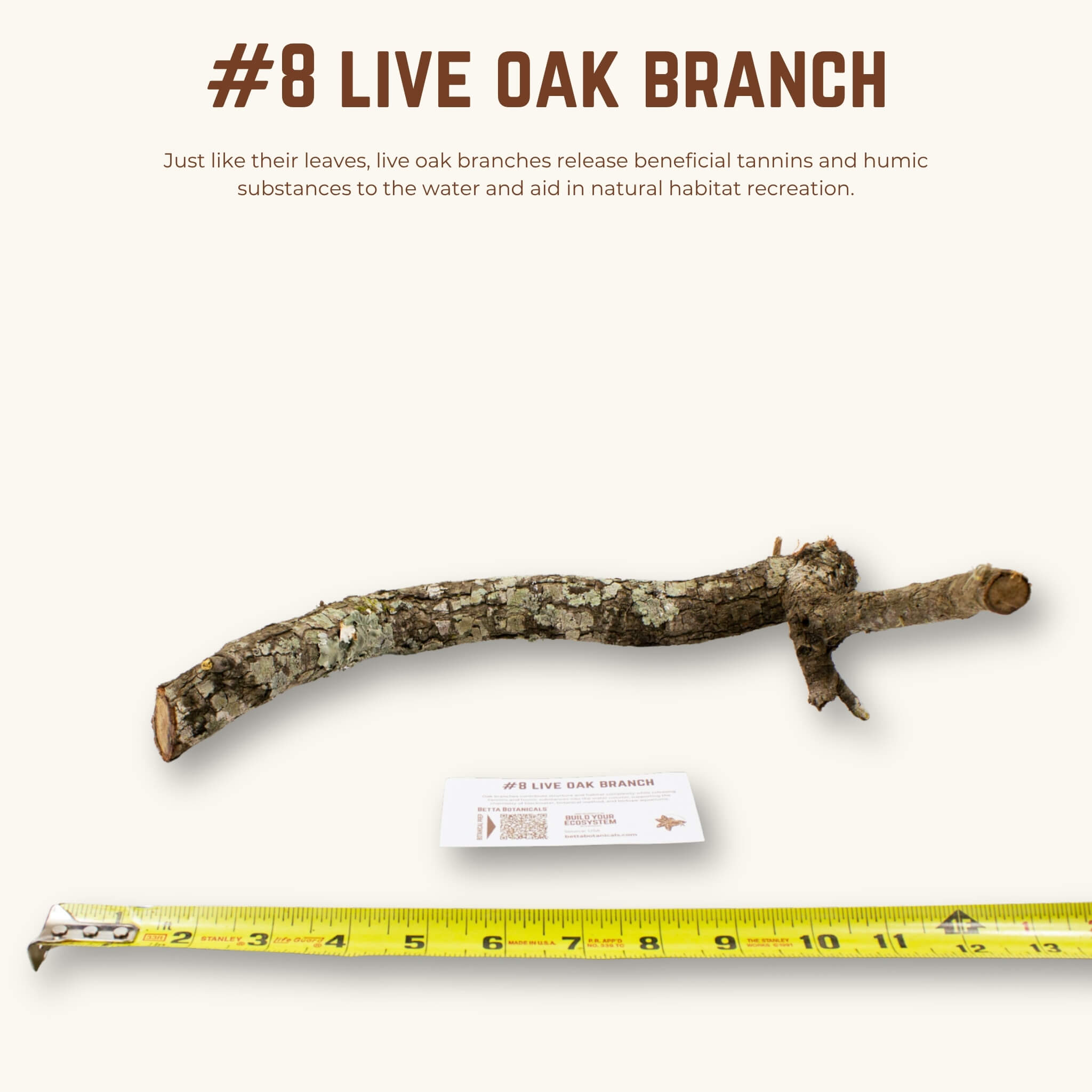
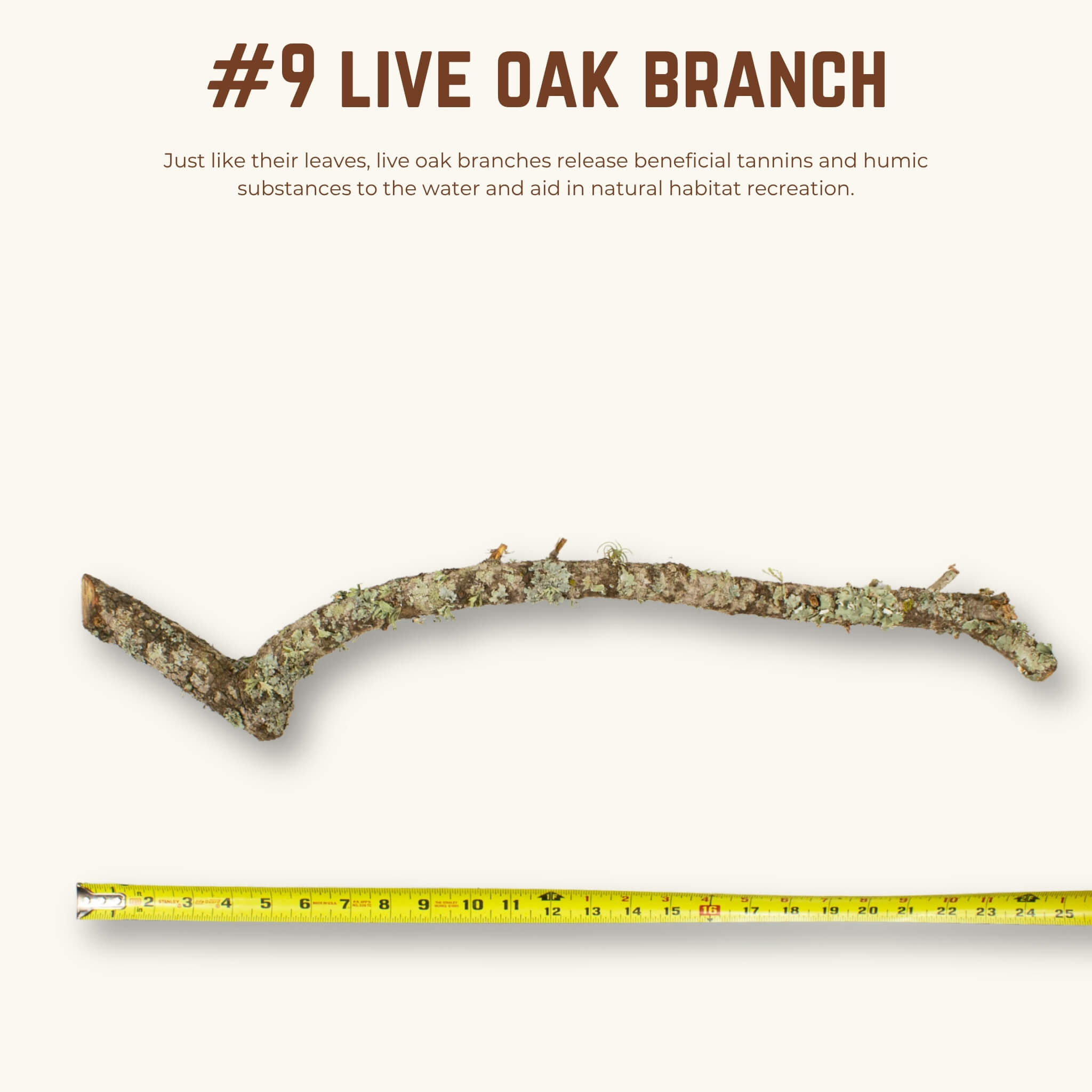
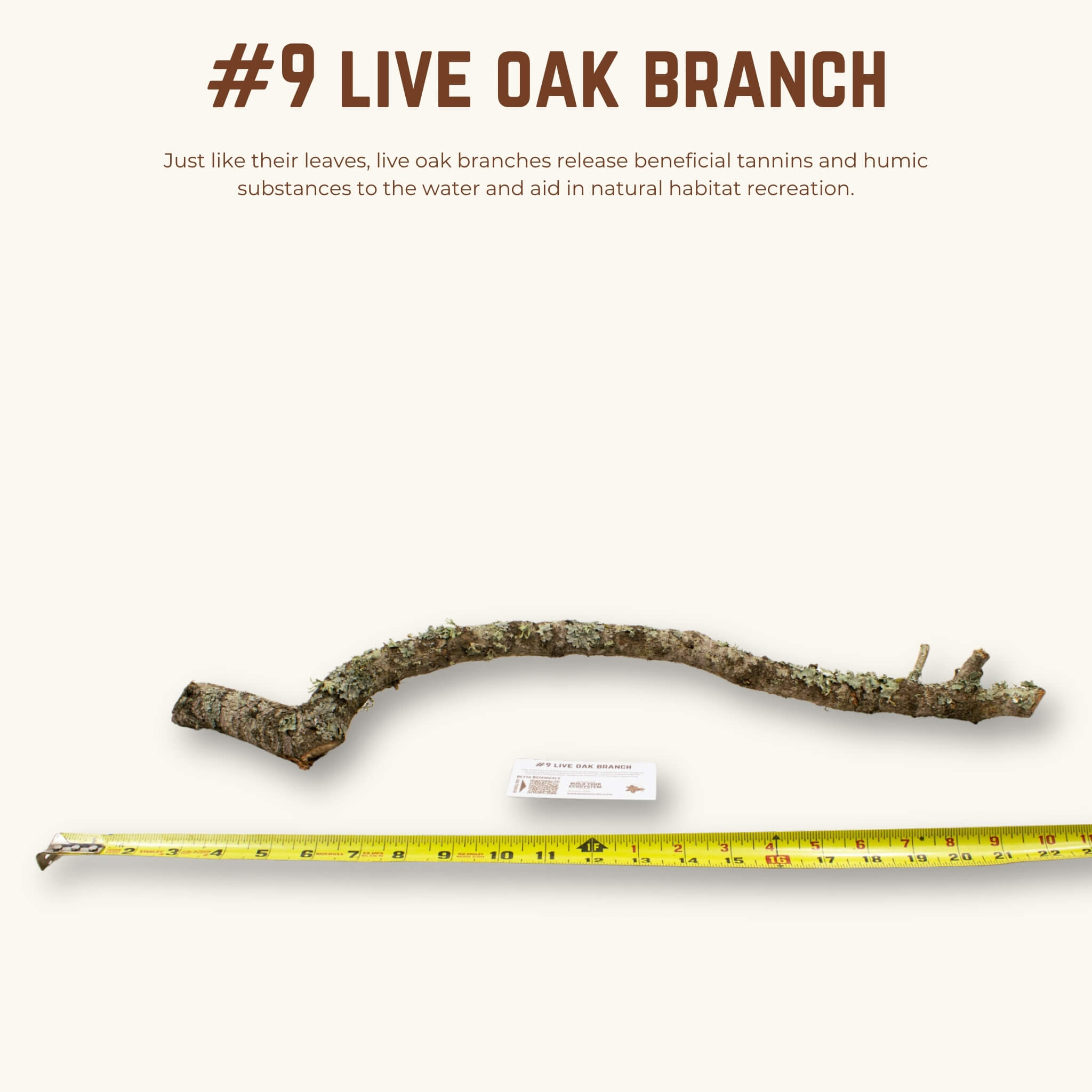
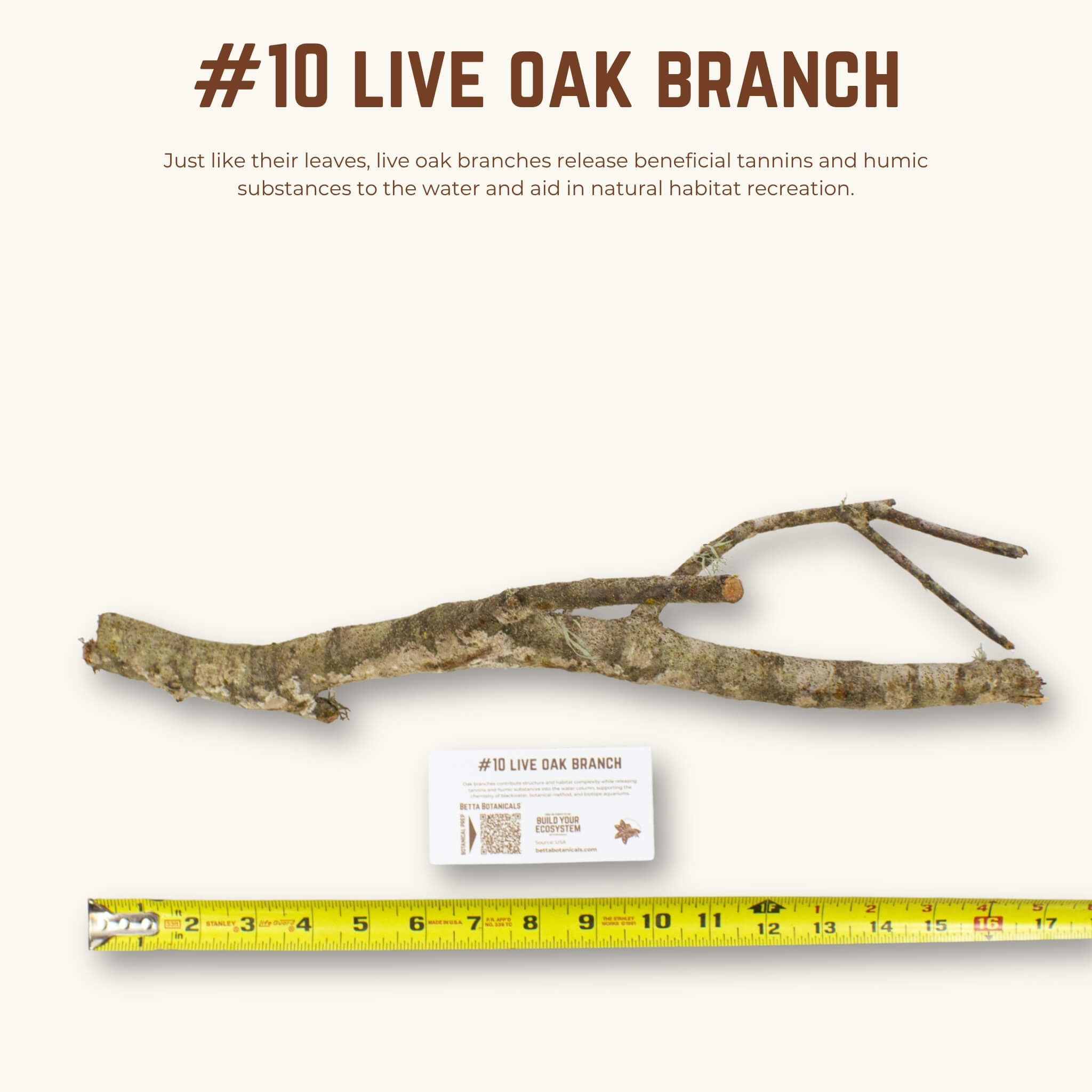
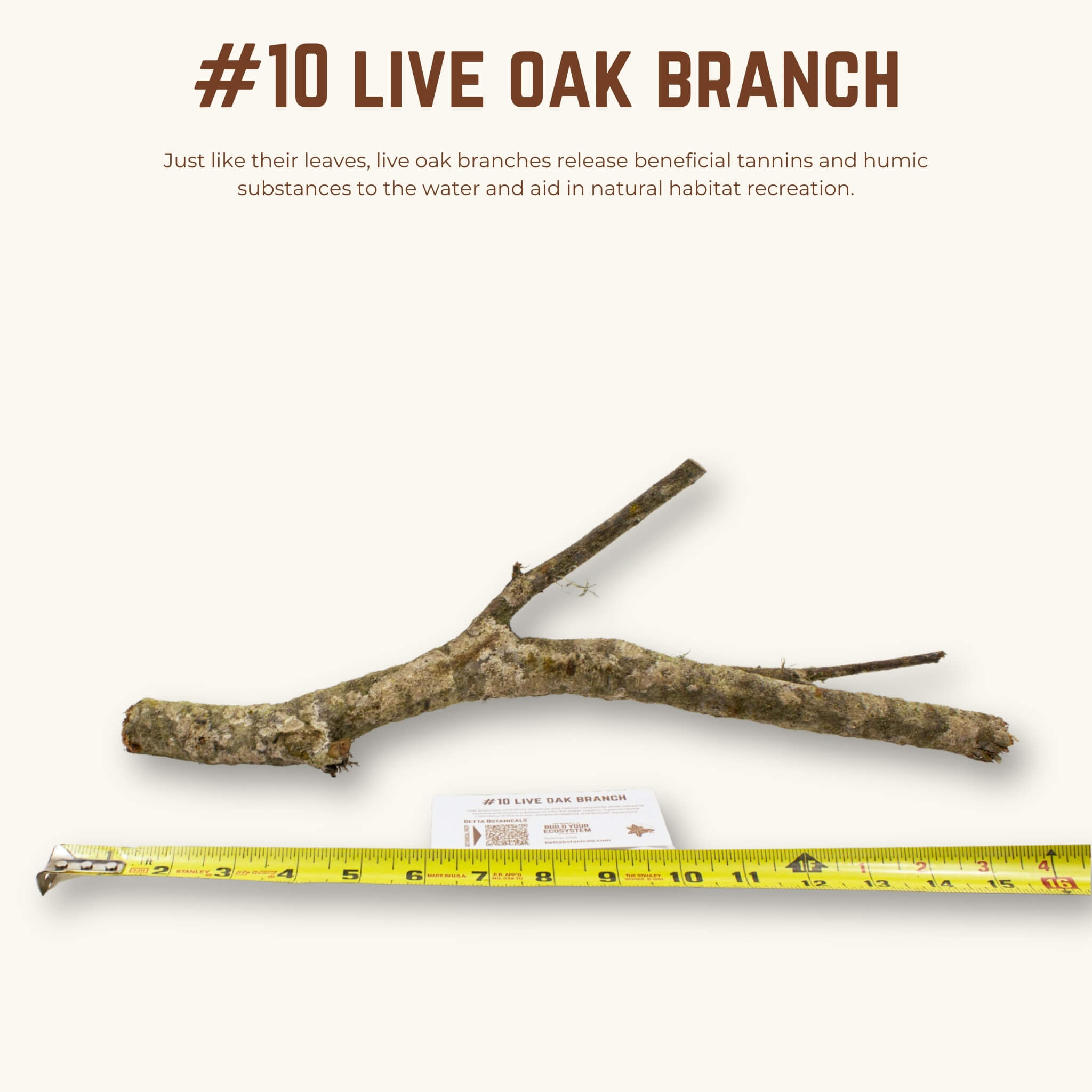
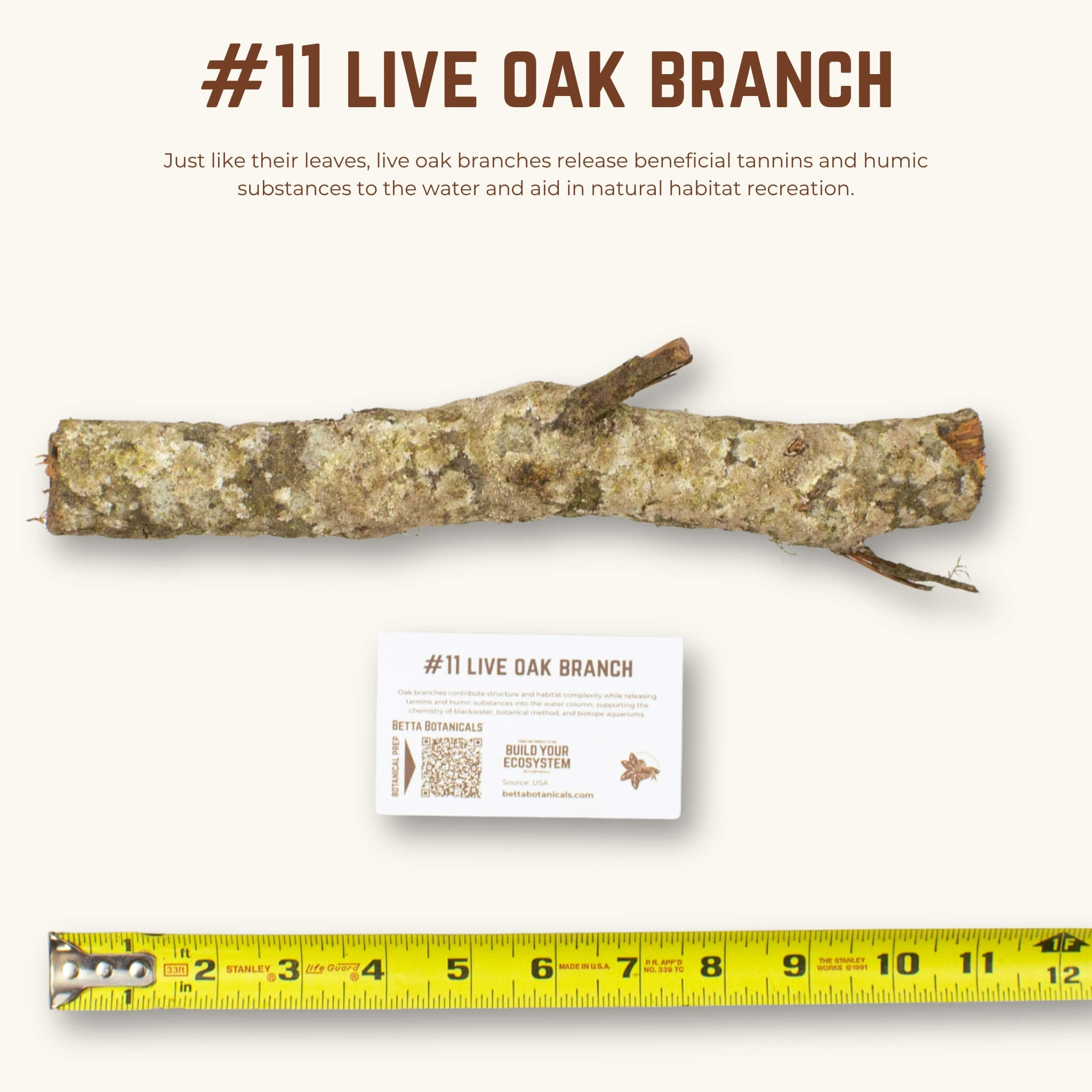
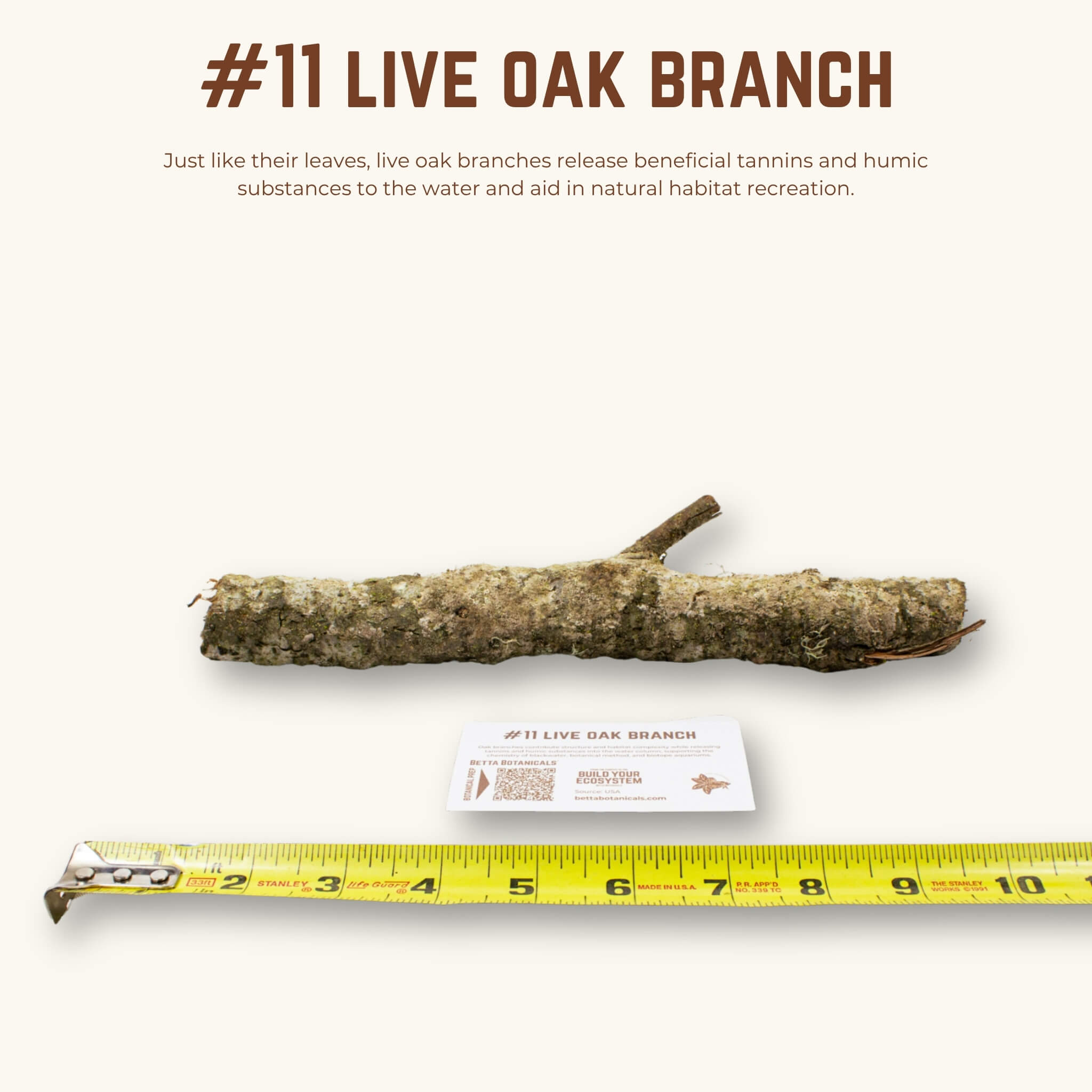
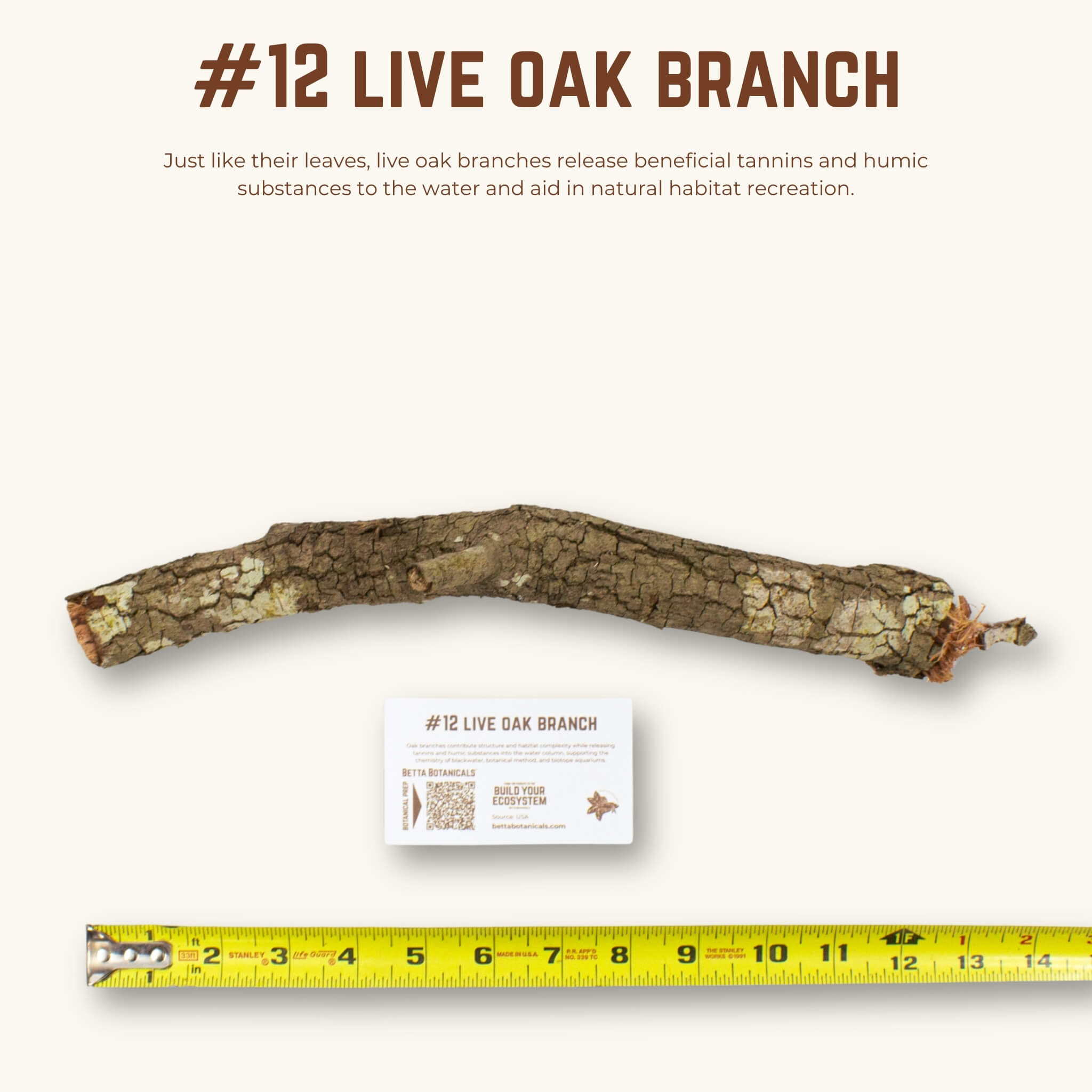
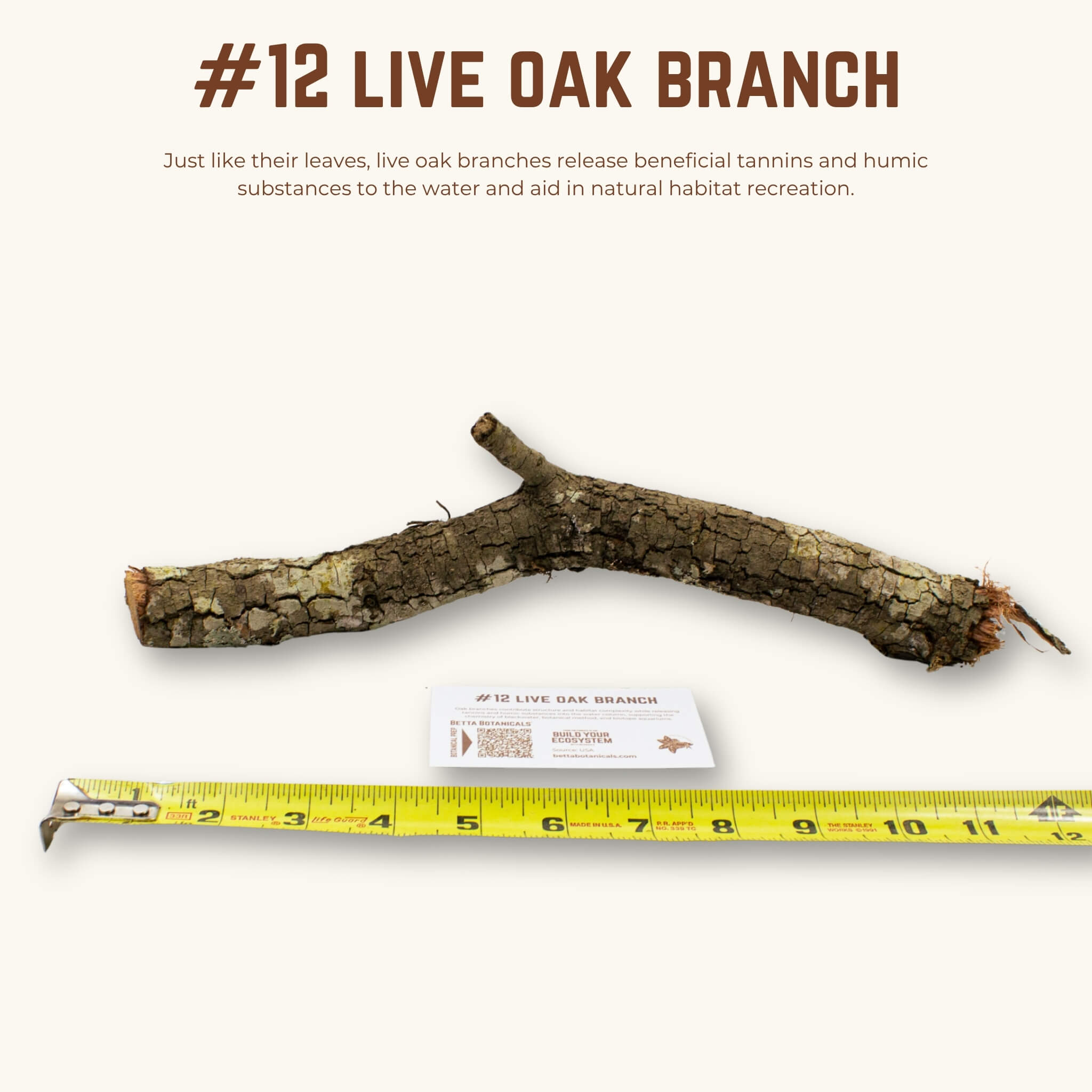
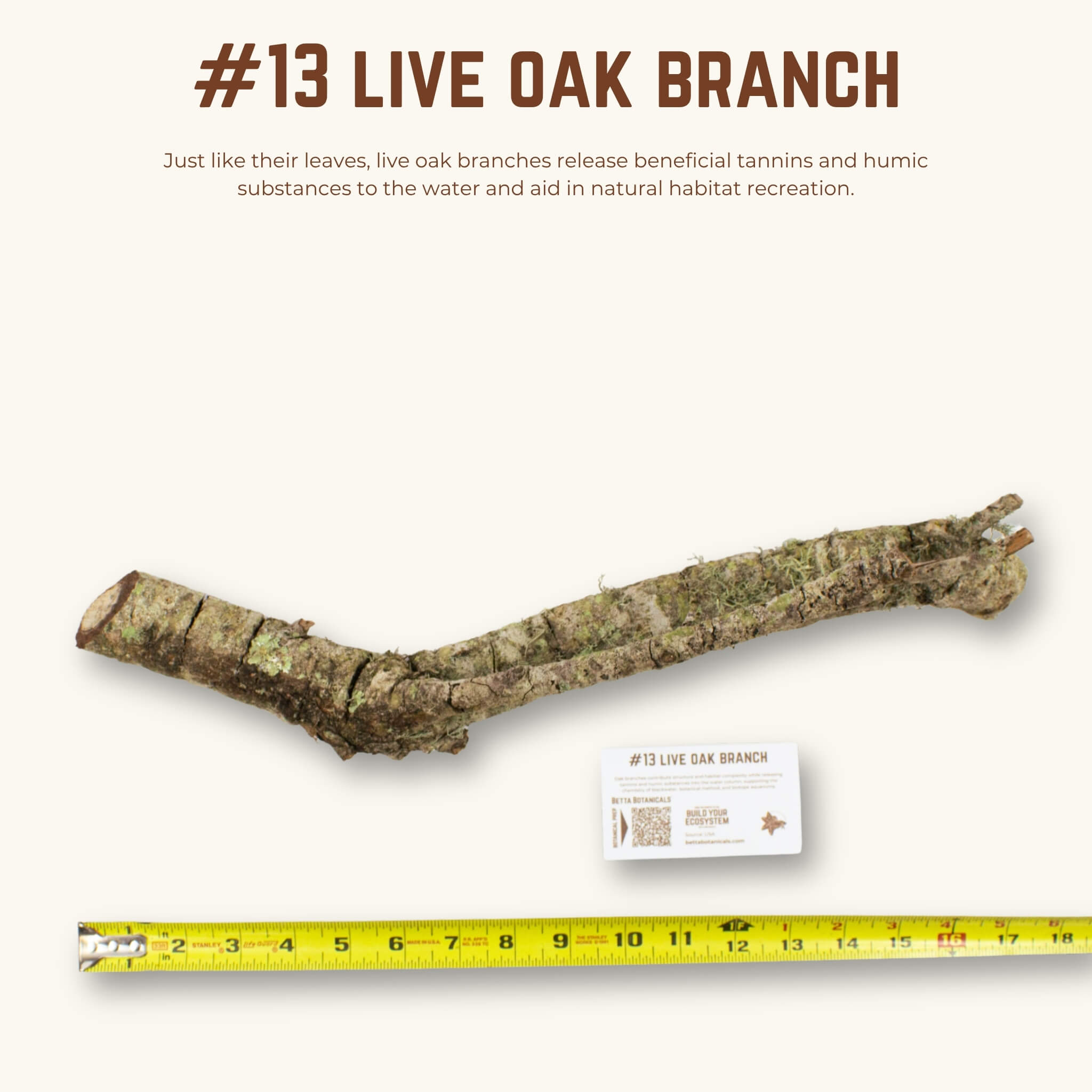
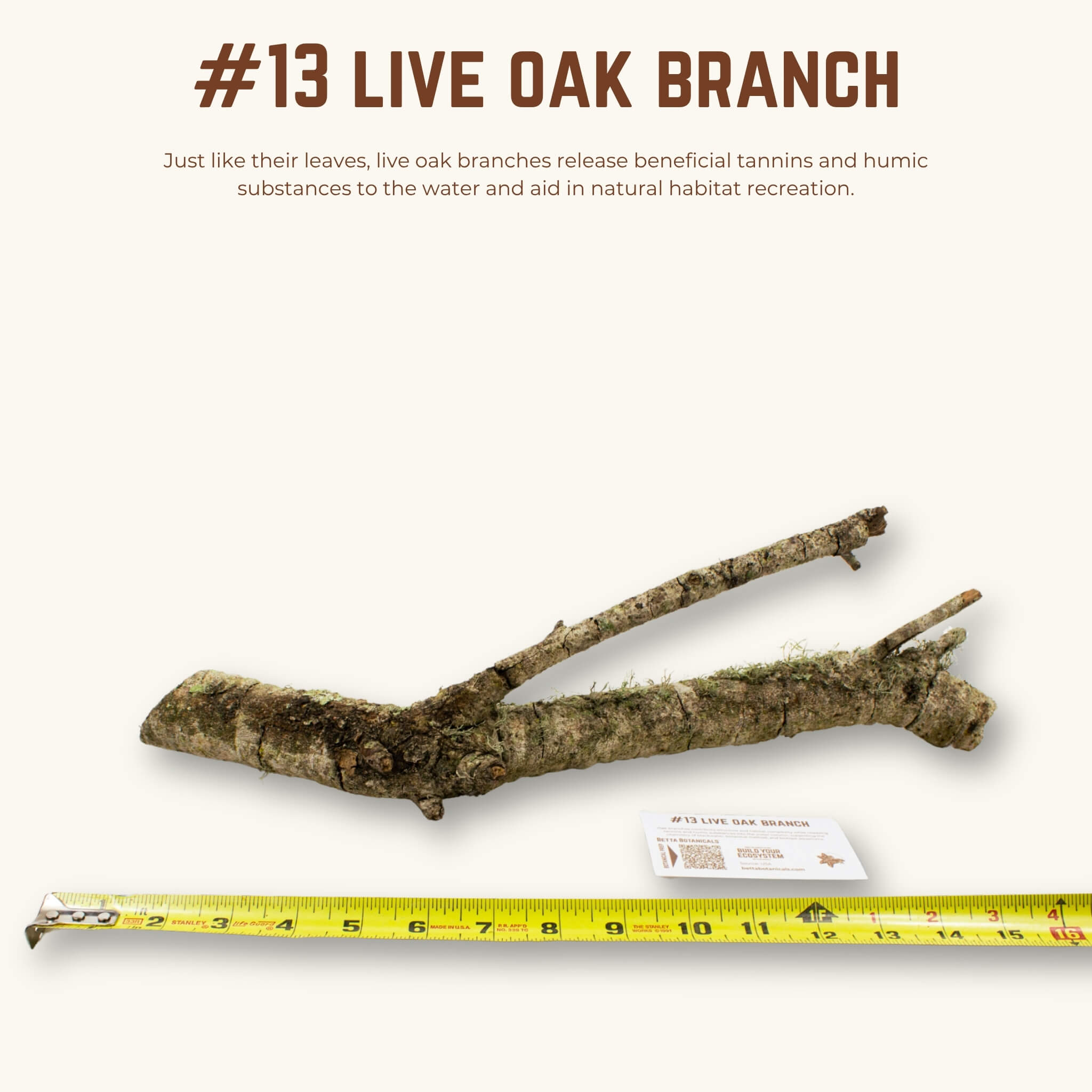
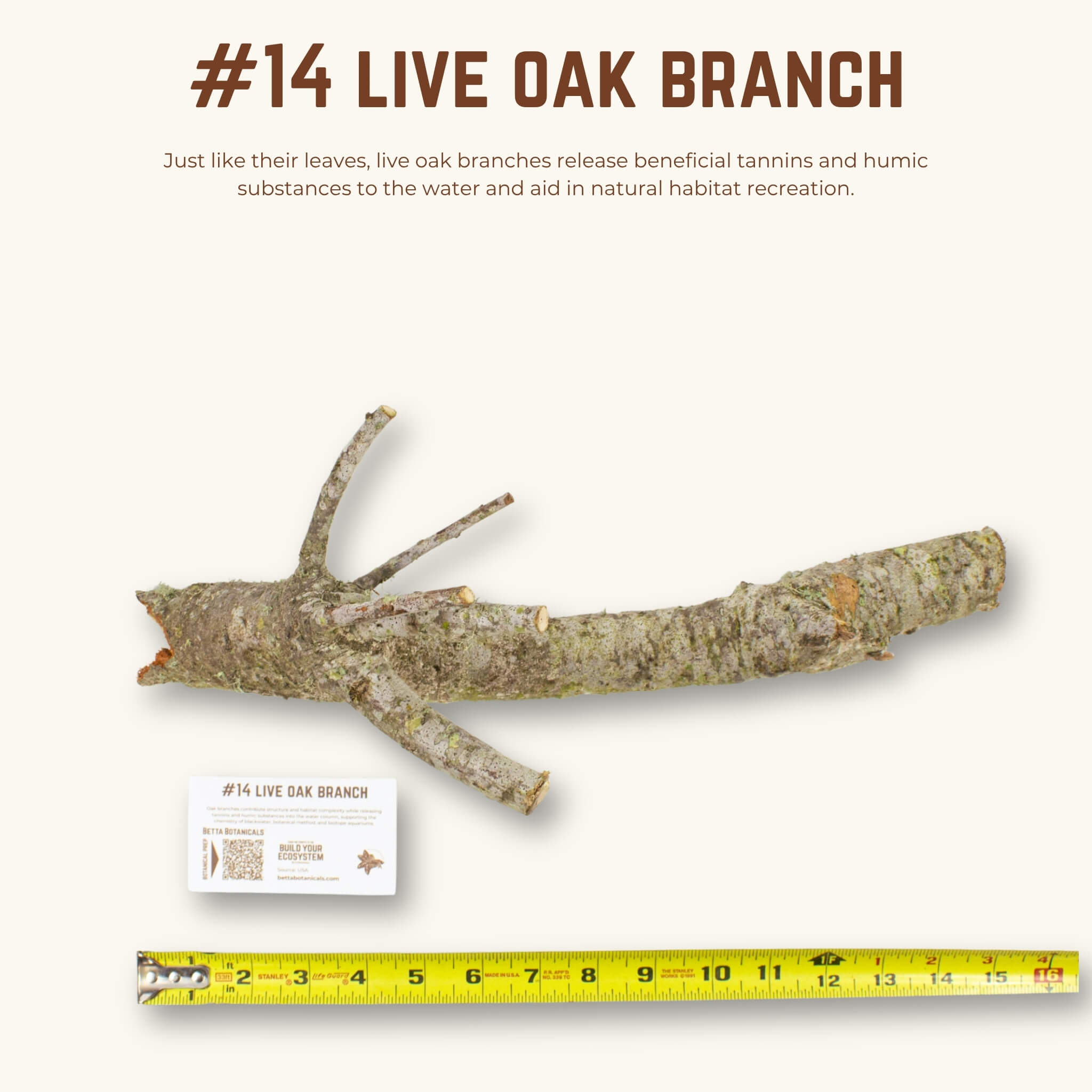
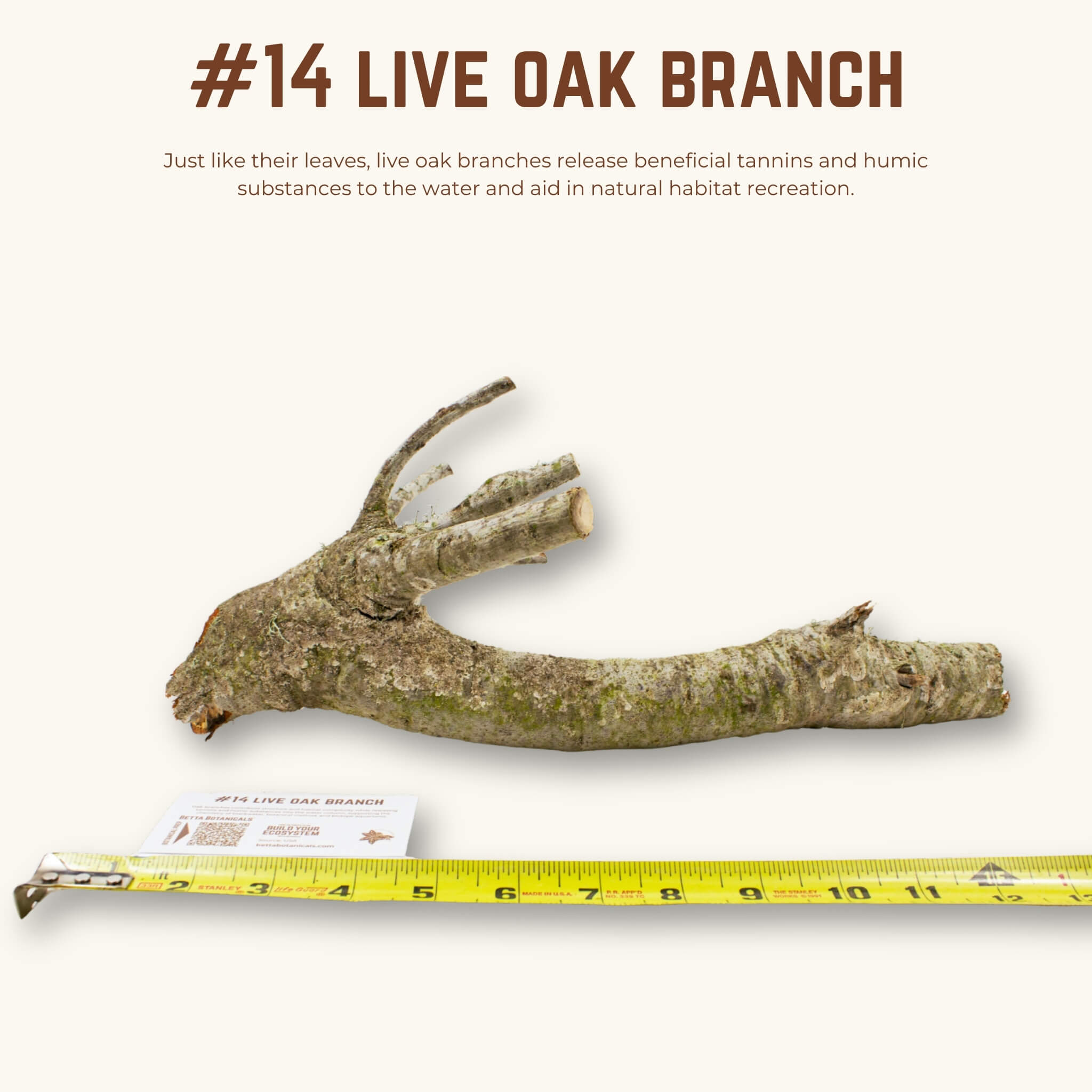
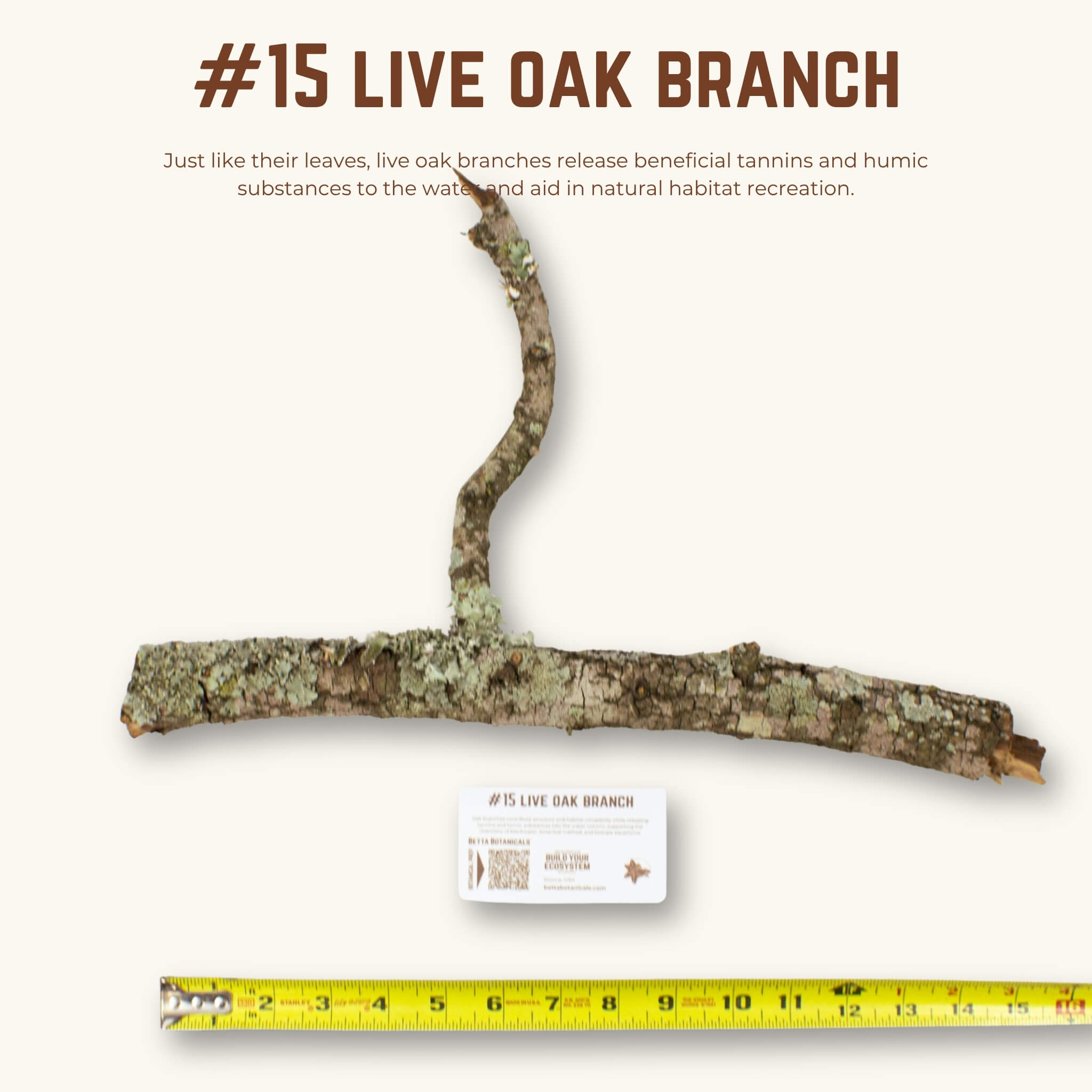
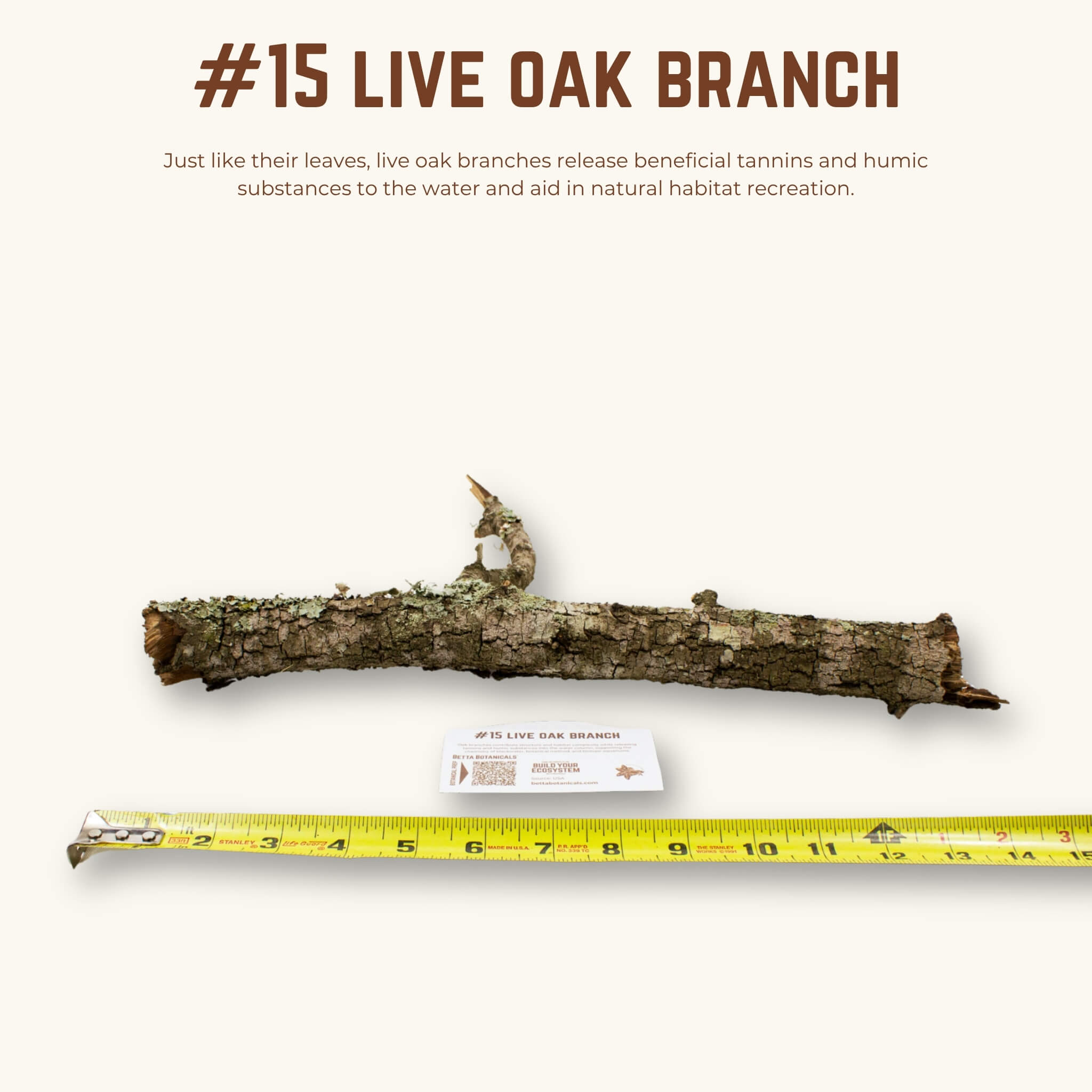
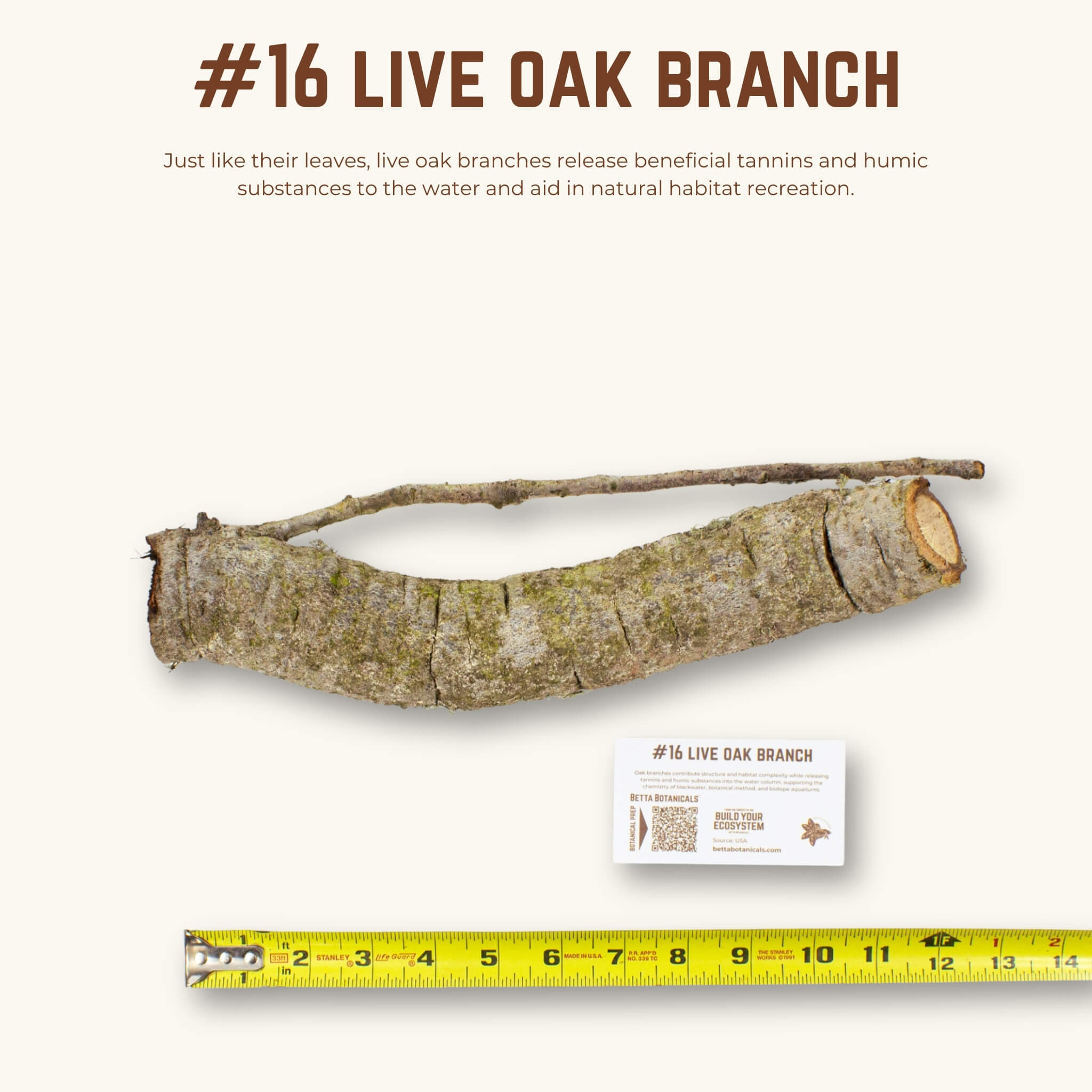
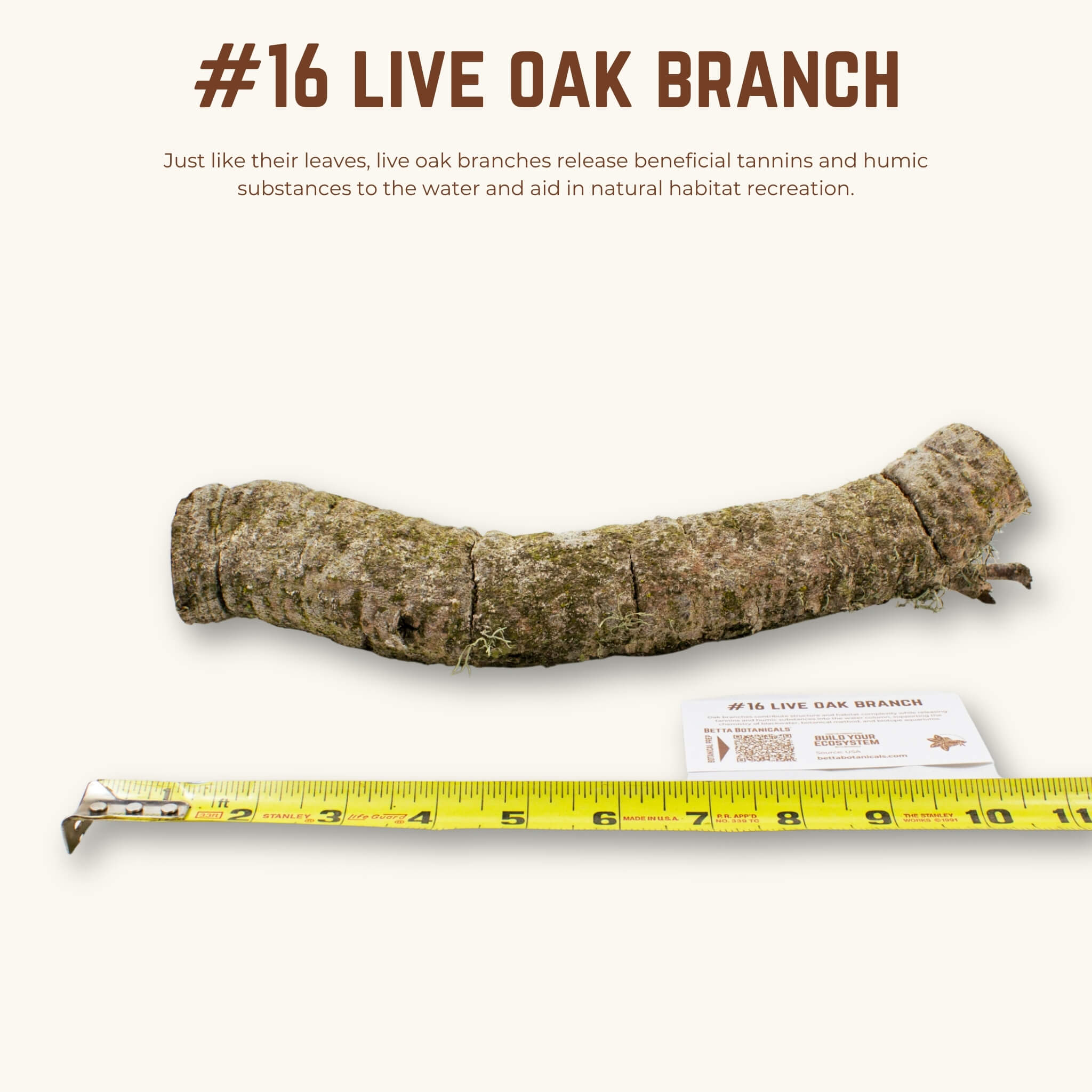
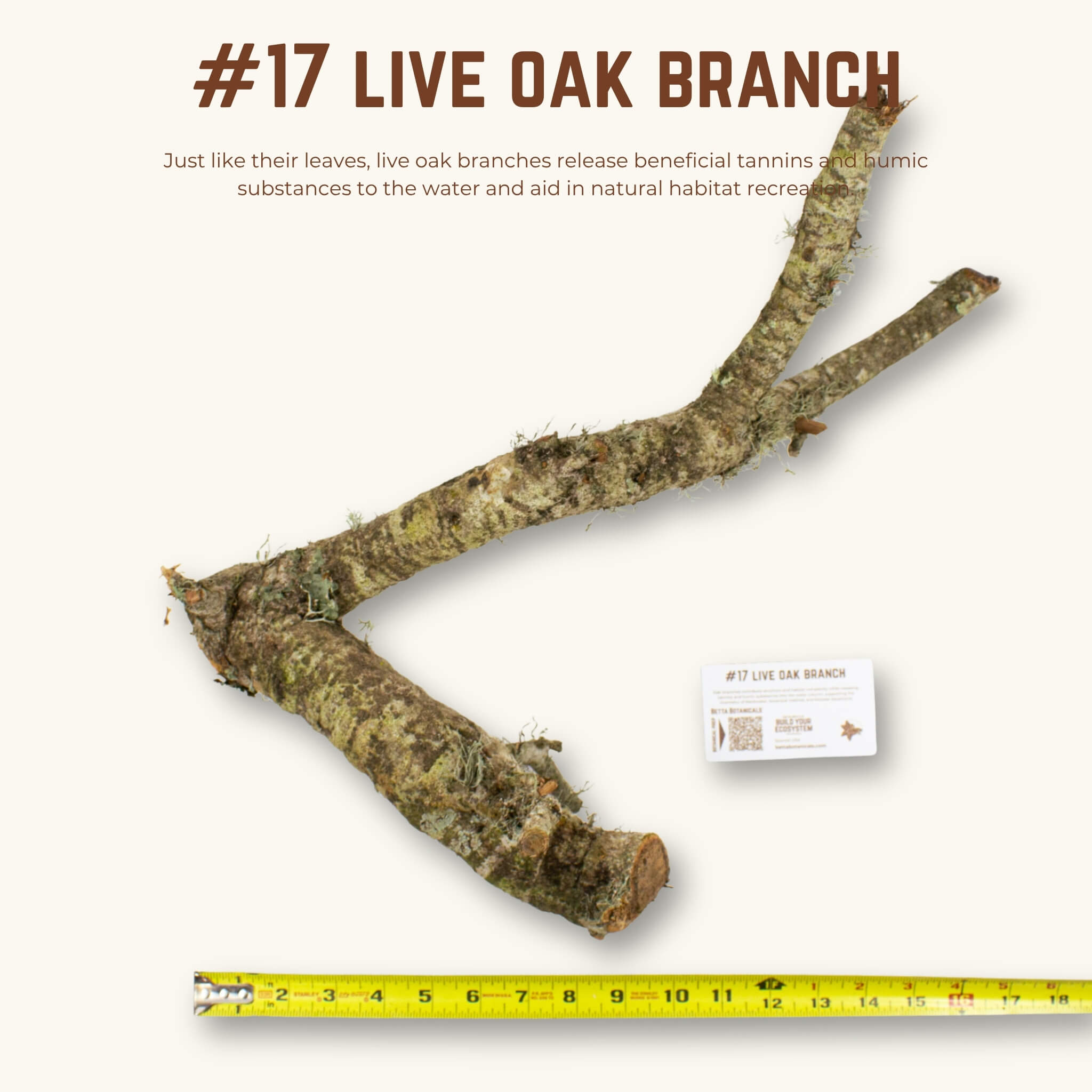
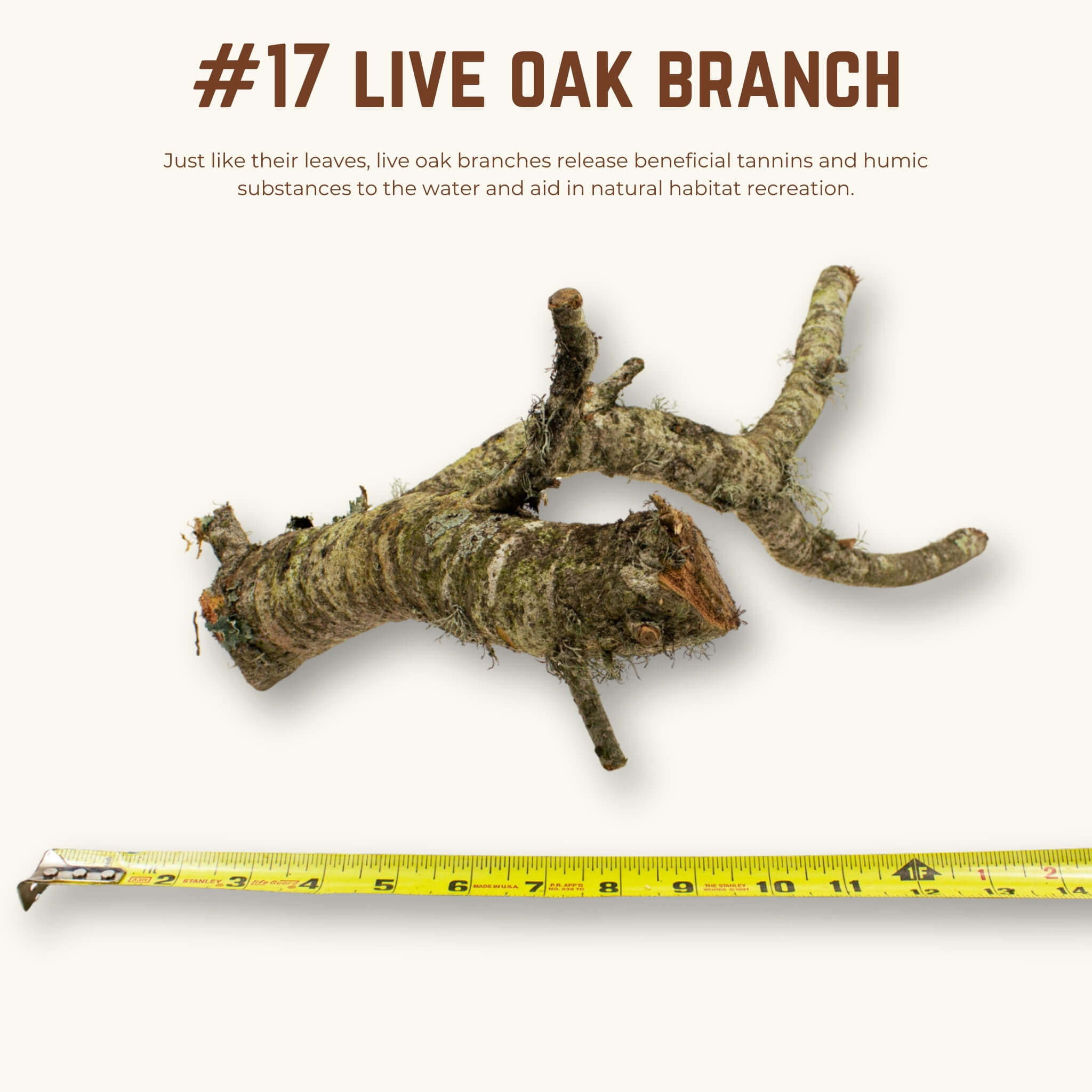
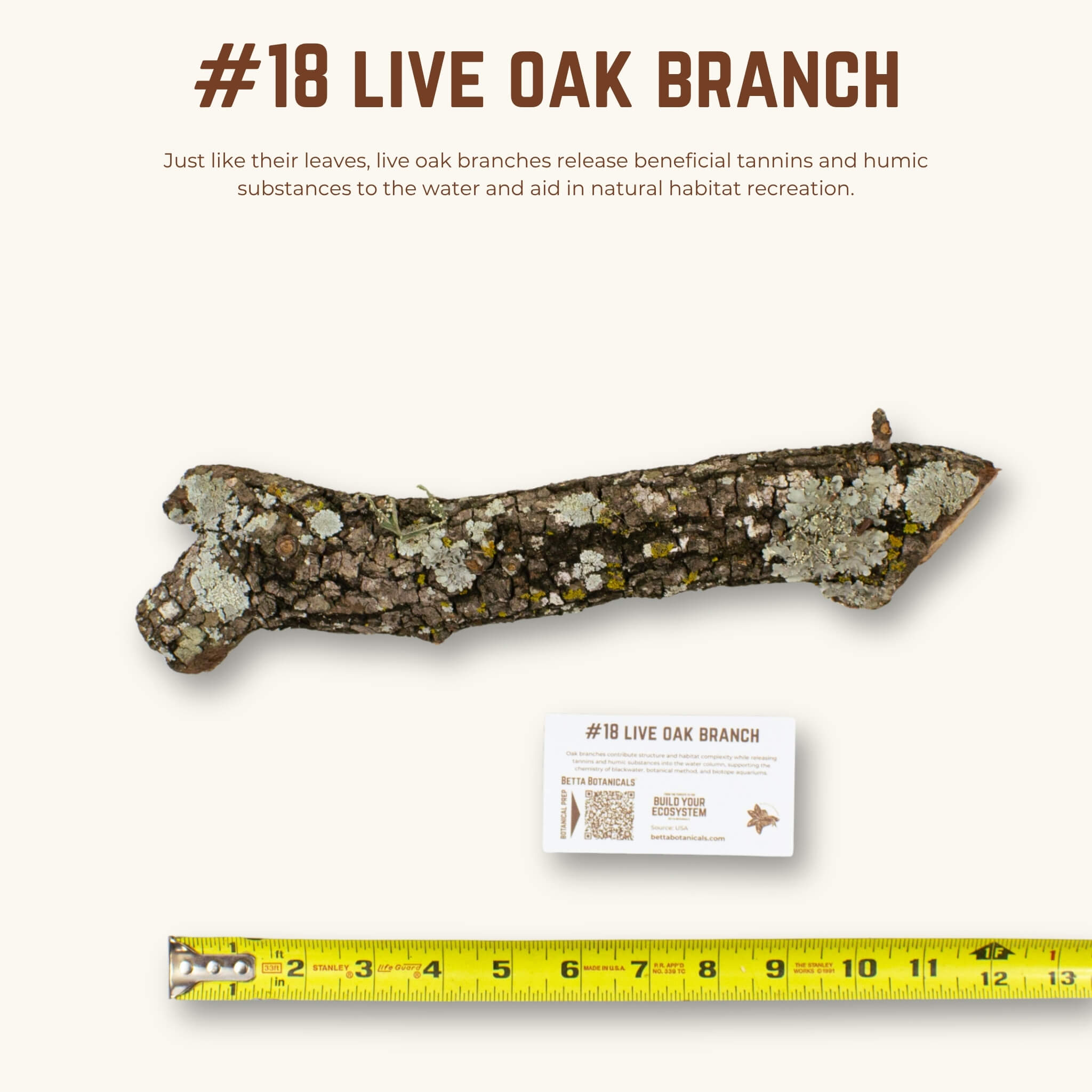
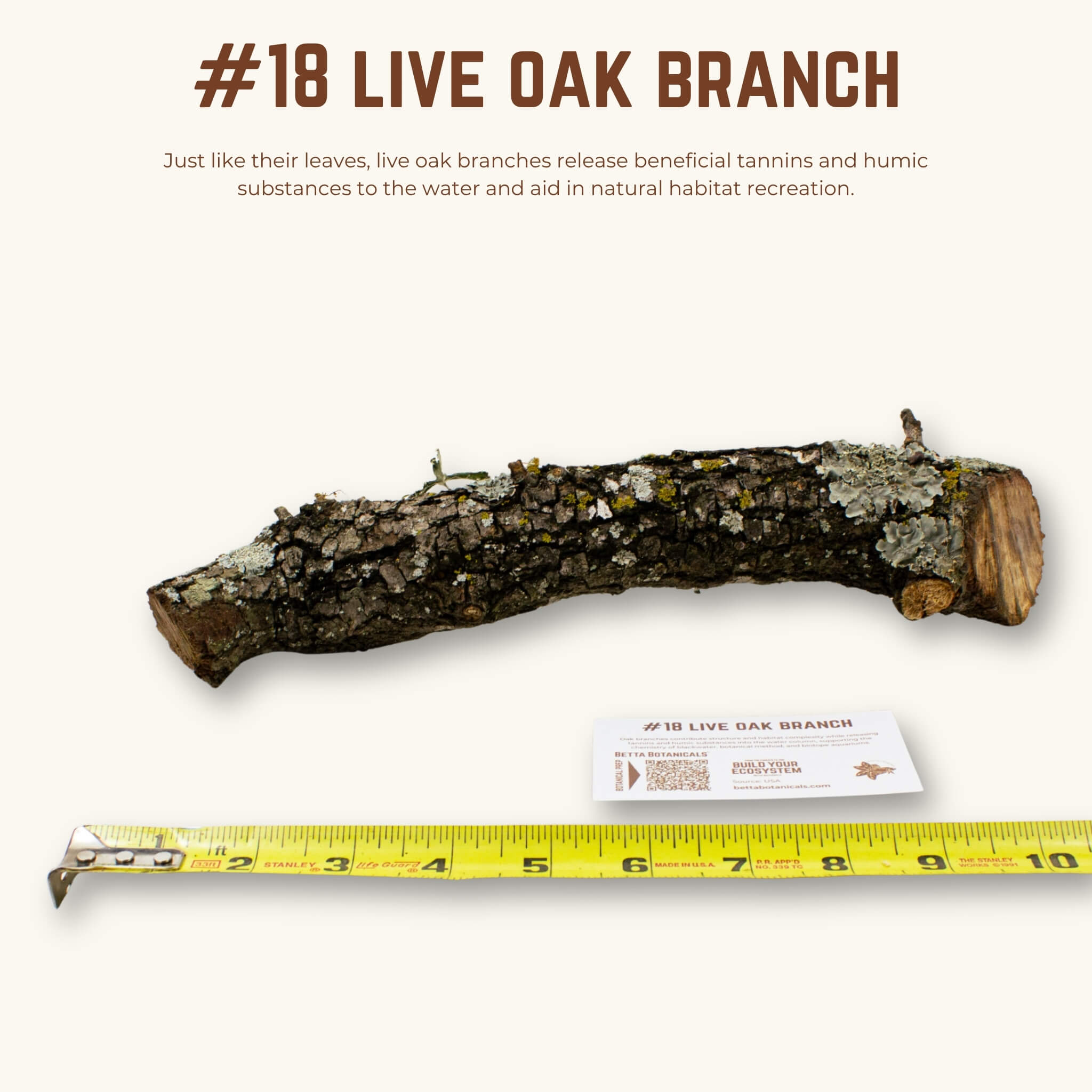
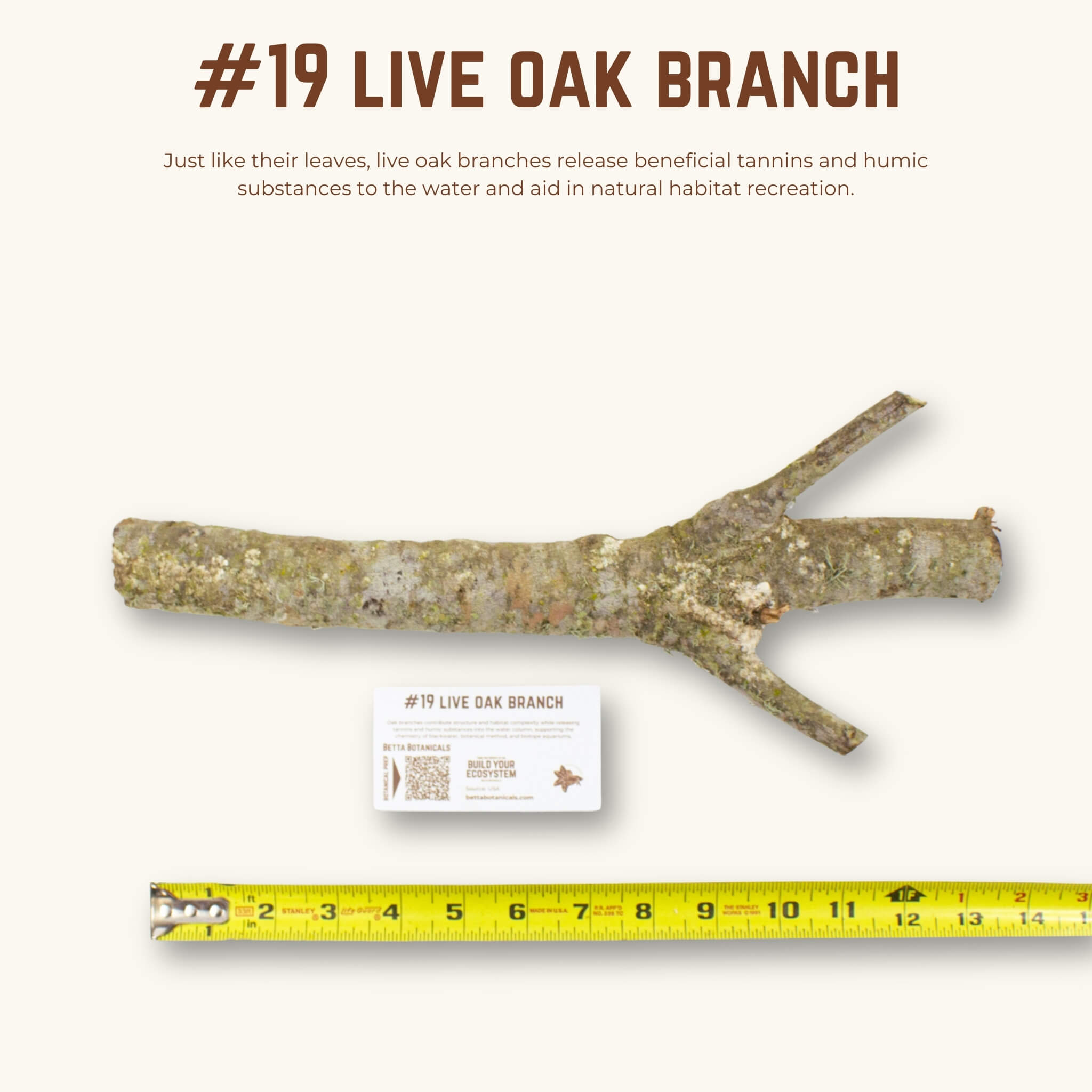
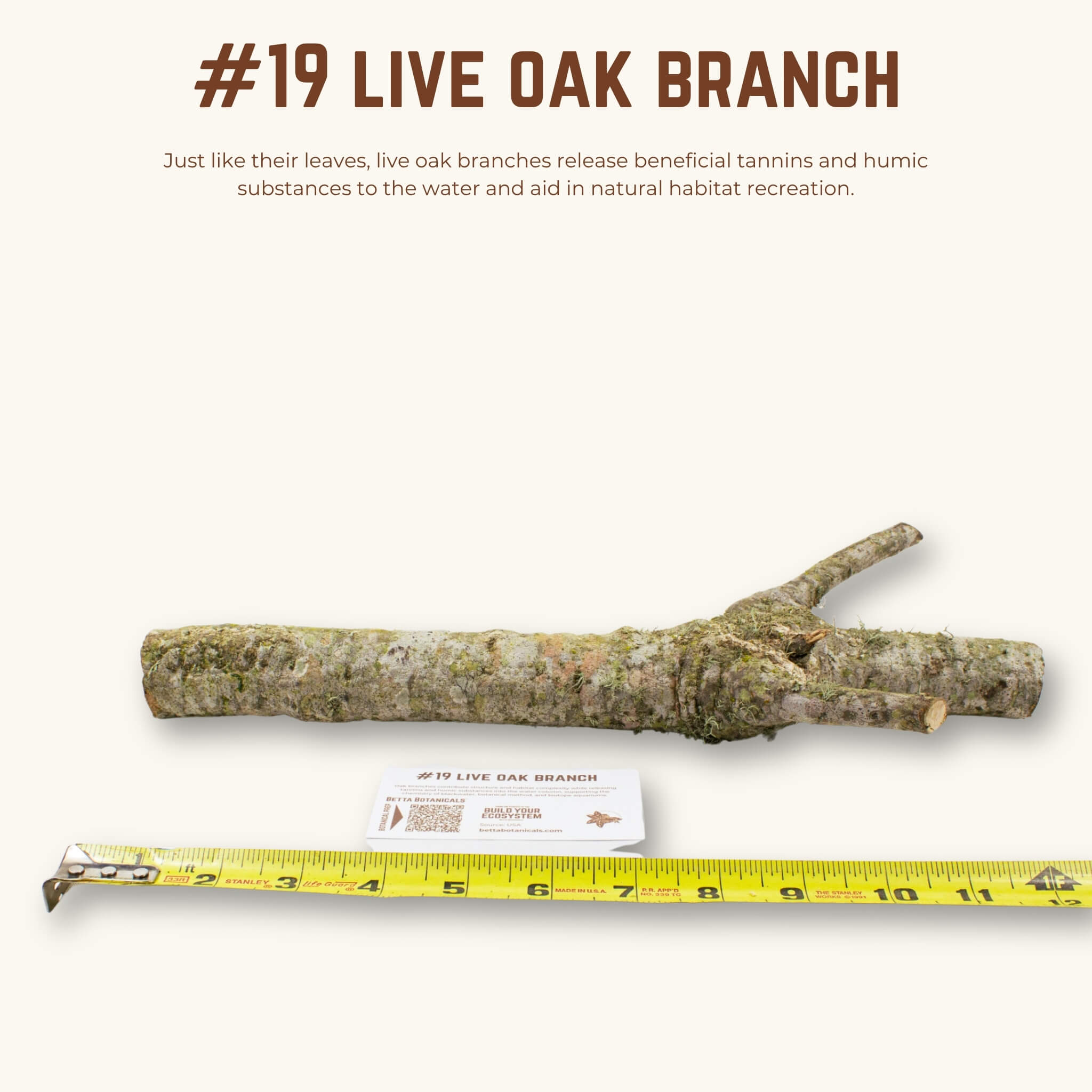
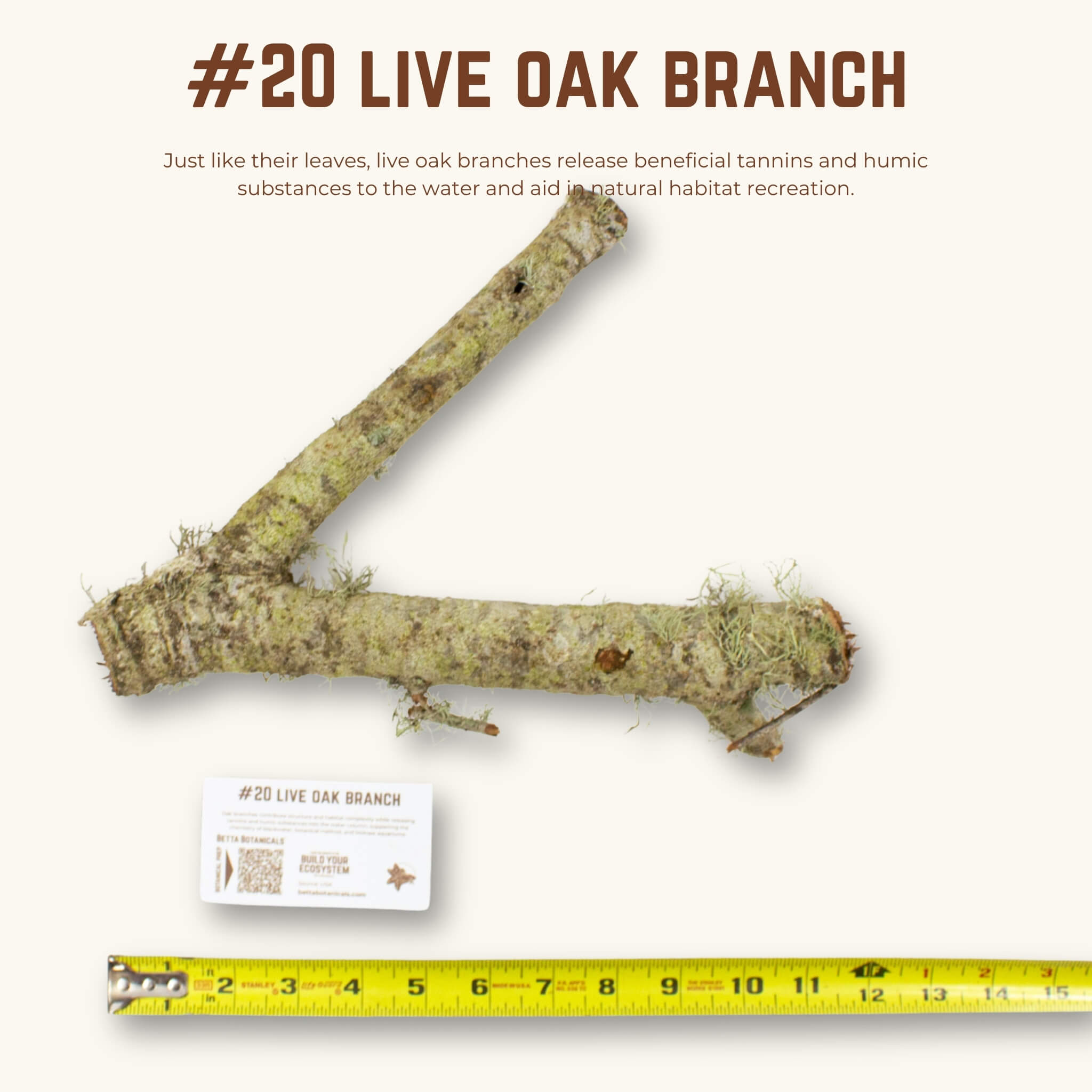
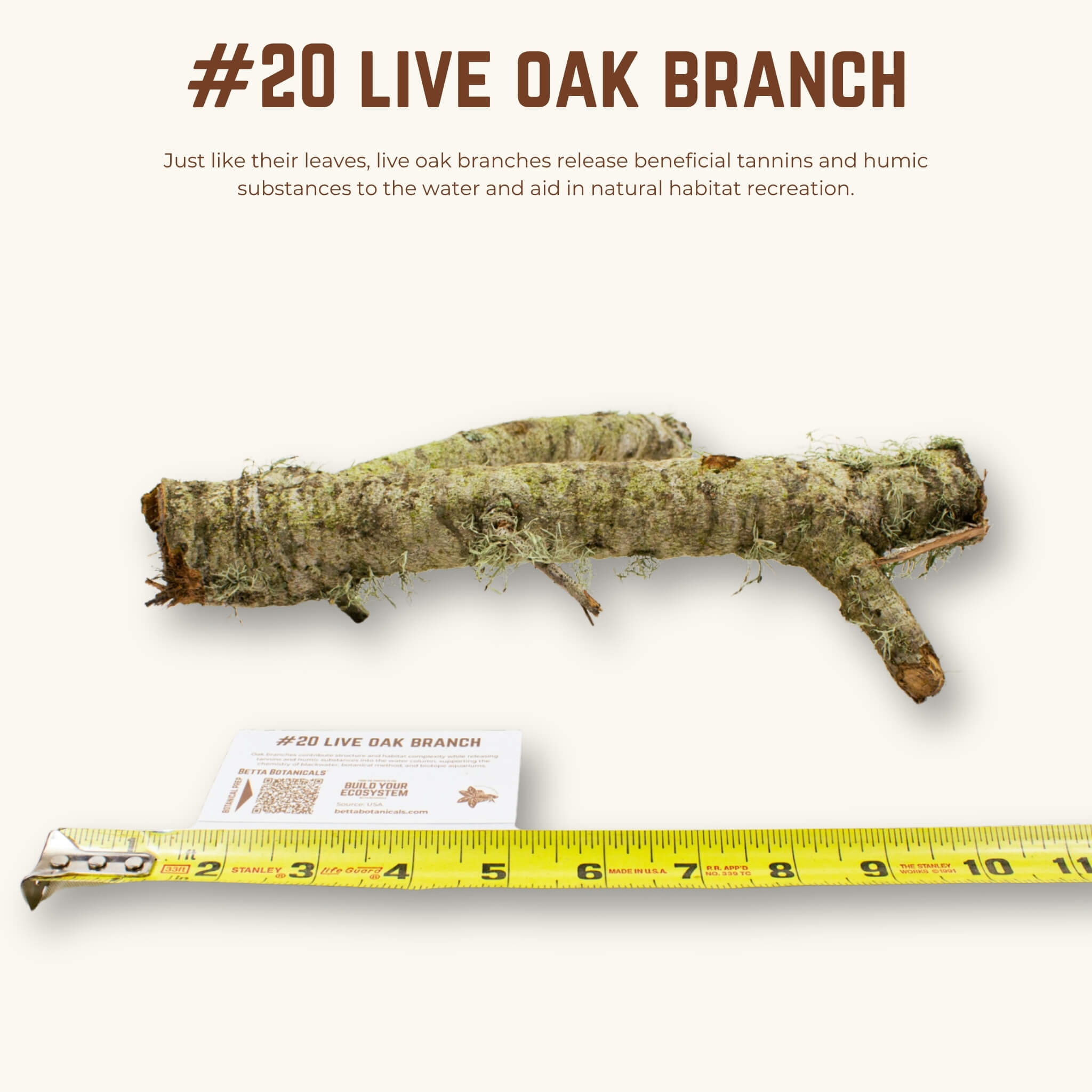
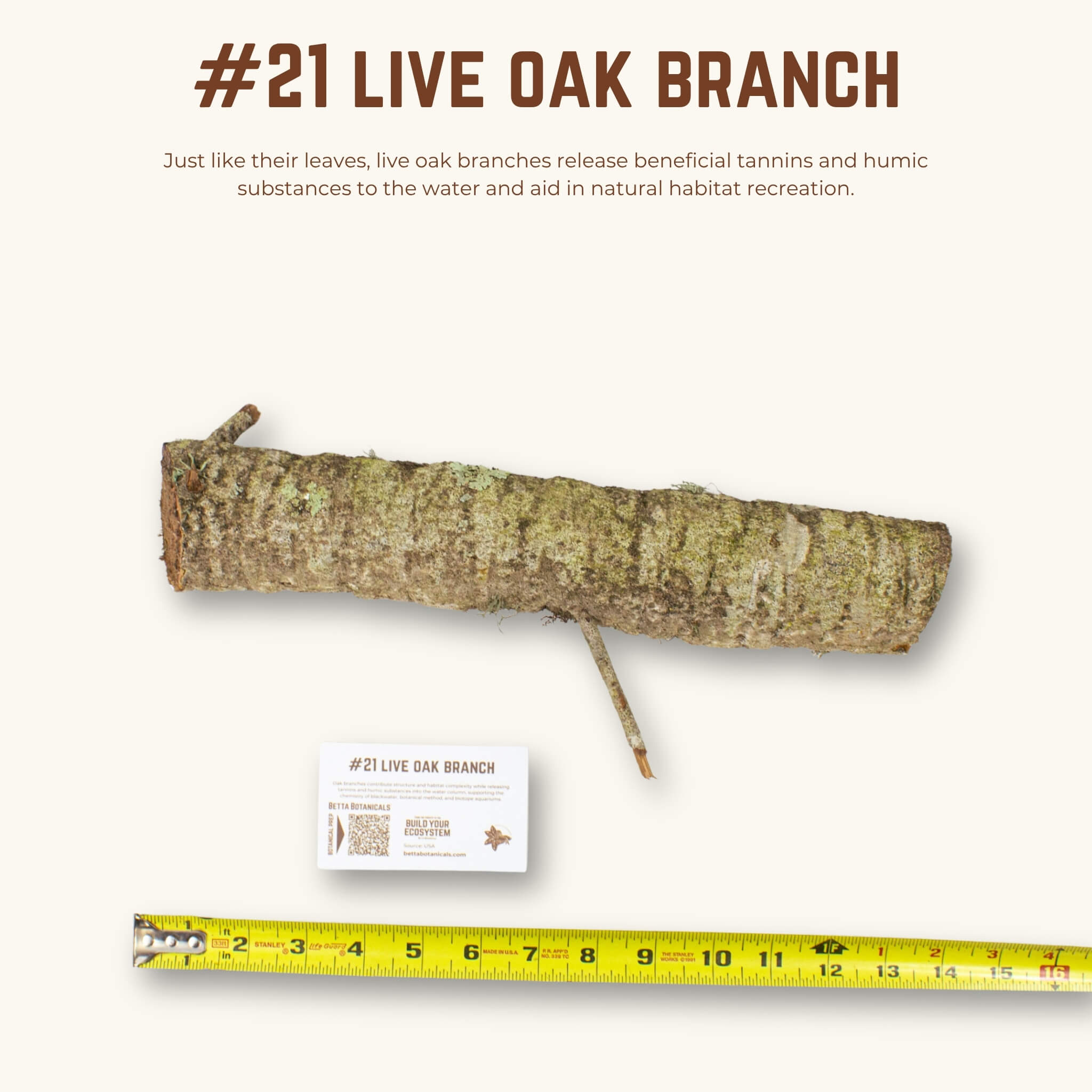
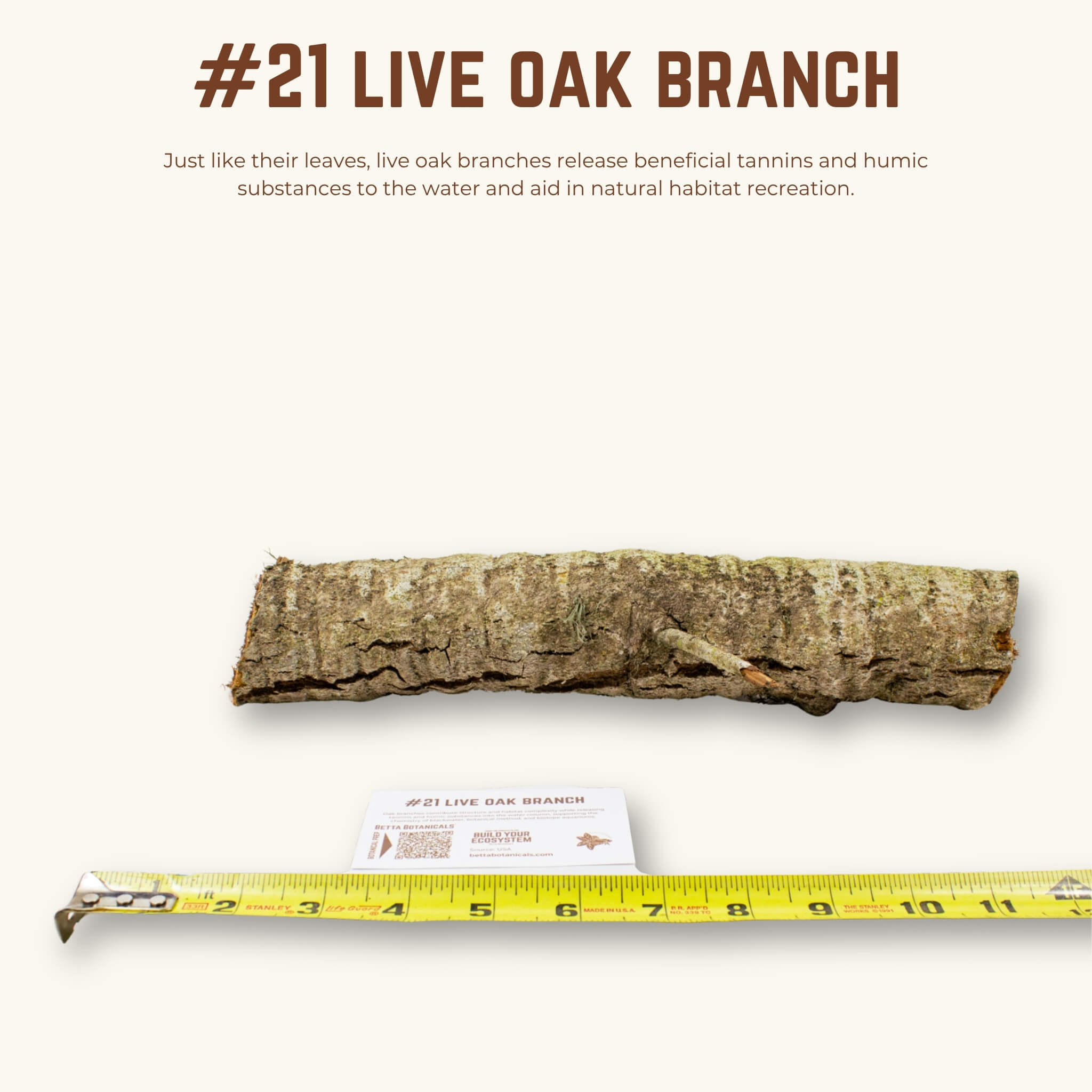
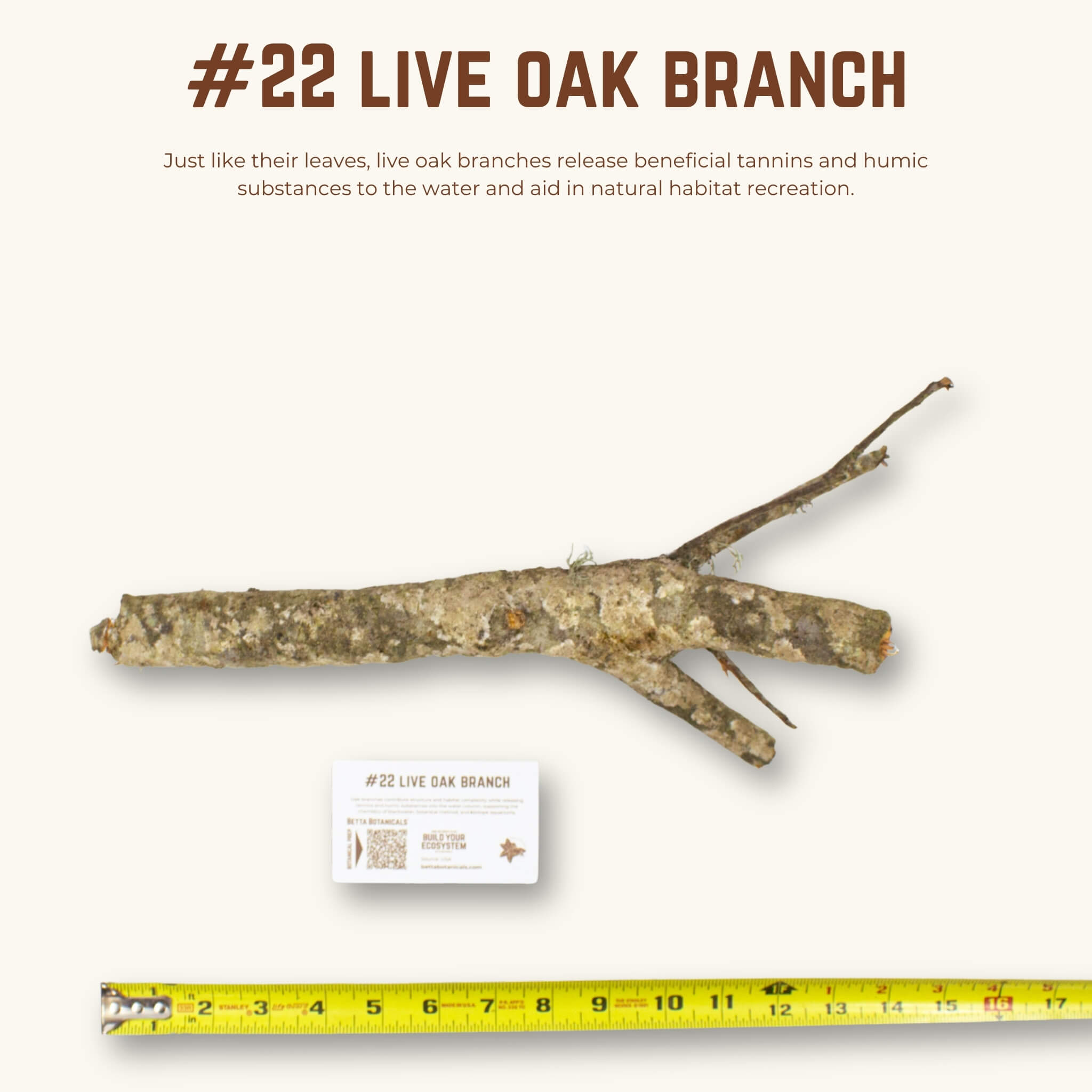
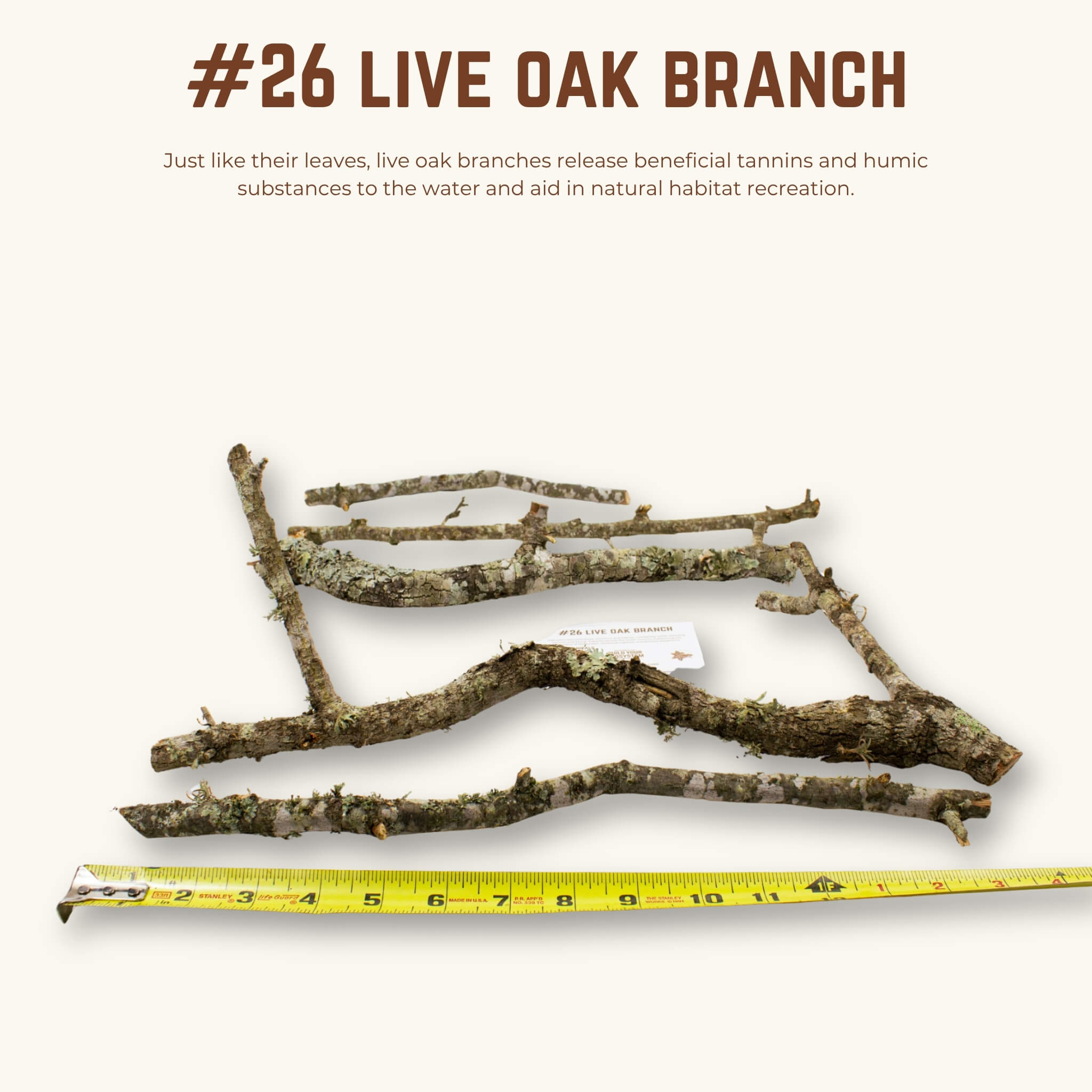
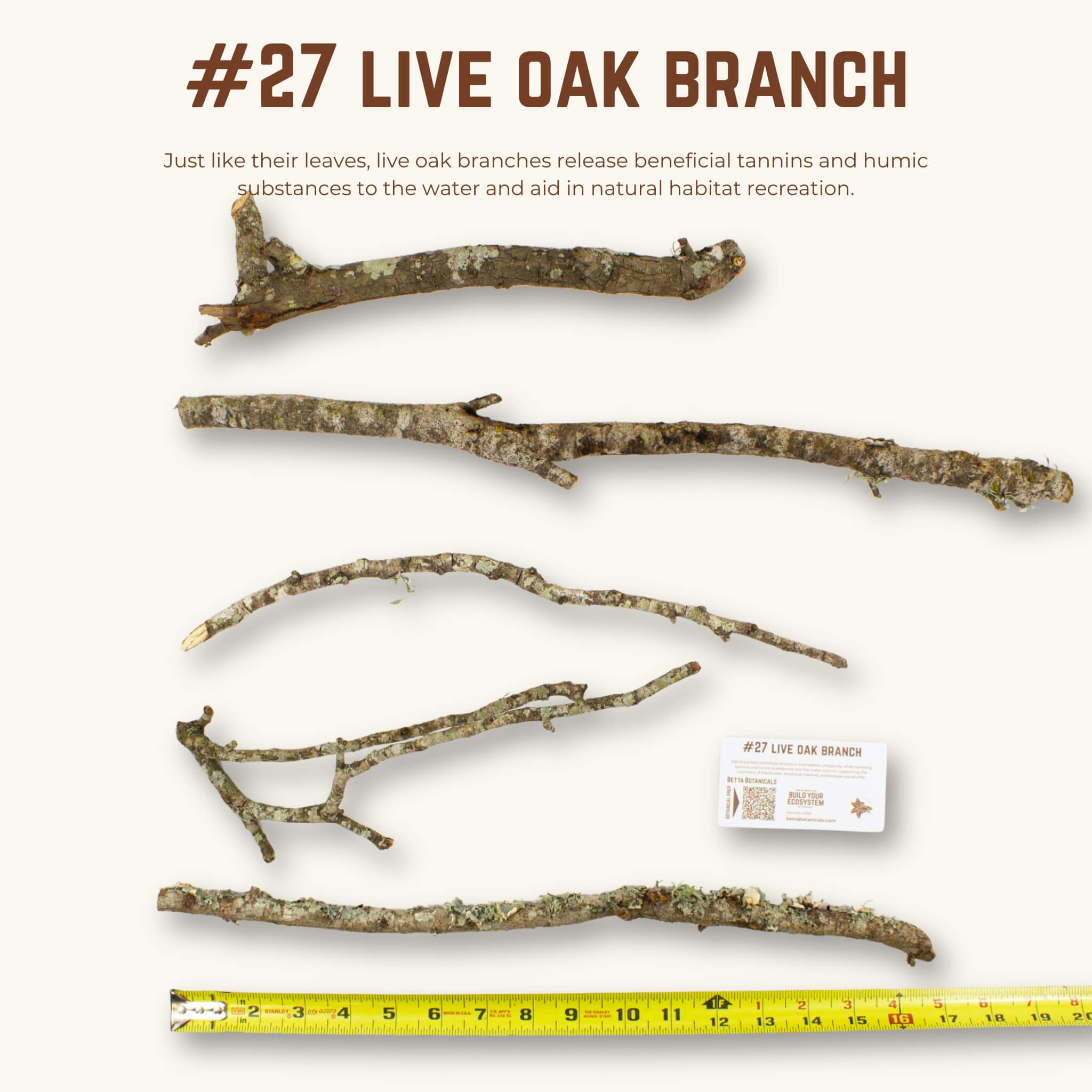
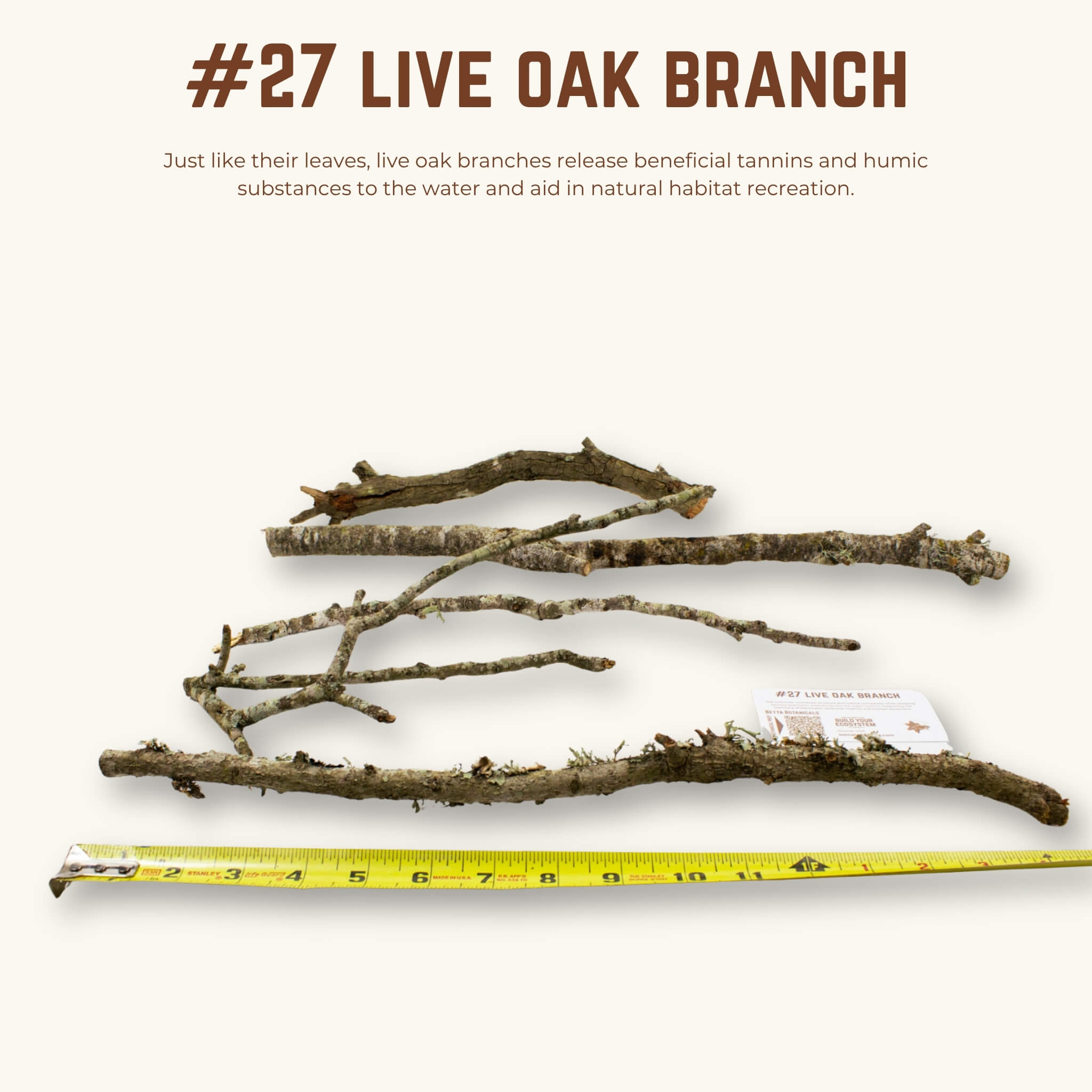
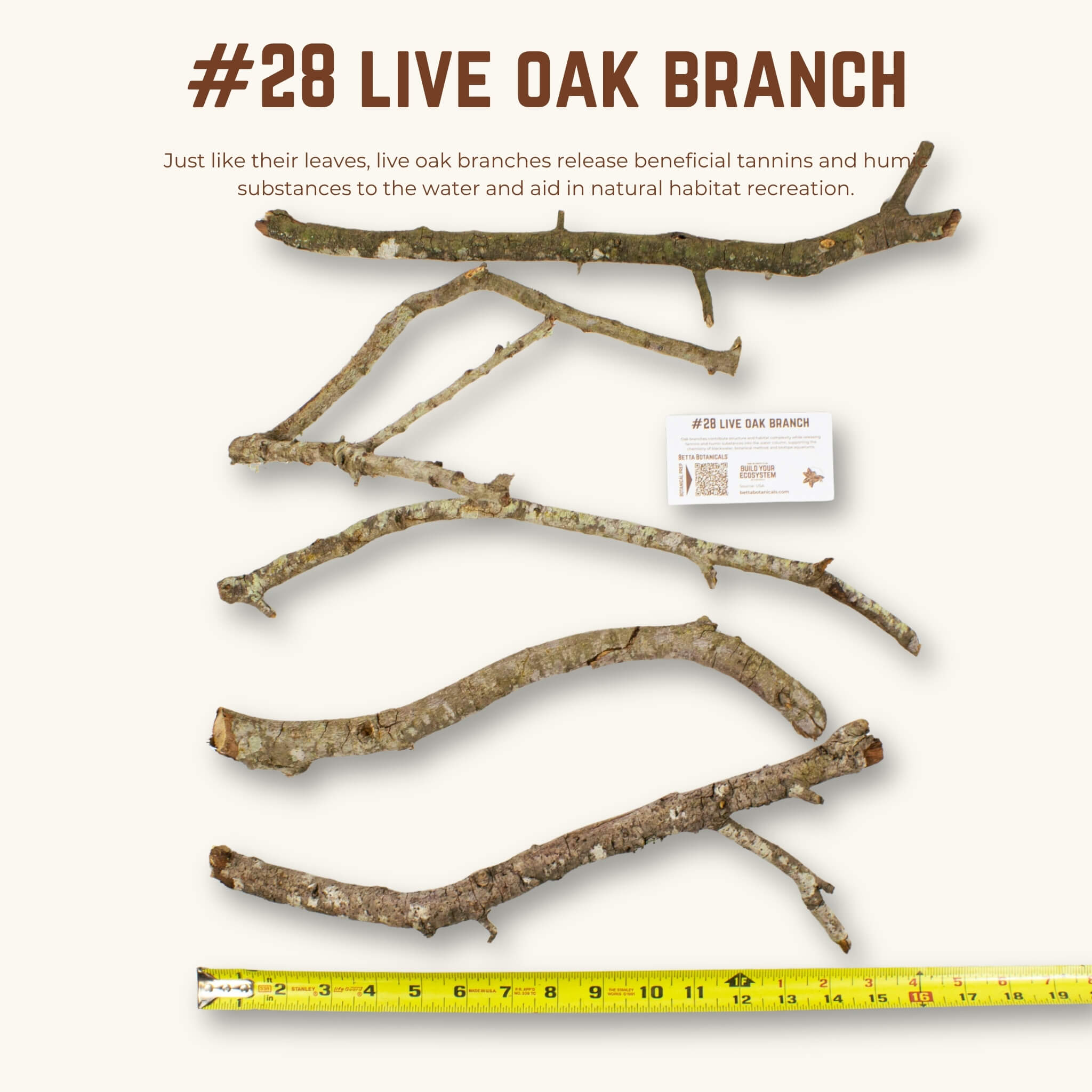
Our Live Oak Branches (Quercus sp.) are sourced from the woodlands and coastal forests of the USA, where these semi-evergreen oaks grow in proximity to freshwater corridors and seasonally flooded streams. Each branch in this collection is individually selected, numbered, and photographed — what you see in the listing is the exact piece you receive. The furrowed bark, knotted joints, and natural textures of live oak wood make these branches ideal structural inputs for botanical method aquariums and vivariums, where they anchor leaf litter, support biofilm and fungal colonization, and passively release tannins, lignins, and polyphenolic compounds into the water column.
Directions Rinse each branch thoroughly before use. For smaller aquariums or with shrimps, a one to two-week pre-soak in a bin or bucket allows the wood to begin conditioning (biofilm development) outside the aquarium. Pre-soaking also aids with initial floating. For vivarium use, boil thoroughly or bake on low heat (150-170F) to sterilize before placement. Lichens present on the bark may be scraped off prior to use if preferred, or left in place. For aquariums, they are typically consumed by shrimp and snails during the conditioning period.
Essential Details
- Tannin Level: Moderate
- Tint Color: Pale amber to brown
- Durability: High. Live oak wood is dense and high in lignin, resisting structural breakdown for months to years, depending on branch diameter and aquarium conditions. Bark surfaces soften over time and support active biofilm colonization before the core wood shows any deterioration.
- Habitat Location: USA; coastal plains, upland forests, and seasonally flooded lowlands where Quercus sp. grows in close proximity to freshwater systems
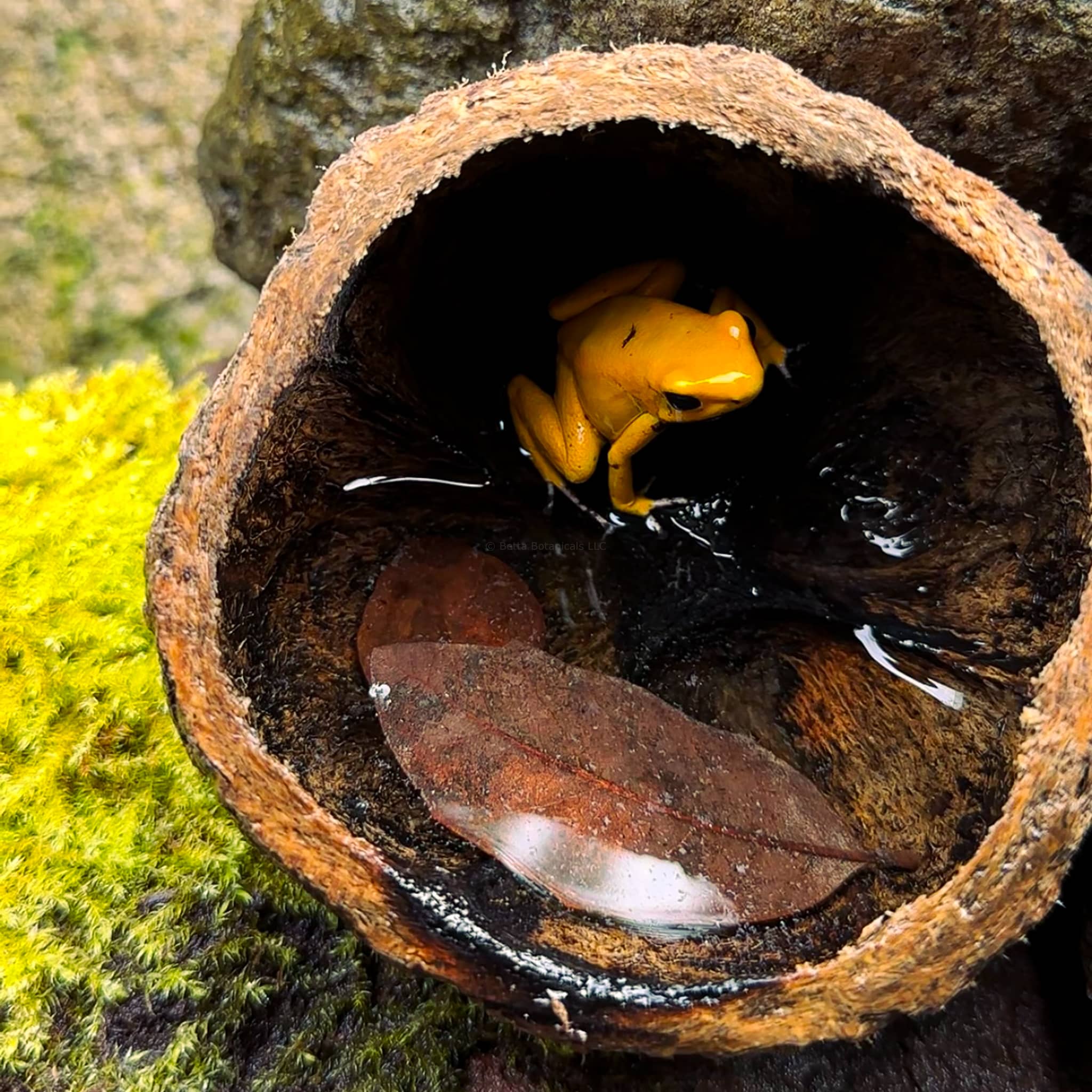
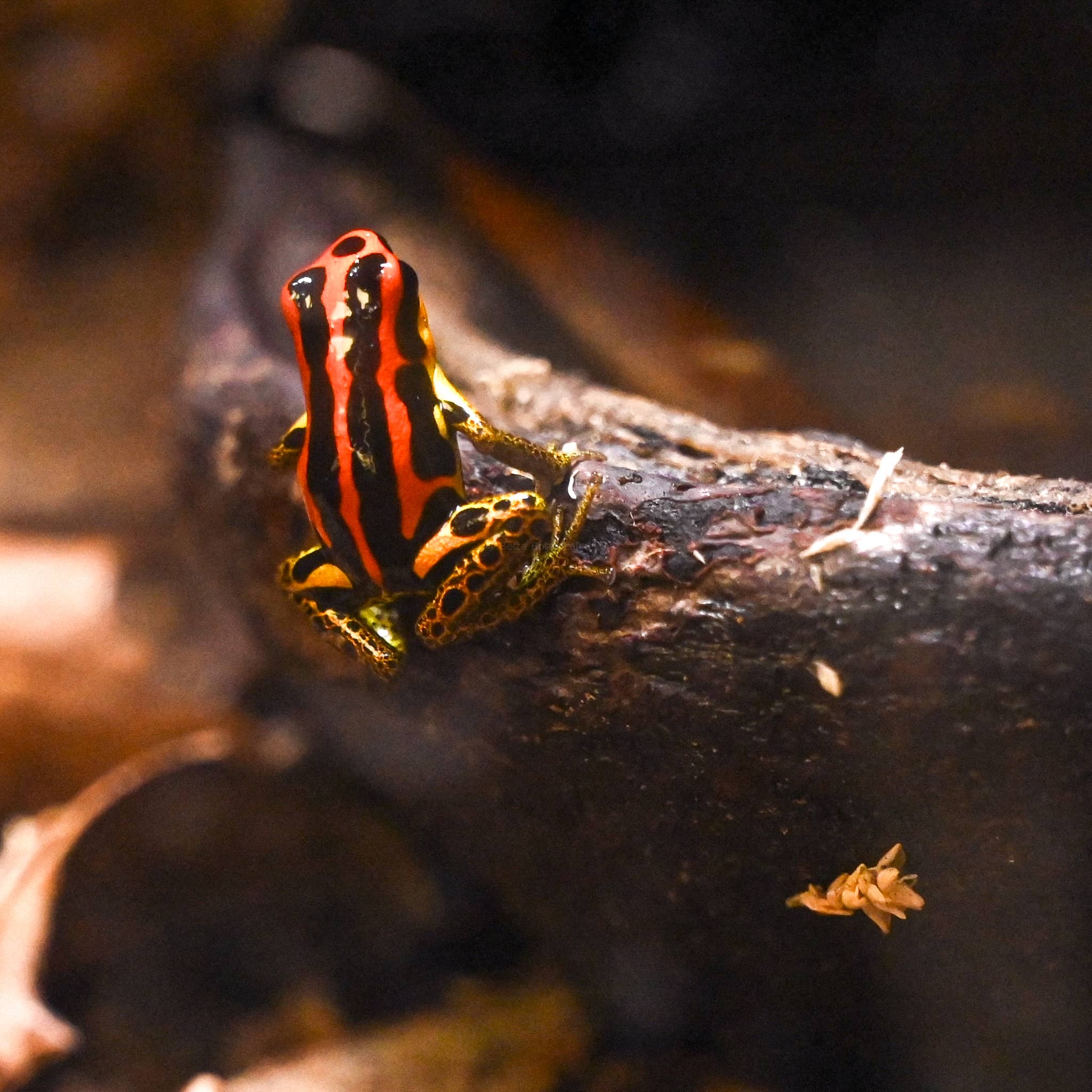
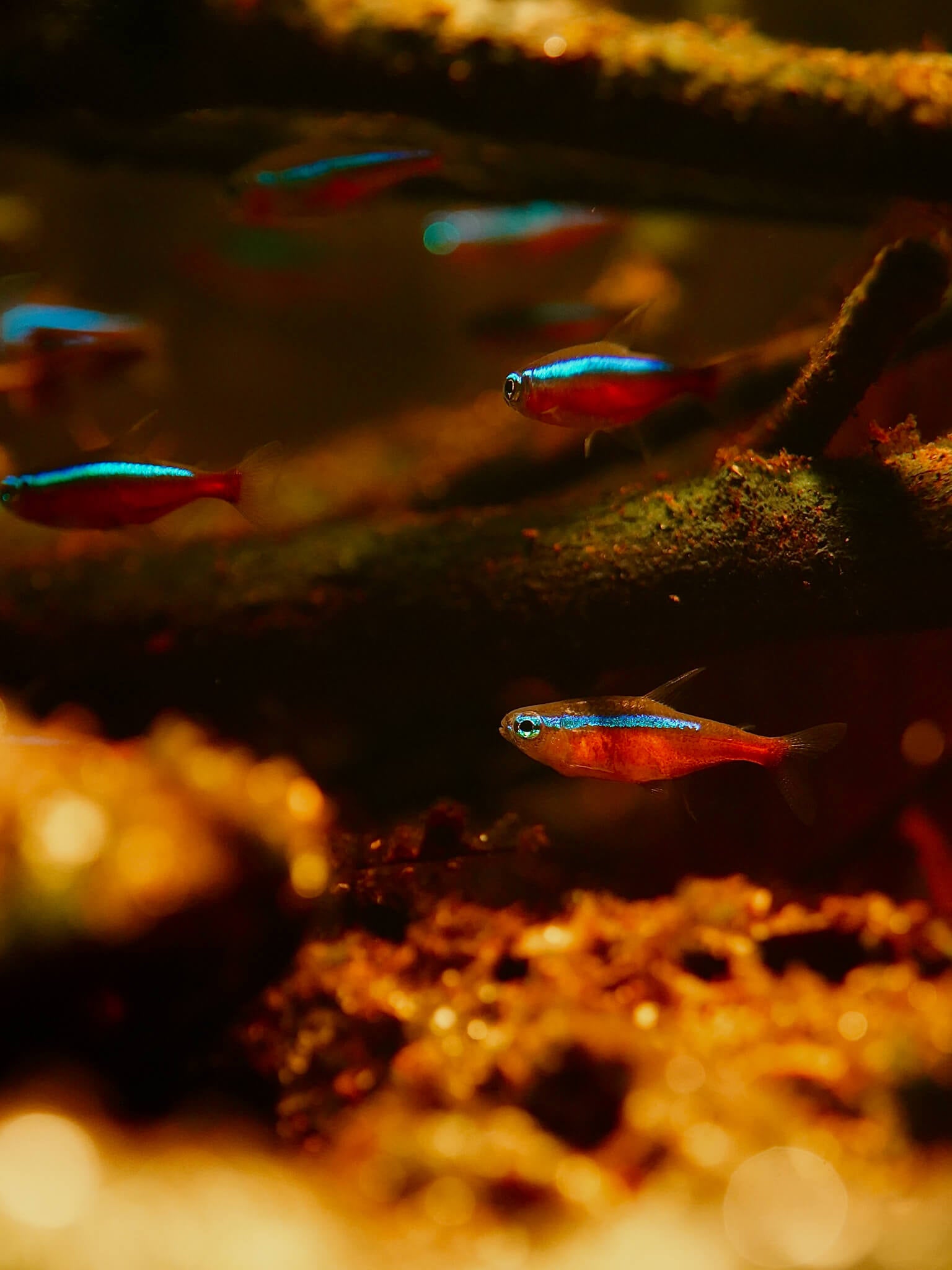
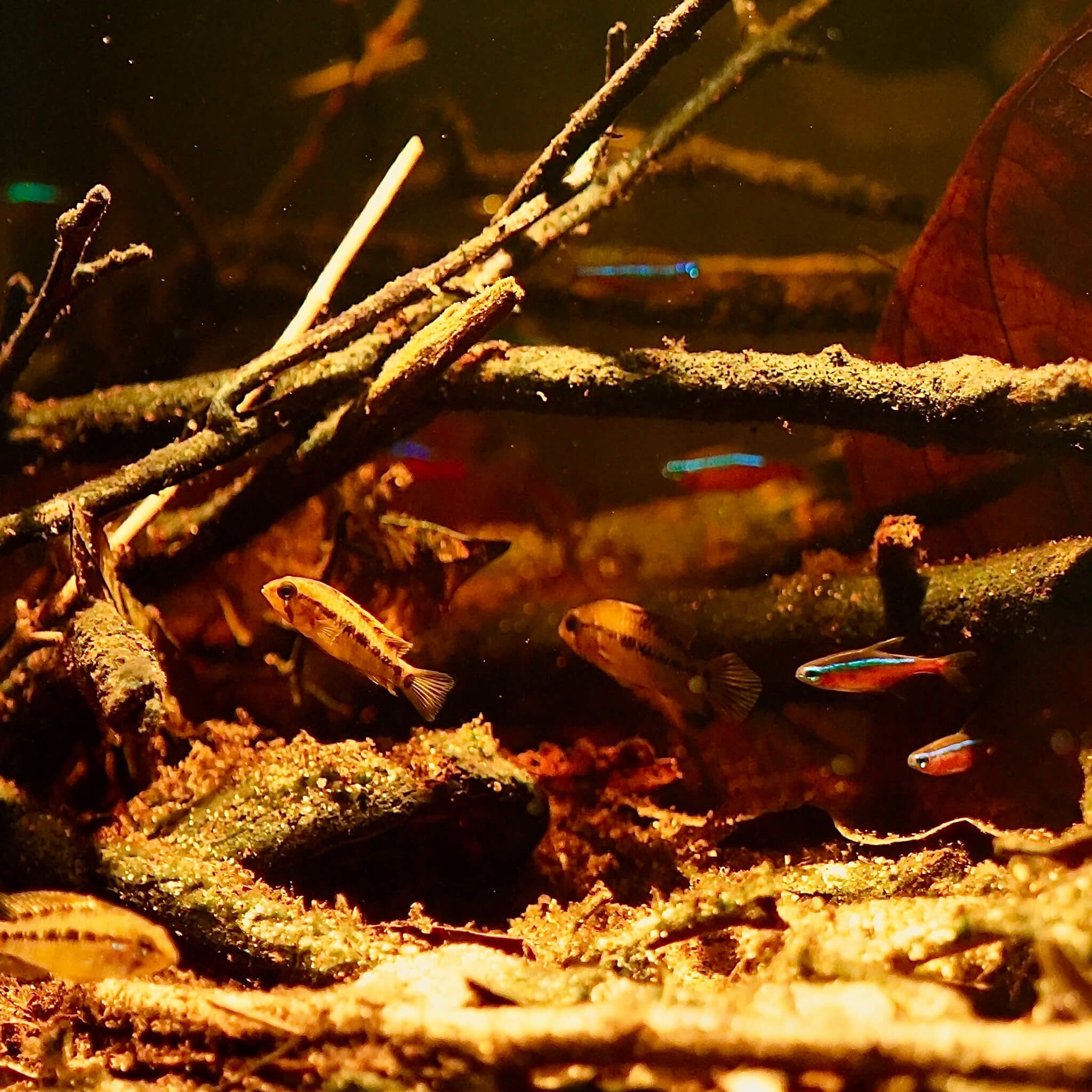
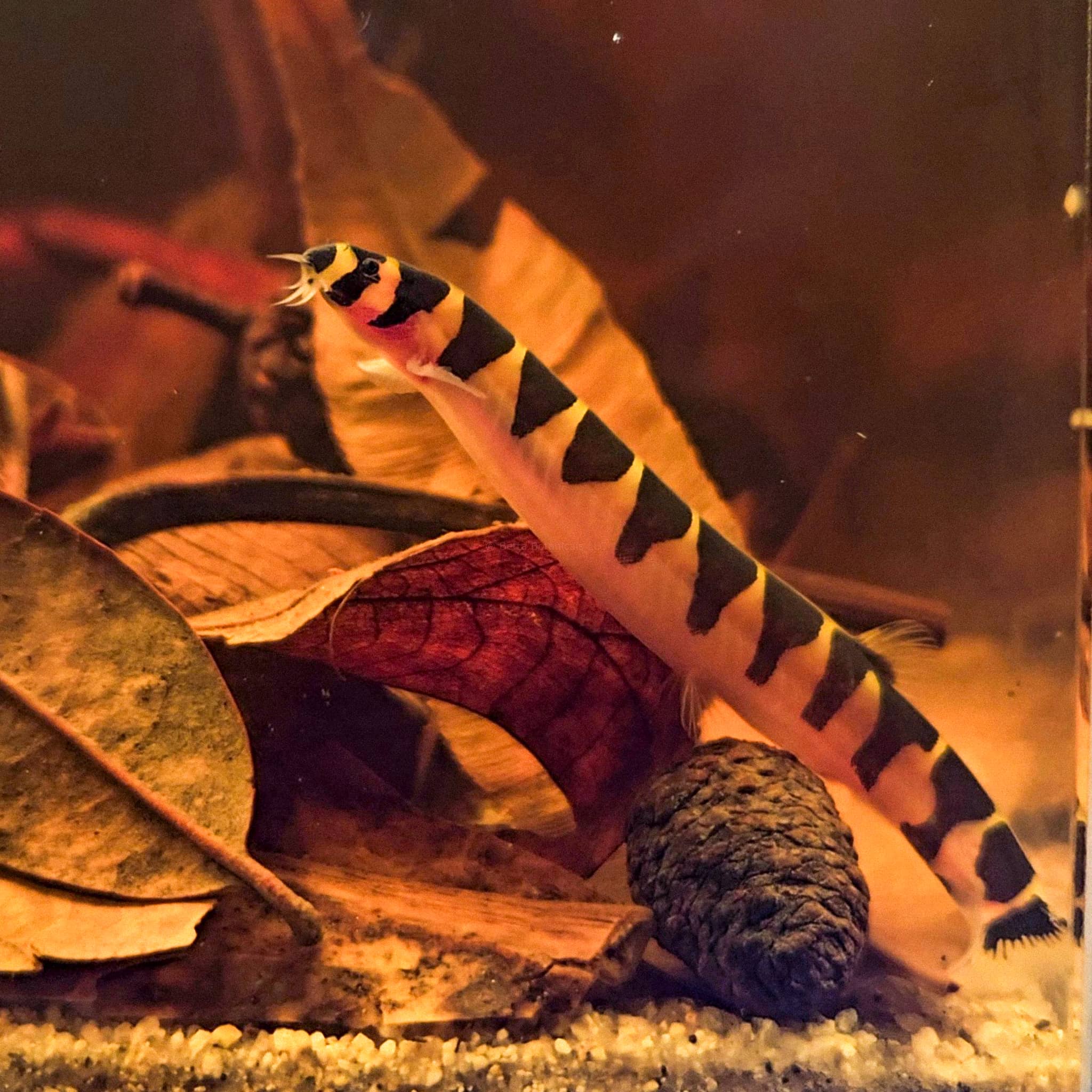
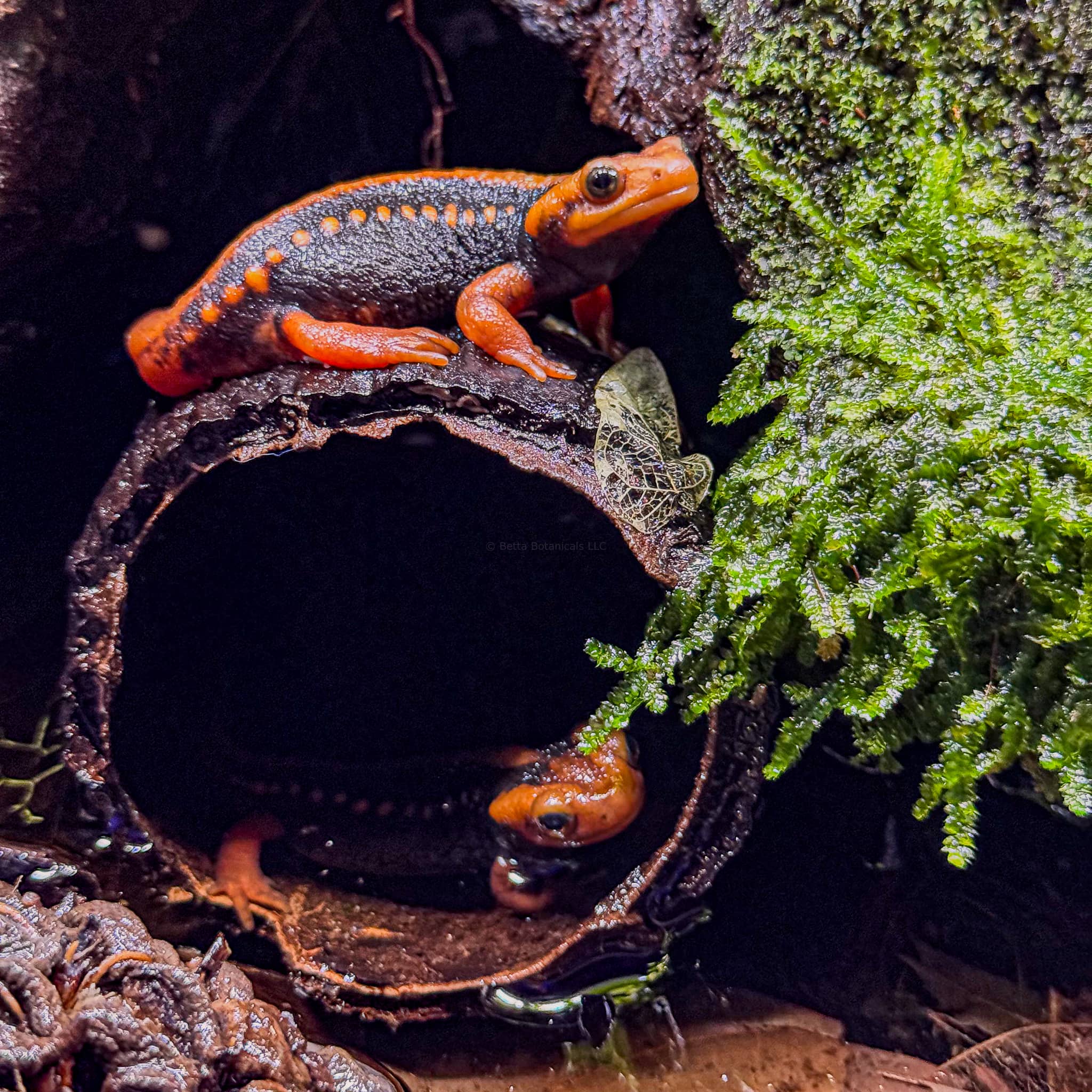
- Optimal For: Bettas, dwarf cichlids, killifish, rasboras, nano fish, small North American natives, shrimp, crayfish, dart frogs, salamanders, isopods, and springtails
- Use with Caution: Soak branches before introduction to begin biofilm development and allow initial tannin diffusion. Monitor water chemistry in very soft or RO/DI water, where humic substance accumulation may gradually lower pH. These branches are not sterilized — for vivarium use, boil thoroughly or bake on low heat before placing. For aquarium use, lichens present on the bark are generally consumed by shrimp and snails during conditioning, or can be gently scraped off prior to introduction to reduce early biofilm accumulation.
- Size Range: Approximately 7 to 22+ inches across the collection, with significant variation in form — straight single-stem pieces, Y-branched sections, and multi-piece bundles. Each numbered piece is photographed with a tape measure for exact reference.
- Quantities: Sold individually by piece number. Select your piece from the dropdown. WYSIWYG (what you see is what you get).
Live Oak Branches for Aquariums & Vivariums
Live oak wood occupies a different ecological role than the leaves and pods that cycle through a botanical method aquarium's litter bed. Where softer botanicals follow a visible decomposition pattern over weeks and months, branches persist. The high lignin content and dense cellular structure of Quercus sp. wood mean these pieces function as long-term habitat.
Submerged, the bark surface becomes an active colonization site. Biofilm communities establish first across the rough, furrowed bark, followed by aquatic hyphomycetes that begin working through the outer layers. This succession of microbial life turns the branch surface into a continuous grazing habitat for shrimp, snails, rasping fish, and microfauna. A mature branch left undisturbed for months produces stable biofilm patches that cycle independently of new botanical additions.
As the wood conditions, it passively releases tannins, lignins, and polyphenolic compounds, including gallic acid and ellagic acid, documented across Quercus species bark and wood, into the water column. These compounds accumulate gradually, contributing to the humic substance profile of the aquarium. In soft or low-alkalinity water, this accumulation can modulate water chemistry in a direction that may support fish immune function and create conditions less hospitable to opportunistic pathogens. This is process-driven chemistry: it builds as the wood matures, increasing the longer you leave it in your ecosystem.
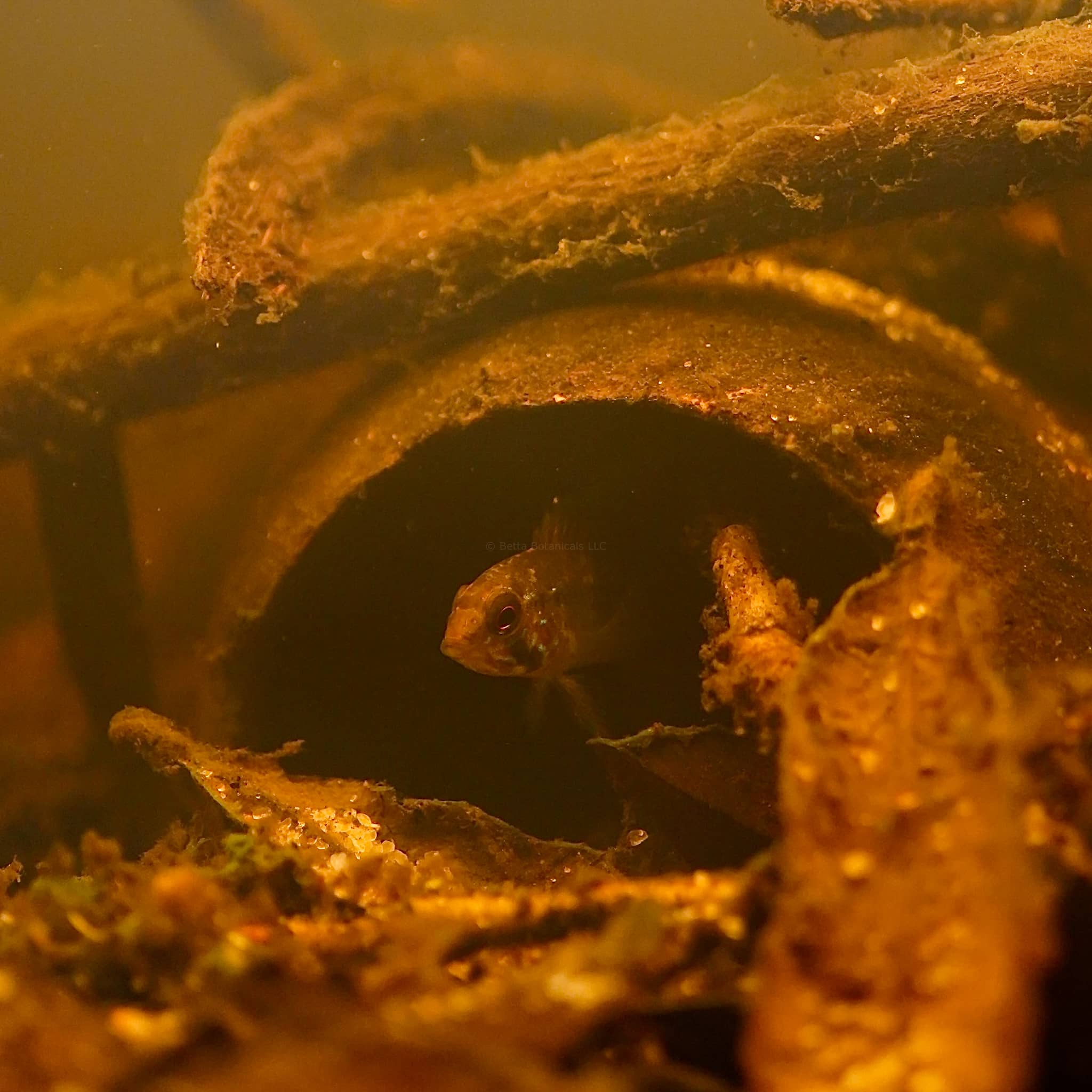
The branching and knotted structure of individual pieces creates zones of reduced flow and habitat complexity near the substrate, useful for fry, nano fish, and invertebrates that seek shelter between structural elements. Pair with leaf litter and seed pods to recreate layered habitat full of organic particulates, detritus, and microfauna populations.
Beneath the Leaves: Quercus sp. in the Wild
Live oaks grow in the coastal and central American South, with species stretching from California, across Texas, and down into Florida. As one of the few broadleaf evergreens in its range, it holds its leaves through winter and sheds them in early spring only as new growth pushes in — a short, overlapping leaf-fall that deposits fresh allochthonous material into seasonally inundated streams, tidal creeks, and swampy lowlands that run beneath its canopy. Many pieces in this collection carry lichen colonies on their bark, a natural feature of the coastal oak environment where these trees grow in humid forests.
In these settings, fallen branches and root tangles accumulate along stream banks and in flooded basins. The bark softens slowly in the water, microbial communities establish across its surface, and the branch becomes a structural habitat that provides shelter for small invertebrates, a grazing surface for aquatic organisms, and a source of organic compounds for the surrounding water. This progression unfolds across multiple flood pulses and seasons, releasing beneficial compounds gradually as water levels rise and recede. These same processes unfold in the aquarium when branches are left to condition undisturbed over time. Mother Nature leads the way. Mother Nature leads the way.
Sustainability Note:
This product's packaging is home compostable.
Just like the botanicals inside, it will break down naturally and return to the soil—because what supports your ecosystem should minimally impact our planet.
Not for human consumption. Preparation required.
This is a natural product—variation in color, shape, and texture is expected.
Live Oak Branches | WYSIWYG Pieces
Home is getting more natural
While the aesthetic appeal of botanicals and tinted water can be quite attractive to us, the recreation of nature to emulate water conditions, feeding patterns, spawning displays, and territory building are the true benefits botanicals provide to our critters.
Botanical FAQs
Compostable Packaging Promise
Our packaging is designed to return safely to the Earth, just like the botanicals inside. Every bag is BPA- and Phthalate-free, GMO-free, and contains no animal products. Each meets ASTM D6400 composting standards, ensuring it can fully break down in a home compost bin.
What are the Fluffy White Growths on my Botanicals?
That’s biofilm and fungi—what we call the “goo phase.” It’s one of the clearest signs that your aquarium is alive and functioning. These growths wax and wane naturally as botanicals decompose. They’re harmless, even beneficial, and will disappear on their own once microbial populations stabilize.
Will botanicals lower the pH of my water?
That depends entirely on your source water. In very soft or RODI water, botanicals can gradually lower pH as tannins and humic substances accumulate. In medium to hard tap water, buffering capacity often resists these shifts, and you may not notice much change. At Betta Botanicals HQ, our very hard water (350+ ppm) shows almost no pH change unless we use botanicals like Alder Cones or Macaranga Leaves.
When should I replace leaves or pods in my tank?
We recommend allowing botanicals to fully break down into detritus, since this fuels microbial life and enriches the substrate. You can remove them once they stop tinting the water, but you’ll lose some of their ecological benefits. Each time you add new botanicals, follow proper preparation and observe your livestock until you learn your aquarium’s rhythm.
Are your products just for bettas?
Nope. Our botanicals are safe for almost all aquariums, terrariums, vivariums, and paludariums. The only exceptions are goldfish and axolotls, which may ingest small pods like alder cones or casuarina cones. For those species, we recommend large leaves such as Indian Almond, Loquat, or Jackfruit.
What are Tannins?
Tannins are natural compounds released by leaves, seed pods, and bark as they decompose in water. They soften water, gently lower pH, and create the characteristic tea-stained tint found in blackwater habitats. But their role goes far beyond color—tannins fuel beneficial bacteria, fungi, and biofilms, which form the foundation of a healthy ecosystem. They also offer mild antifungal benefits and help reduce stress in fish by replicating the natural conditions they’ve evolved in. At their core, tannins are plant-derived antioxidants that connect your aquarium to the same processes at work in wild flooded forests and streams.