



Java Fern | Microsorum pteropus
Java Fern on the Surface:
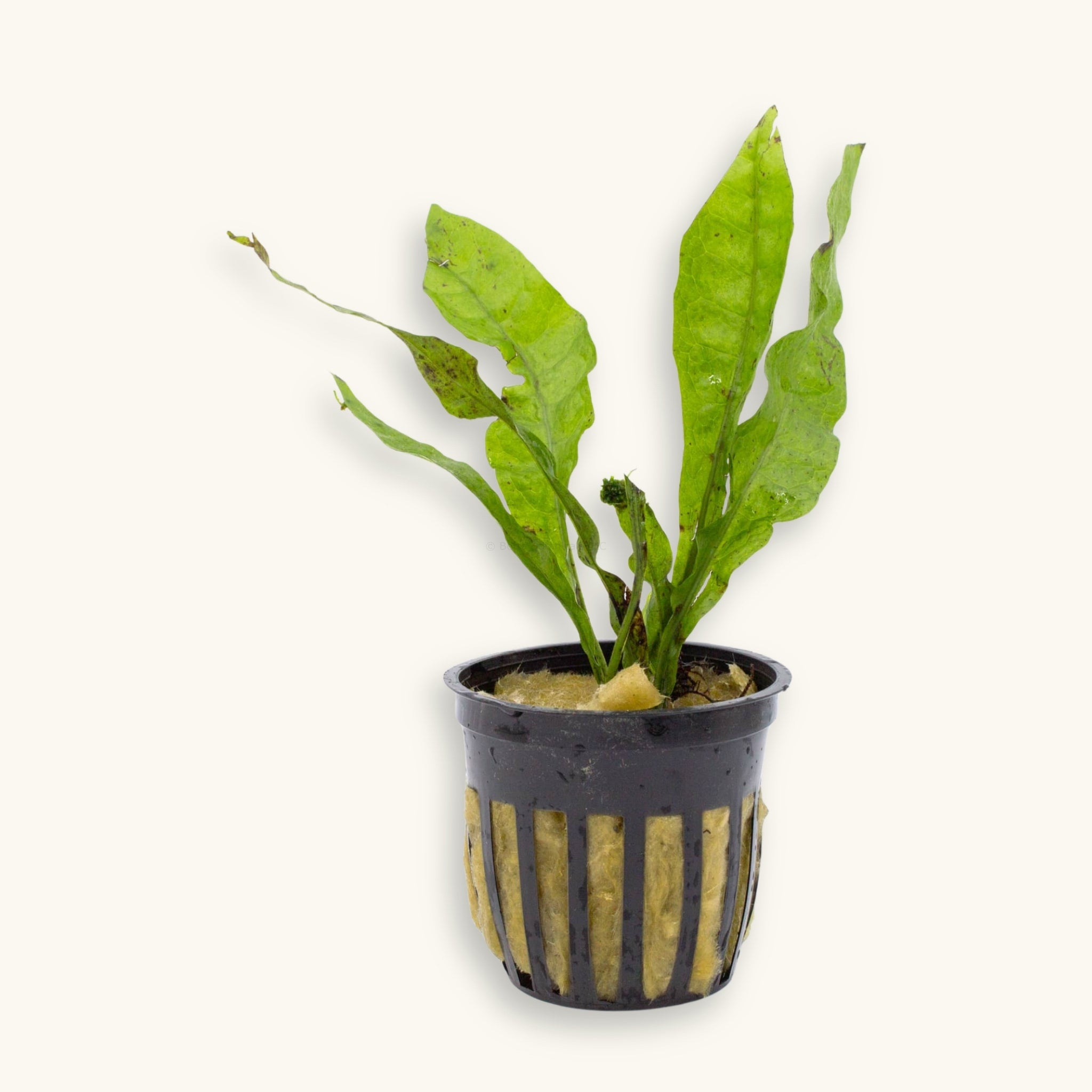
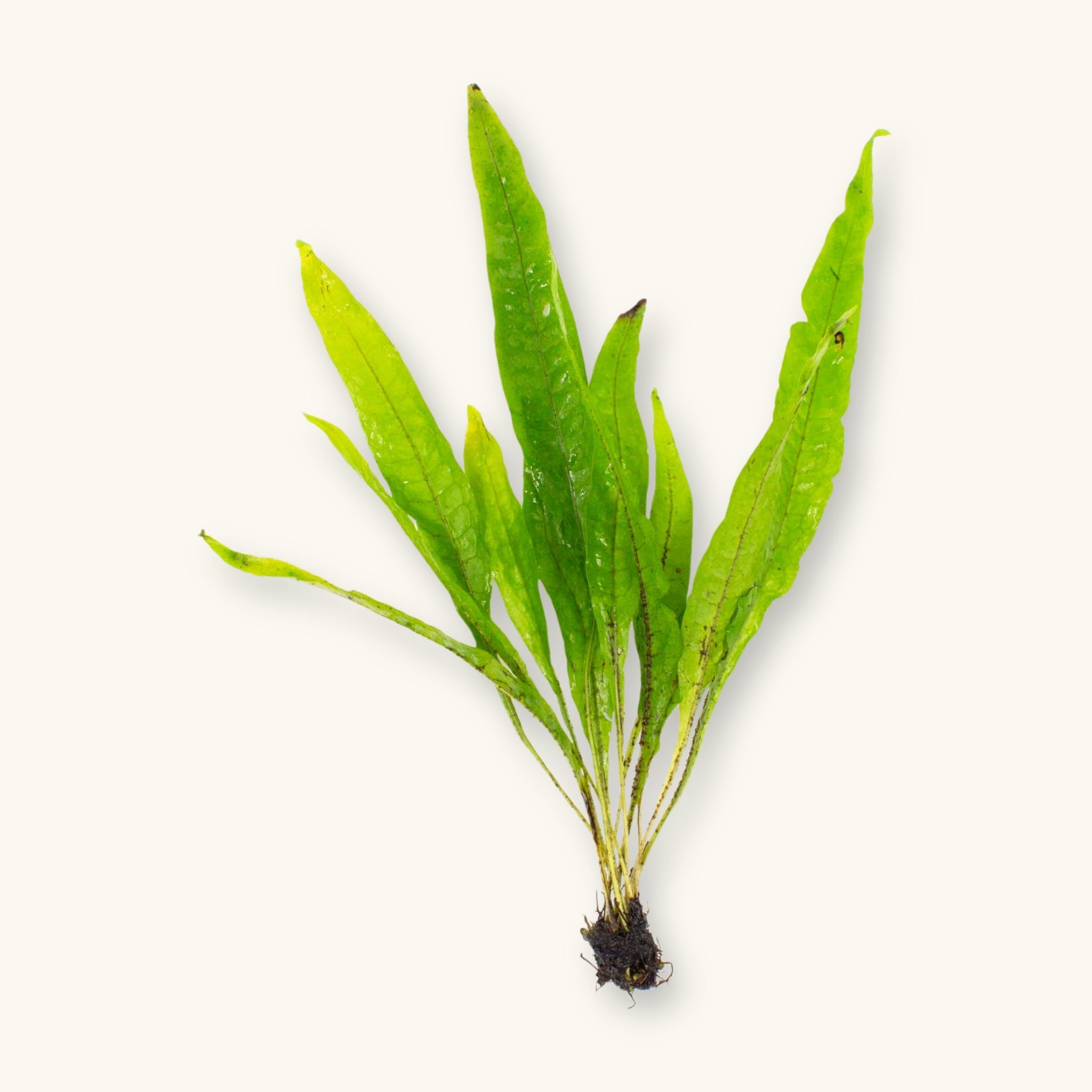
Java Fern (Microsorum pteropus) is an epiphyte native to the fast-flowing streams and waterfalls of Malaysia, Thailand, Northeastern India, and parts of South China, where it anchors to both emergent and submerged rock and driftwood. Dark green, leathery fronds grow from a rhizome held in place by a network of wiry roots built to withstand the current. In the Botanical Method Aquarium, it is best attached to wood and stone to build habitat and grazing surfaces for biofilm. Do not bury its rhizome in the substrate. Its roots are free to grow into it.
Essential Details
- Care Level: Easy
- Growth Habit: Slow growth via rhizomes
- Light: Low
- CO2: Not Necessary
- Propagation: Rhizome division, or daughter plantlets that form on mature fronds
- Tint Tolerance: Low to High
- Habitat Location: Malaysia, Thailand, Northeastern India, and parts of South China
- Optimal For: Betta fish, shrimp, and dwarf cichlids, and other species suited to wood- and rock-attached cover in blackwater and biotope aquariums
- Use with Caution: Rinse before introducing; may carry beneficial hitchhiking snails, snail eggs, or duckweed from the grow-out ponds
- Size Range: Fronds typically reach 8 to 14 inches at maturity
- Quantities: Sold as bare root or potted
Java Fern for Aquariums & Vivariums
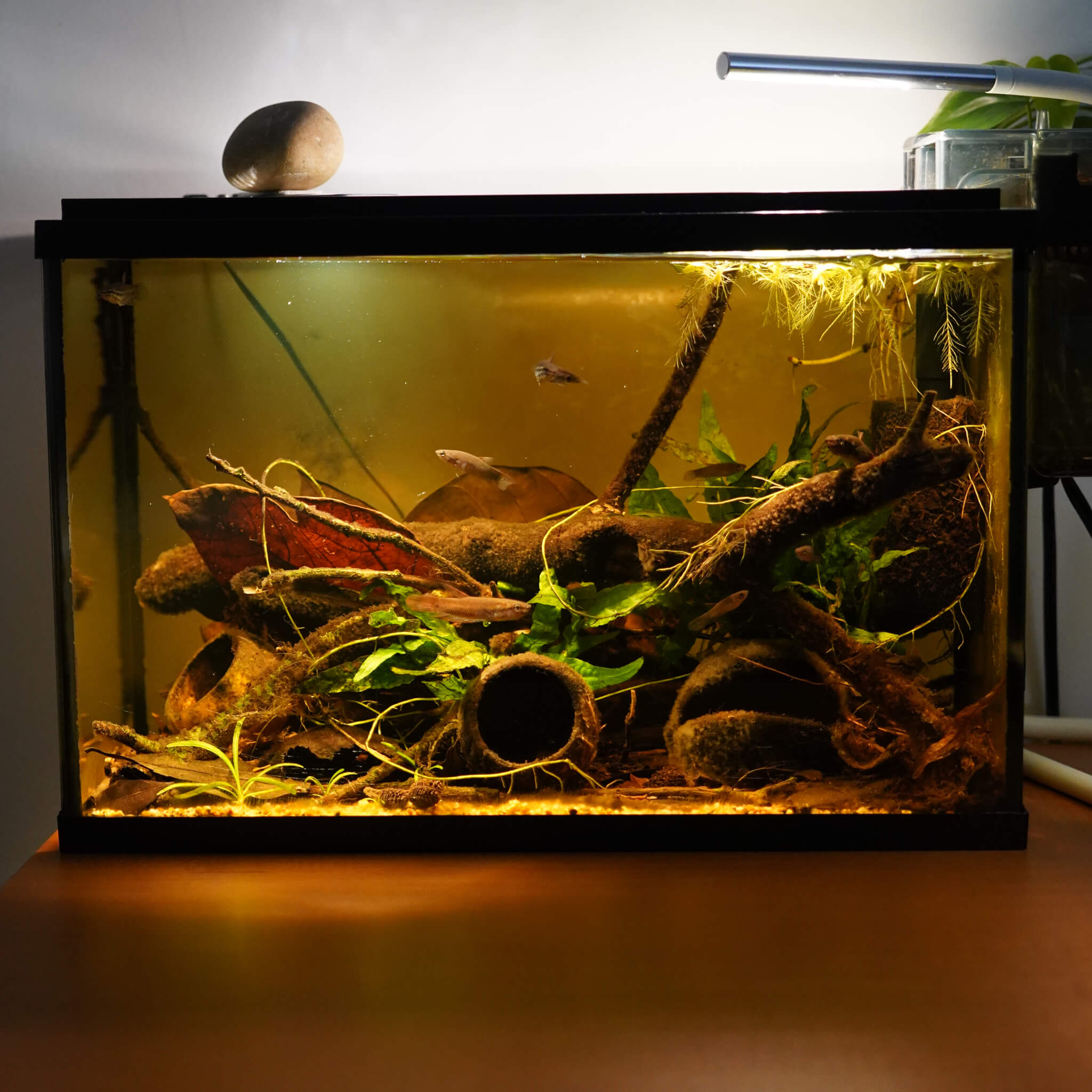
Java Fern's rhizome cannot be buried. It is the thick, horizontal stem that both fronds and roots grow from, and covering it in substrate causes it to rot. The roots that extend from the rhizome are a different matter: they are free to reach into the substrate or wrap around hardscape. We tie or glue the rhizome itself to wood or rock with thread, clear fishing line, or a small bead of cyanoacrylate gel, and let the roots find their own hold from there, the same way the rhizome creeps along exposed rock and wood in the wild while its roots reach into whatever sediment collects in the cracks. Once established, the rhizome and root network build a grazing surface of biofilm and a refuge for fry and shrimp among the tangle of fronds.
Java Fern already grows slowly, and a heavily tinted aquarium filters out some of the light it needs to reach it's growth potential, so we favor the higher end of low light, with low to medium levels of tint. Because it doesn't depend on the substrate the same way a rooted plant does, a little bit of water column fertilization is recommended. We keep an eye on algae building up on older fronds in a low light, heavily tinted aquarium, since slow growth gives algae more time to establish than it would on a faster-growing stem plant.
New fronds emerge along the rhizome as it grows, and daughter plantlets often develop directly on the tips and undersides of mature fronds, complete with their own small root systems while still attached to the parent leaf. We separate these plantlets once they've grown a few leaves of their own and tie them to a new piece of hardscape, or divide a larger rhizome into sections, each capable of establishing independently as long as a portion of healthy rhizome and at least one frond comes with it.
Because it naturally grows on rock and root entanglements at the water's edge, Java Fern can tolerate time above the waterline as readily as it does fully submerged, and it holds up well mounted on hardscape that breaches the surface in a paludarium or riparium. Fronds grown emersed, in high humidity, come in slightly tougher and more upright than their submerged counterparts, without any change in care.
Beneath the Leaves: Microsorum pteropus in the Wild
Microsorum pteropus, also classified as Leptochilus pteropus, is native to the streams and waterfalls of Malaysia, Thailand, Northeastern India, and parts of South China, where its rhizome grips submerged rock and driftwood in place of soil. Wild and cultivated variation within the species has produced a range of frond shapes, from the broad standard leaf to the forked tips of Trident, the narrow blades of Narrow Leaf, and the ruffled edges of Windelov. Because every form shares the same rhizome structure and care needs, hobbyists build entire "Java Jungle" aquariums from Java Fern cultivars alone, layering habitat complexity at multiple frond heights without introducing a second species' care requirements into the system.
Where a botanical contributes as it breaks down, an aquatic plant is living and contributes as it grows. So let them grow. Mother Nature leads the way.
Sustainability Note:
Please select a heat/cold pack if necessary. Check your local weather before ordering to avoid any shipment holds or cancellations. All Plants may contain snails or snail eggs. We keep them in all of our aquariums for the benefits they provide. Our blackwater aquarium plants are provided in cooperation with PNW Bettas in adherence to their Shipping and DOA Policies. Your curated selection will arrive in their packaging separate from your botanical, wood & merch orders.
Java Fern | Microsorum pteropus
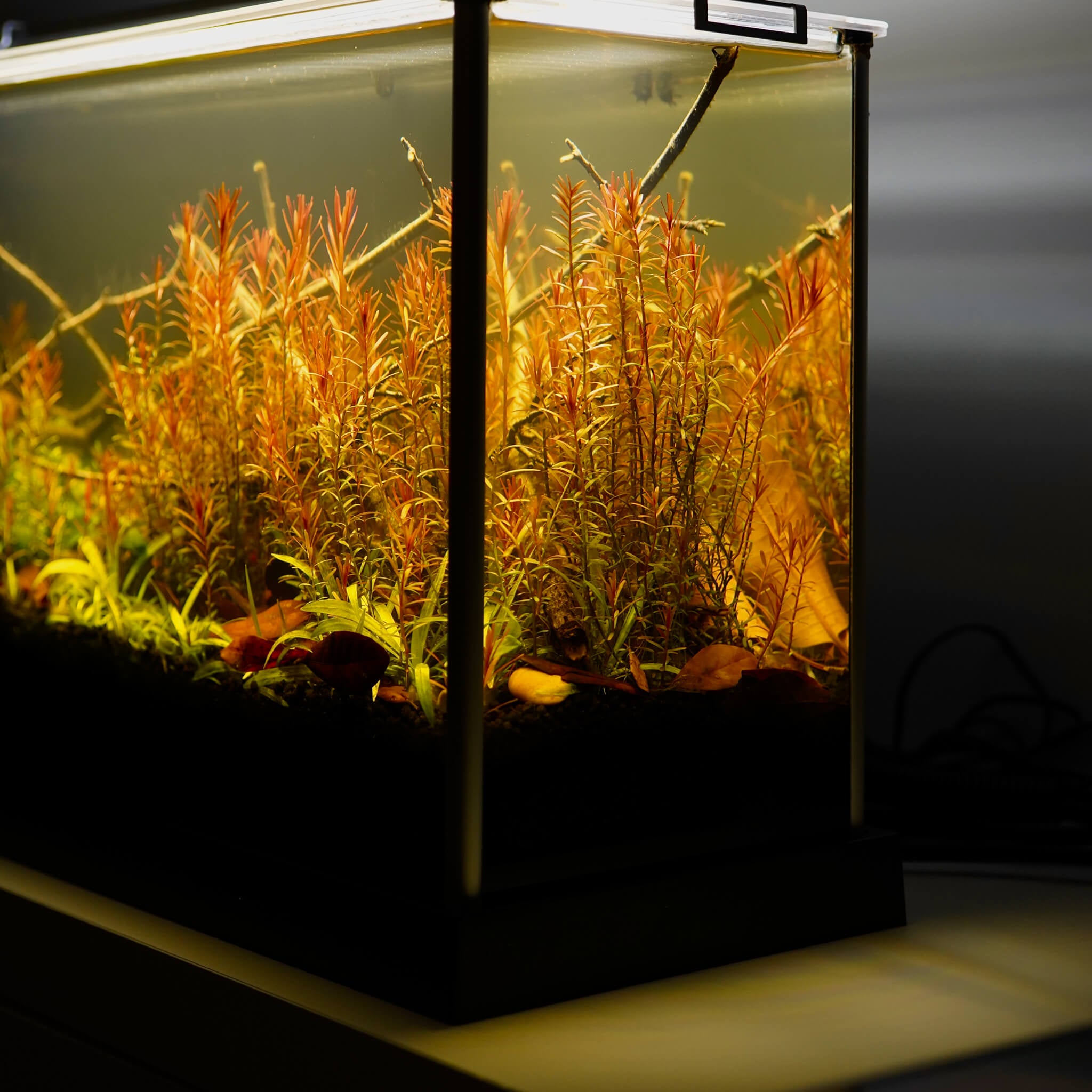
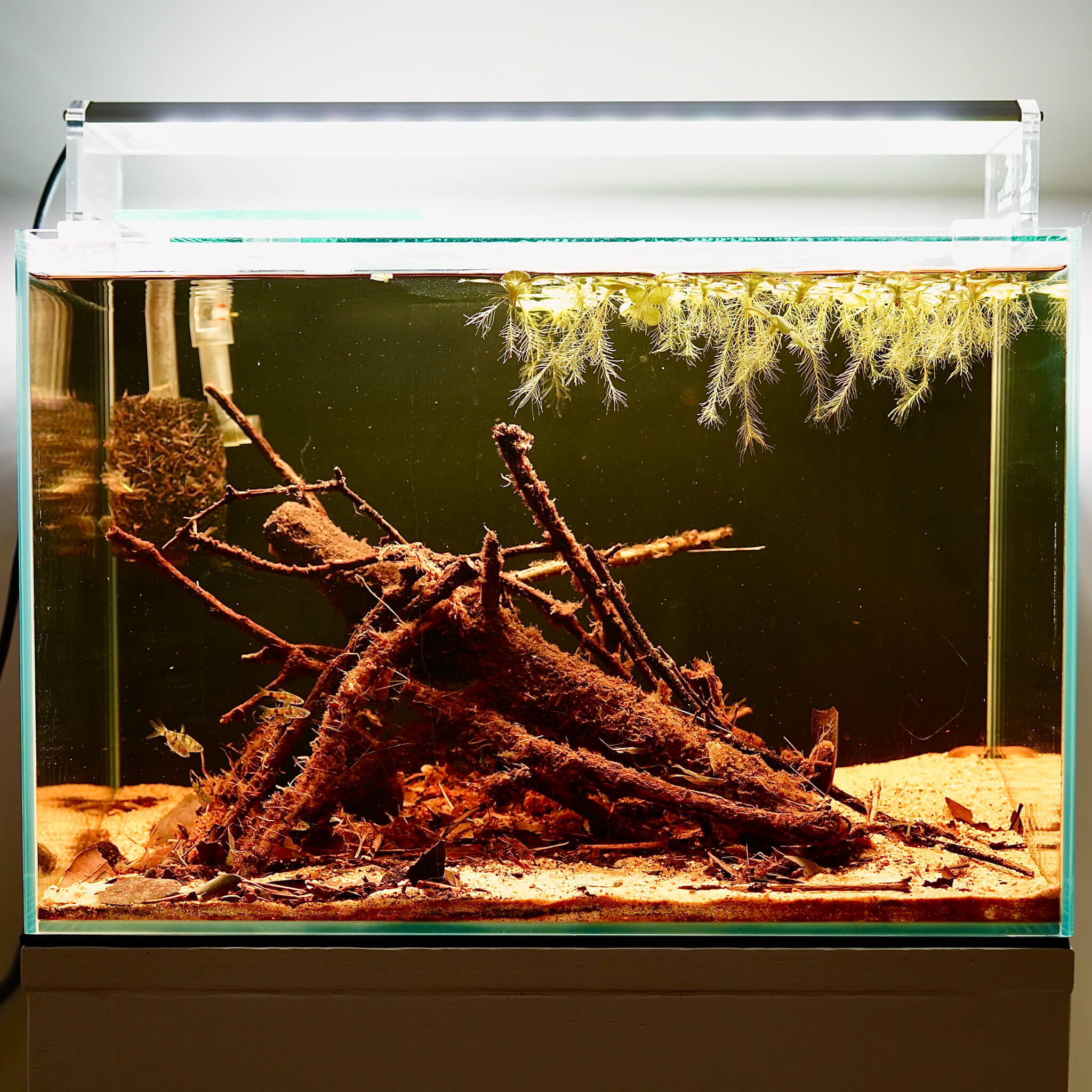
contrast the tint with greenery
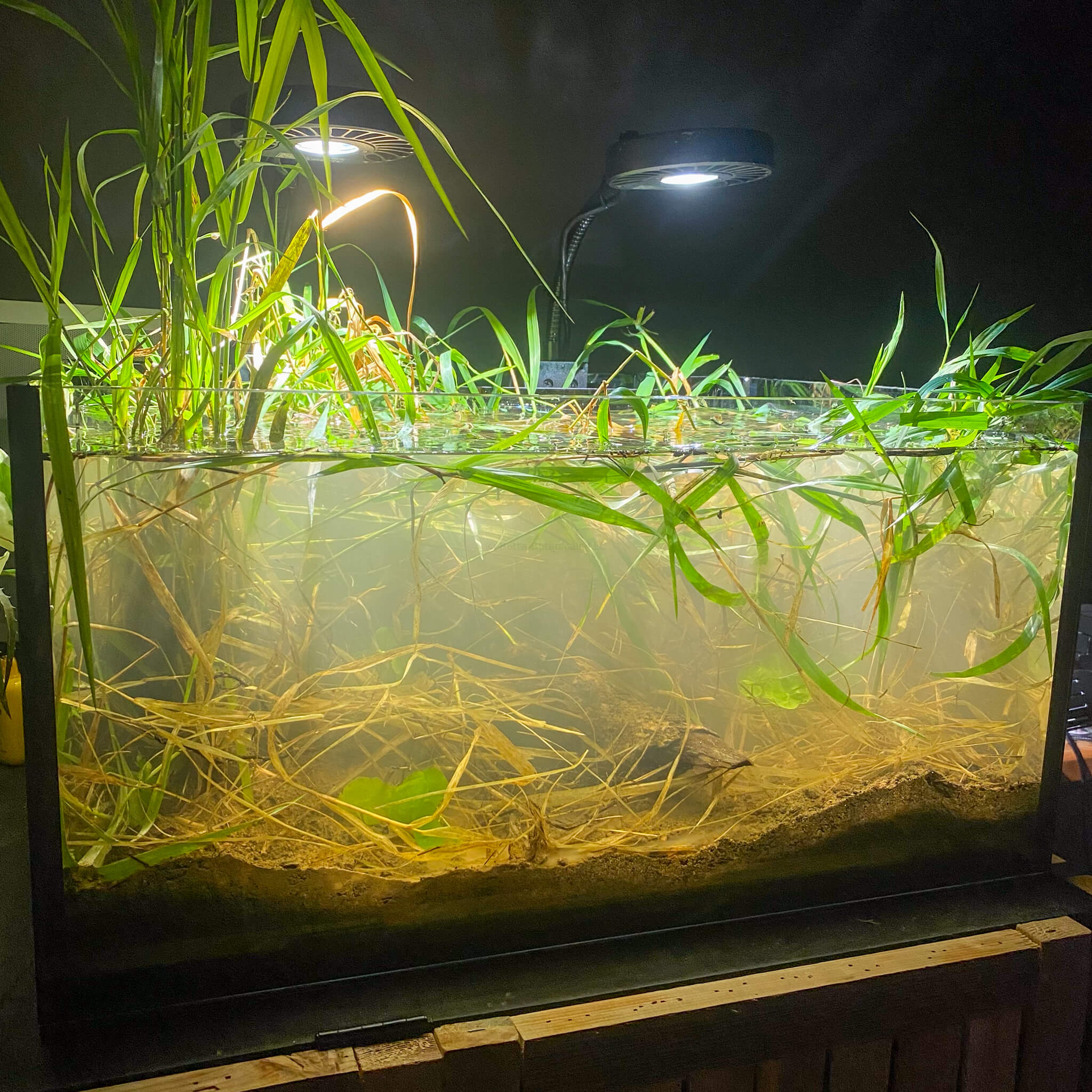
While the aesthetic appeal of tinted waters can be quite attractive to us, the recreation of nature—which includes both submerged and emersed plants—is the end goal. Flora helps to improve water conditions, feeding patterns, spawning displays, and territory building.
Aquatic Plant FAQs
DOA Policy
Please ensure that you add a heat pack or cold pack to your orders if temperatures in your area are above 90°F or below 40°F. Click for more info on our DOA Policy.
Are these plants duckweed and snail free?
All Plants may contain snails or snail eggs, small macroinvertebrates, and duckweed. We keep them in all of our tanks for the benefits they provide. We have experienced the presence of small snails, ostracods, daphnia, and beneficial detritus worms.
Are your plants only for tinted water conditions?
Nope! All of our plants will grow perfectly in untinted aquariums that have CO2 and aquasoils, or low-tech planted aquariums. Our selection, though, is optimized for emersed plant growth and low- to medium-tinted water environments.
What is your aquatic plant shipping schedule?
To ensure our aquatic plants ship under the best conditions, we are currently shipping our aquatic plants on Mondays. Please have your orders placed by 11:59 pm on Sundays. Aquatic plants usually arrive within 1-4 business days
How are your plants packaged?
All of our aquatic plants are shipped in sealed bags or cups, inside insulated mailers. Void fill is used to ensure plants stay secure during transit to your ecosystem. Heat & Cold Packs are available for purchase.
Are your plants just for bettas?
Nope! Our aquatic plants are safe for almost all aquariums, terrariums, vivariums, and paludariums. Many of our plants can be grown emersed in filter compartments, vivariums, or incorporated into wabikua.
What are Tannins?
Tannins are natural compounds released by leaves, seed pods, and bark as they decompose in water. They soften water, gently lower pH, and create the characteristic tea-stained tint found in blackwater habitats. But their role goes far beyond color—tannins fuel beneficial bacteria, fungi, and biofilms, which form the foundation of a healthy ecosystem. They also offer mild antifungal benefits and help reduce stress in fish by replicating the natural conditions they’ve evolved in. At their core, tannins are plant-derived antioxidants that connect your aquarium to the same processes at work in wild flooded forests and streams.
Looks beautiful in my tank and my betta loves laying on it!

Beautiful and healthy! Thank you!
Came in good condition, healthy green leaves. Didn't melt.