



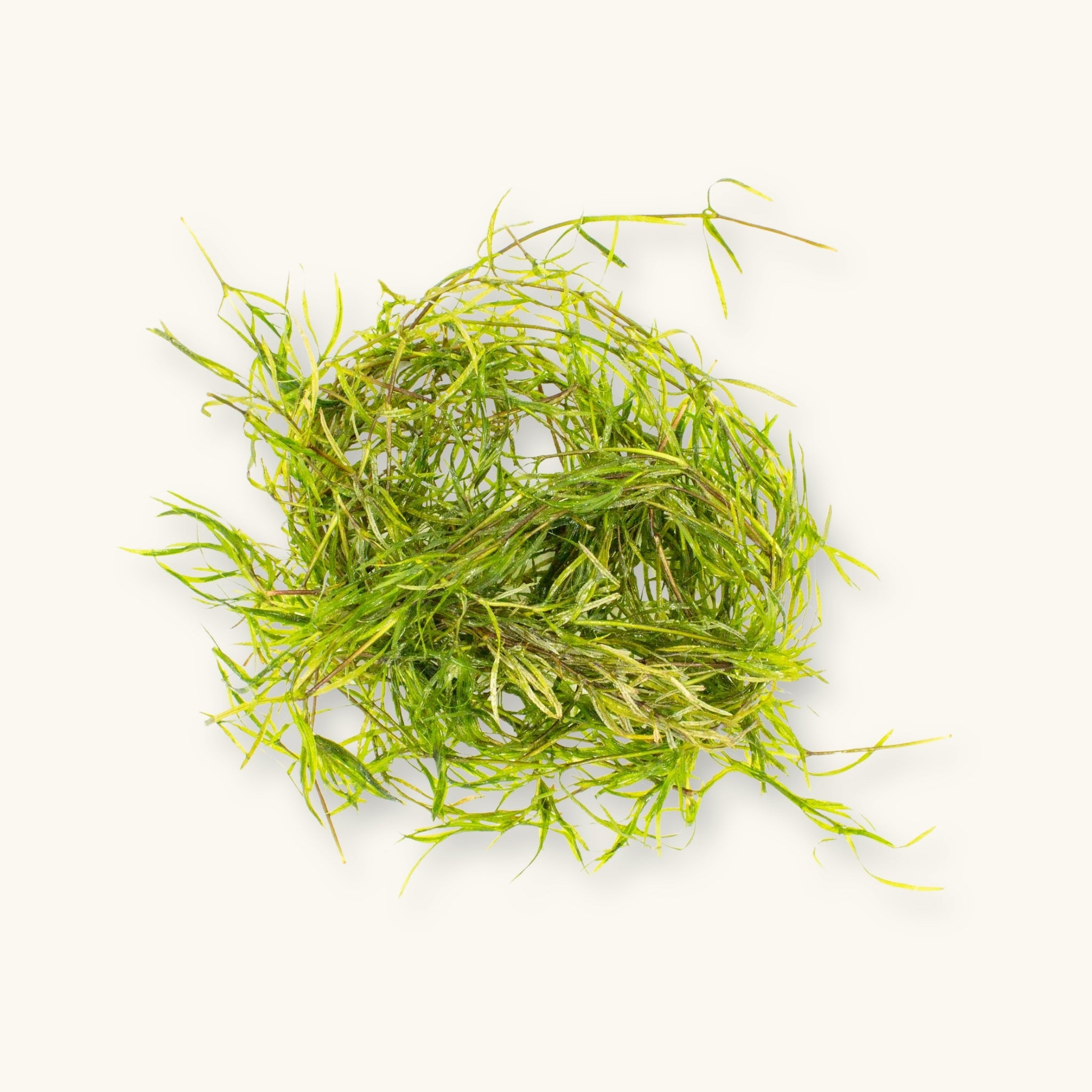
Guppy Grass | Najas guadalupensis
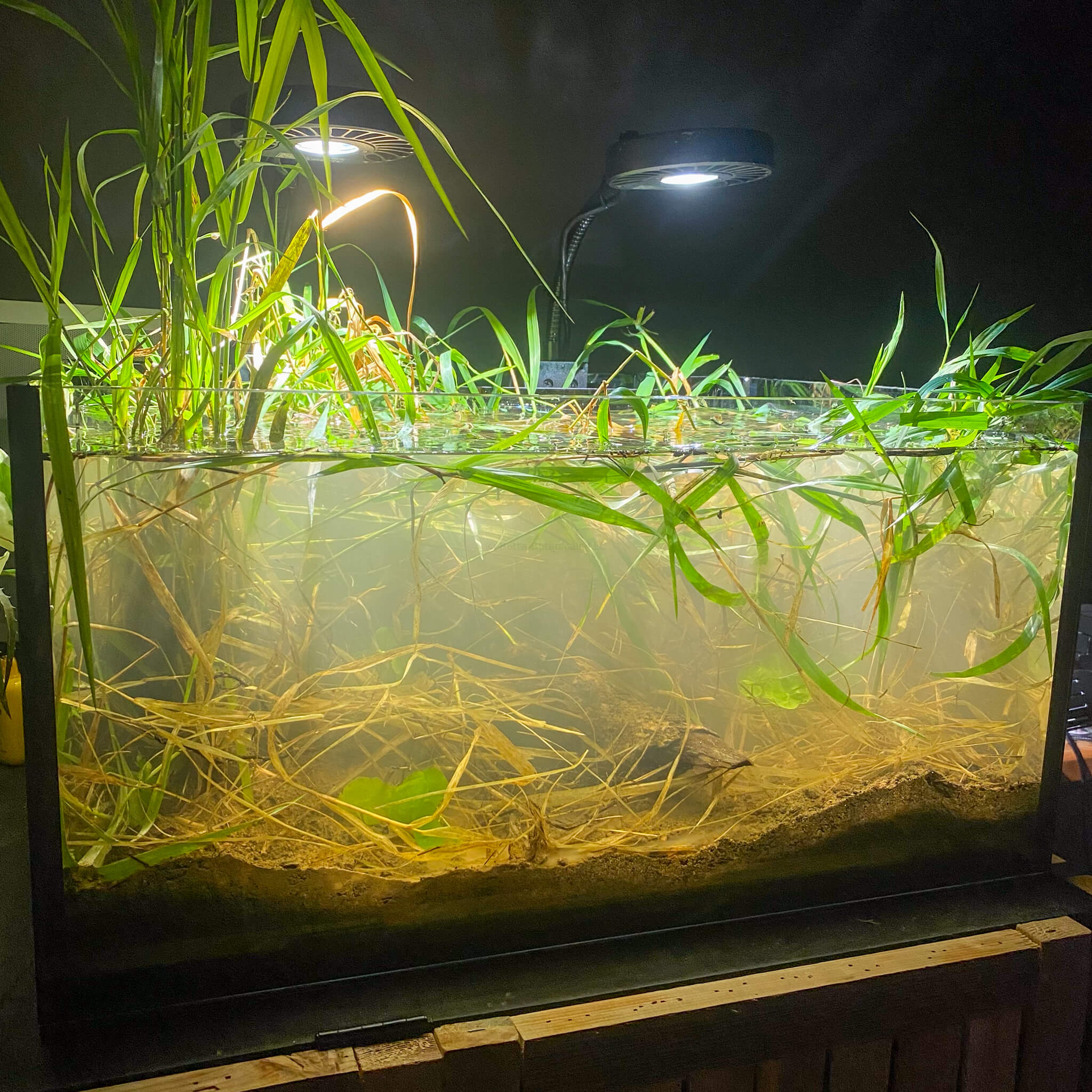
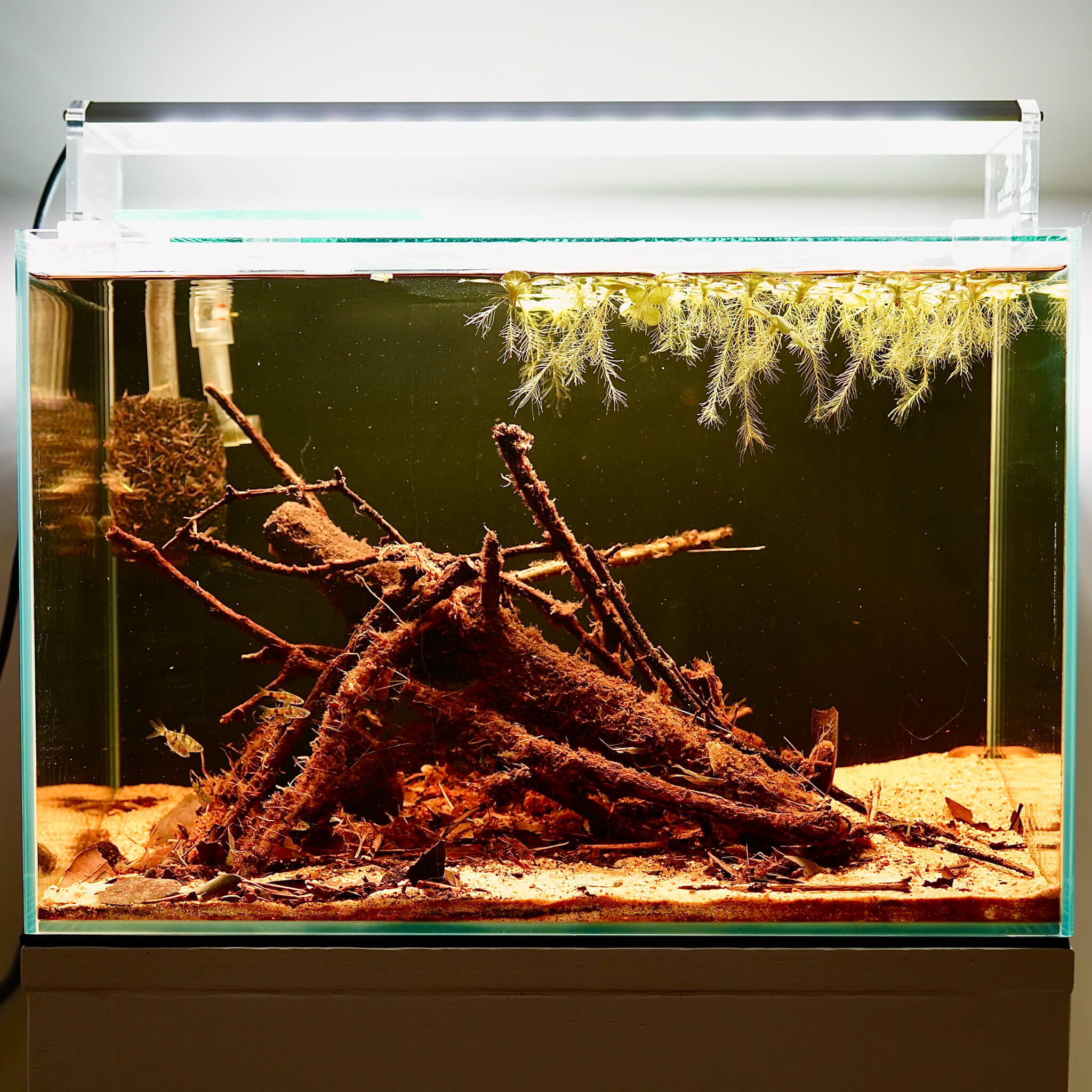
Guppy Grass on the Surface:
Guppy Grass (Najas guadalupensis), also called southern waternymph, is a fast-growing submersed plant native to freshwater across the Americas, from Canada south through Central and South America. Its stems branch constantly along their length, carrying thin, translucent leaves barely a millimeter or two wide, and it grows as readily floating loose at the surface as rooted into the substrate. In the Botanical Method Aquarium, this fine branching structure provides fry and shrimplets refuge and grazing surface. As a water column floating plant, mild water column fertilization is recommended.
Essential Details
- Care Level: Easy
- Growth Habit: Fast, brittle stems can fragment easily
- Light: Low to Medium
- CO2: Not Necessary
- Propagation: Stem fragmentation
- Tint Tolerance: Low to High
- Habitat Location: Freshwater ponds, ditches, and low-flow streams from Canada through Central and South America
- Optimal For: Betta fish, shrimp, guppies, killifish, and other species being bred or raised where fry need dense cover and a grazing surface
- Use with Caution: Rinse before introducing; may carry beneficial hitchhiking snails, snail eggs, or duckweed
- Size Range: Leaves roughly 1 to 3 cm long and 1 to 2 mm wide; stems reach 2 to 3 feet if left untrimmed
- Quantities: Sold as a loose bunch of 7 to 10 stems
Guppy Grass for Planted Aquariums & Blackwater Biotopes
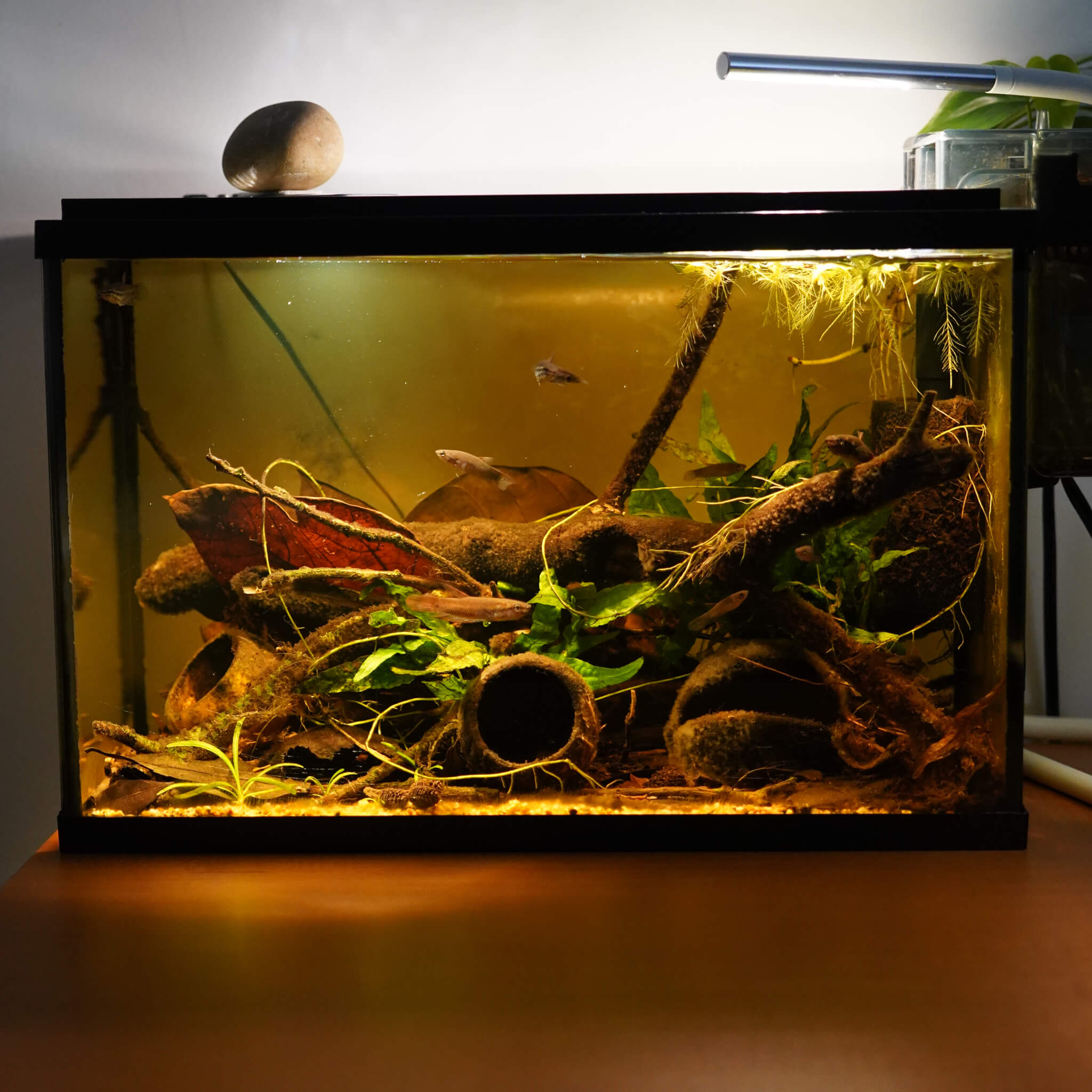
Periphyton colonizes every inch of Guppy Grass, which, left unpruned, can form dense networks, providing supplemental nutrition and areas of refuge for fry and shrimp in the Botanical Method Aquarium. This aquatic plant is best used in a breeding aquarium, as its fast growth provides newly hatched fry food and cover.
Guppy Grass feeds from the water column rather than the substrate, pulling nitrogen, micro-, and macronutrients directly from the water. Its quick uptake is also how it can help outcompete algae for nutrients. As a free-floating aquatic plant, its growth is not really dependent on light reaching the sediment; therefore, tint has little bearing on how the plant grows, and it does well in darkly tinted water from leaf litter and seed pods. We recommend keeping a clump in all of your ecosystems to help uptake nutrients, pruning back excess growth each week during your water exchanges.
Fragmentation is how Guppy Grass propagates. Its stems break easily, and any loose piece left behind can grow into a new bunch. We keep ours floating in most of our ecosystems, where it sits close to the light and grows fastest, and thin it regularly so the plants rooted below still get the light they need.
Beneath the Leaves: Najas guadalupensis in the Wild
Najas guadalupensis grows in shallow ponds, ditches, and low-flow streams throughout the Americas. It's native habitat has silty substrates, where it's roots can grow into readily. Guppy Grass is an annual plant, sprouting from deeply pitted seeds in the spring, growing vigorously through summer and early fall, then going to seed again. The bank of seeds these plants produce is equipped to survive the cold months of winter, before sprouting again from the sediment.
Invertebrates colonize the densely growing stems and feed the fish, amphibians, and wading birds of the shallow waters of its natural habitat. Migrating mallards, pintails, and lesser scaup graze on the stems, leaves, and seeds. Seeds that survive the trip through a bird's gut germinate in new water bodies the birds migrate to. This dispersal route is documented across the genus, and it is part of how a plant with no runners and no rhizomes reached the range it holds today.
Where a botanical contributes as it breaks down, an aquatic plant is living and contributes as it grows. So let them grow. Mother Nature leads the way.
Please select a heat/cold pack if necessary. Check your local weather before ordering to avoid any shipment holds or cancellations. All Plants may contain snails or snail eggs. We keep them in all of our aquariums for the benefits they provide. Our blackwater aquarium plants are provided in cooperation with PNW Bettas in adherence to their Shipping and DOA Policies. Your curated selection will arrive in their packaging separate from your botanical, wood & merch orders.
Guppy Grass | Najas guadalupensis
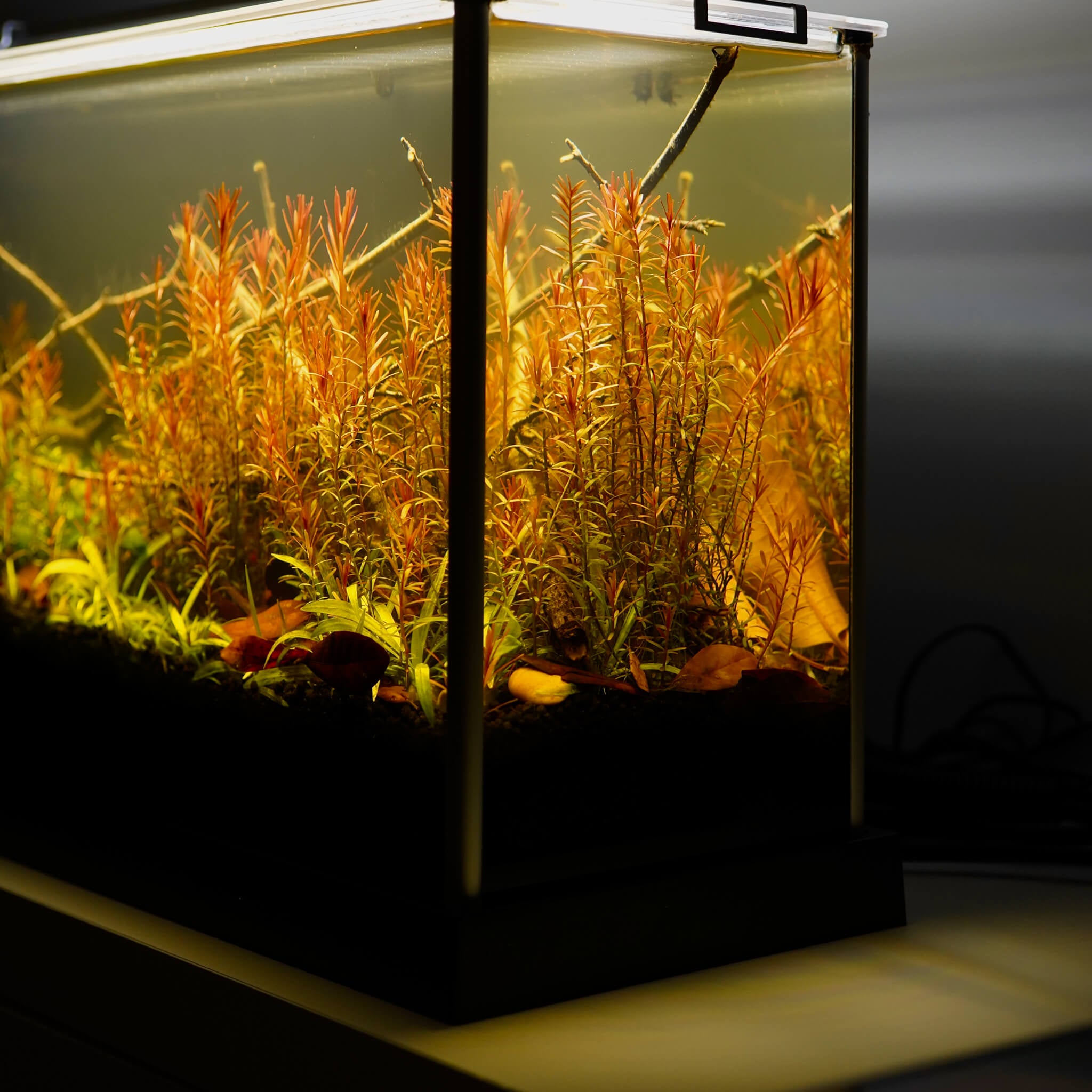
contrast the tint with greenery
While the aesthetic appeal of tinted waters can be quite attractive to us, the recreation of nature—which includes both submerged and emersed plants—is the end goal. Flora helps to improve water conditions, feeding patterns, spawning displays, and territory building.
Aquatic Plant FAQs
DOA Policy
Please ensure that you add a heat pack or cold pack to your orders if temperatures in your area are above 90°F or below 40°F. Click for more info on our DOA Policy.
Are these plants duckweed and snail free?
All Plants may contain snails or snail eggs, small macroinvertebrates, and duckweed. We keep them in all of our tanks for the benefits they provide. We have experienced the presence of small snails, ostracods, daphnia, and beneficial detritus worms.
Are your plants only for tinted water conditions?
Nope! All of our plants will grow perfectly in untinted aquariums that have CO2 and aquasoils, or low-tech planted aquariums. Our selection, though, is optimized for emersed plant growth and low- to medium-tinted water environments.
What is your aquatic plant shipping schedule?
To ensure our aquatic plants ship under the best conditions, we are currently shipping our aquatic plants on Mondays. Please have your orders placed by 11:59 pm on Sundays. Aquatic plants usually arrive within 1-4 business days
How are your plants packaged?
All of our aquatic plants are shipped in sealed bags or cups, inside insulated mailers. Void fill is used to ensure plants stay secure during transit to your ecosystem. Heat & Cold Packs are available for purchase.
Are your plants just for bettas?
Nope! Our aquatic plants are safe for almost all aquariums, terrariums, vivariums, and paludariums. Many of our plants can be grown emersed in filter compartments, vivariums, or incorporated into wabikua.
What are Tannins?
Tannins are natural compounds released by leaves, seed pods, and bark as they decompose in water. They soften water, gently lower pH, and create the characteristic tea-stained tint found in blackwater habitats. But their role goes far beyond color—tannins fuel beneficial bacteria, fungi, and biofilms, which form the foundation of a healthy ecosystem. They also offer mild antifungal benefits and help reduce stress in fish by replicating the natural conditions they’ve evolved in. At their core, tannins are plant-derived antioxidants that connect your aquarium to the same processes at work in wild flooded forests and streams.