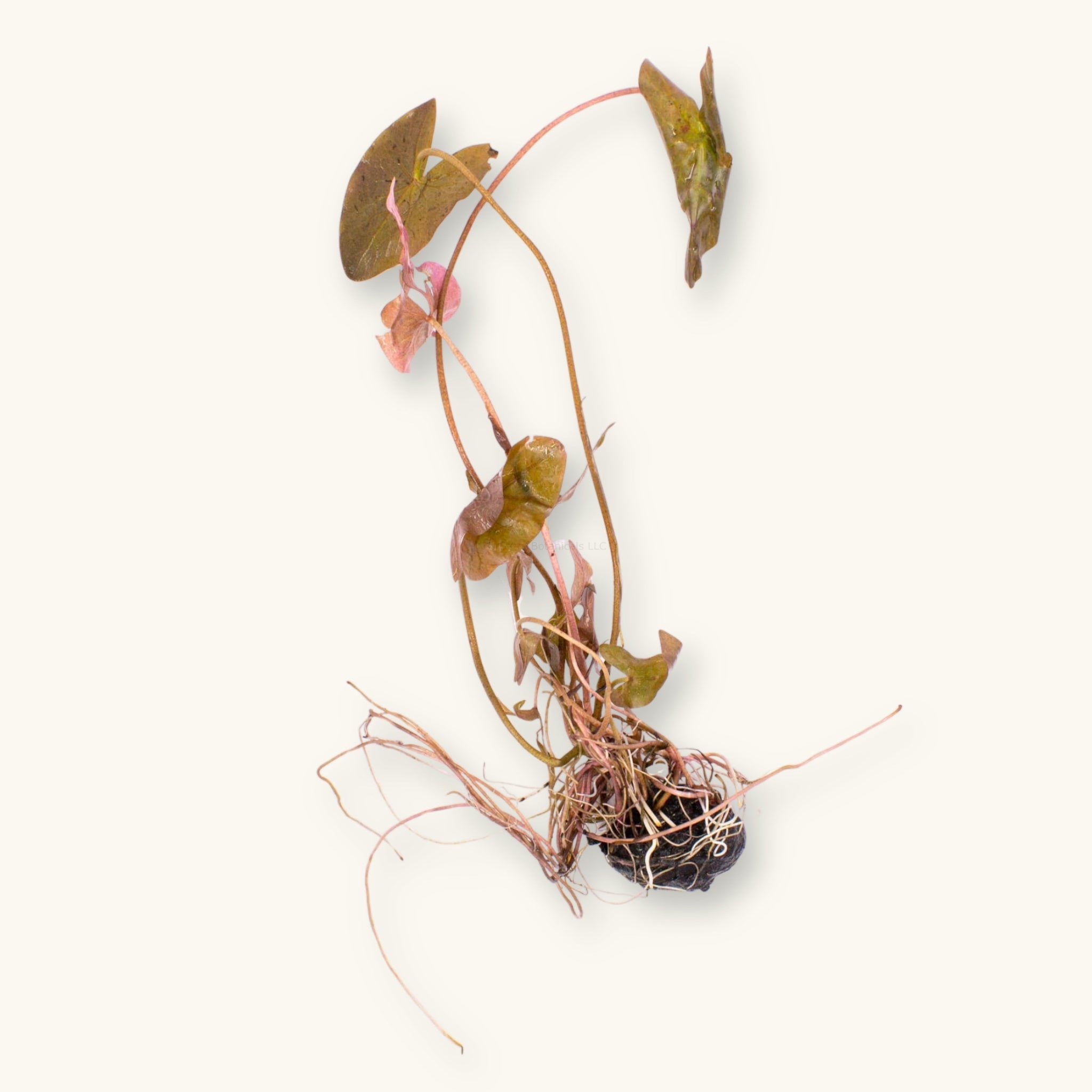
Dwarf Aquarium Lily | Nymphaea stellata
Dwarf Lily on the Surface:
Dwarf Lily (Nymphaea stellata), also called Dwarf Aquarium Lily, is a tuberous aquatic plant native to shallow, slow-moving wetlands across South and Southeast Asia, Australia, and Taiwan. It grows from a bulb rooted in the substrate, sending up arrowhead-shaped leaves that lengthen with each new emergent leaf until reaching the surface. In the Botanical Method Aquarium, its root network draws nutrients directly from the substrate, and its leaves build habitat at multiple depths as the plant matures, from the substrate floor to the surface.
Essential Details
- Care Level: Easy
- Growth Habit: Tuberous, cycles through periodic dormancy
- Light: Low to Medium
- CO2: Not Necessary
- Propagation: Daughter plants can be pinched from the main bulb once established
- Tint Tolerance: Low to High
- Habitat Location: South and Southeast Asia, Australia, and Taiwan
- Optimal For: Betta fish, tetras, and other species suited to compact rooted plants in blackwater and biotope aquariums, especially nano to medium-sized setups
- Use with Caution: Rinse before introducing; may carry beneficial hitchhiking snails, snail eggs, or duckweed from the grow-out ponds
- Size Range: Under 5 inches until the leaves reach the surface
- Quantities: Sold as a single sprouted bulb
Dwarf Lily for Planted Aquariums & Blackwater Biotopes
A Dwarf Lily's root network is extensive relative to the plant's small size, drawing nutrients directly from the substrate rather than the water column like we see in stem plants. As new leaves emerge, each one grows a little taller than the last, so the plant builds habitat in stages, from low arrowhead-shaped foliage near the substrate to broader leaves that eventually reach the surface and can flower once they do. If we want to keep growth compact and fully submerged, trimming the tallest leaves as they approach the surface redirects the plant's energy into denser growth below.
Tint affects a Dwarf Lily differently depending on which leaves we're talking about. Submerged leaves need more light to pass through the water to photosynthesize, so they tolerate less tint than a floating plant would. Leaves that reach the surface grow above the tinted water entirely and are unaffected by it. In a heavily tinted aquarium, moderate to bright light at the substrate helps submerged growth keep pace with what the tannins filter out.
Because the root network draws so heavily on the substrate, a Dwarf Lily can outcompete other rooted plants for available nutrients. We use a layer of aquasoil beneath our Botanical Method Aquarium substrates or root tabs with this in mind so neighboring plants aren't left short. The plant propagates via daughter plants that emerge out of the bulb that can be pinched off once established: it will periodically shed its leaves and enter a short dormant period before sending up new growth, which is a normal part of its cycle and not a sign of decline. We see this similarly in our Cryptocorynes as well.
Beneath the Leaves: Nymphaea stellata in the Wild
Nymphaea stellata grows in shallow, slow-moving to stagnant wetlands and slightly acidic streams across South and Southeast Asia, Australia, and Taiwan, rooting in submerged substrate and sending leaves up through the water column toward the light. Closely related to Nymphaea nouchali, with which it's frequently grouped or confused in both botanical and horticultural literature, the species has long-documented cultural significance in South Asia, where water lilies in this group are tied to regional festivals and, in some accounts, to national symbolism in Bangladesh and Sri Lanka.
Where a botanical contributes as it breaks down, an aquatic plant is living and contributes as it grows. So let them grow. Mother Nature leads the way.
Sustainability Note:
Please select a heat/cold pack if necessary. Check your local weather before ordering to avoid any shipment holds or cancellations. All Plants may contain snails or snail eggs. We keep them in all of our aquariums for the benefits they provide. Our blackwater aquarium plants are provided in cooperation with PNW Bettas in adherence to their Shipping and DOA Policies. Your curated selection will arrive in their packaging separate from your botanical, wood & merch orders.
Dwarf Aquarium Lily | Nymphaea stellata
Home is getting more natural
While the aesthetic appeal of botanicals and tinted water can be quite attractive to us, the recreation of nature to emulate water conditions, feeding patterns, spawning displays, and territory building are the true benefits botanicals provide to our critters.
Botanical FAQs
Compostable Packaging Promise
Our packaging is designed to return safely to the Earth, just like the botanicals inside. Every bag is BPA- and Phthalate-free, GMO-free, and contains no animal products. Each meets ASTM D6400 composting standards, ensuring it can fully break down in a home compost bin.
What are the Fluffy White Growths on my Botanicals?
That’s biofilm and fungi—what we call the “goo phase.” It’s one of the clearest signs that your aquarium is alive and functioning. These growths wax and wane naturally as botanicals decompose. They’re harmless, even beneficial, and will disappear on their own once microbial populations stabilize.
Will botanicals lower the pH of my water?
That depends entirely on your source water. In very soft or RODI water, botanicals can gradually lower pH as tannins and humic substances accumulate. In medium to hard tap water, buffering capacity often resists these shifts, and you may not notice much change. At Betta Botanicals HQ, our very hard water (350+ ppm) shows almost no pH change unless we use botanicals like Alder Cones or Macaranga Leaves.
When should I replace leaves or pods in my tank?
We recommend allowing botanicals to fully break down into detritus, since this fuels microbial life and enriches the substrate. You can remove them once they stop tinting the water, but you’ll lose some of their ecological benefits. Each time you add new botanicals, follow proper preparation and observe your livestock until you learn your aquarium’s rhythm.
Are your products just for bettas?
Nope. Our botanicals are safe for almost all aquariums, terrariums, vivariums, and paludariums. The only exceptions are goldfish and axolotls, which may ingest small pods like alder cones or casuarina cones. For those species, we recommend large leaves such as Indian Almond, Loquat, or Jackfruit.
What are Tannins?
Tannins are natural compounds released by leaves, seed pods, and bark as they decompose in water. They soften water, gently lower pH, and create the characteristic tea-stained tint found in blackwater habitats. But their role goes far beyond color—tannins fuel beneficial bacteria, fungi, and biofilms, which form the foundation of a healthy ecosystem. They also offer mild antifungal benefits and help reduce stress in fish by replicating the natural conditions they’ve evolved in. At their core, tannins are plant-derived antioxidants that connect your aquarium to the same processes at work in wild flooded forests and streams.