



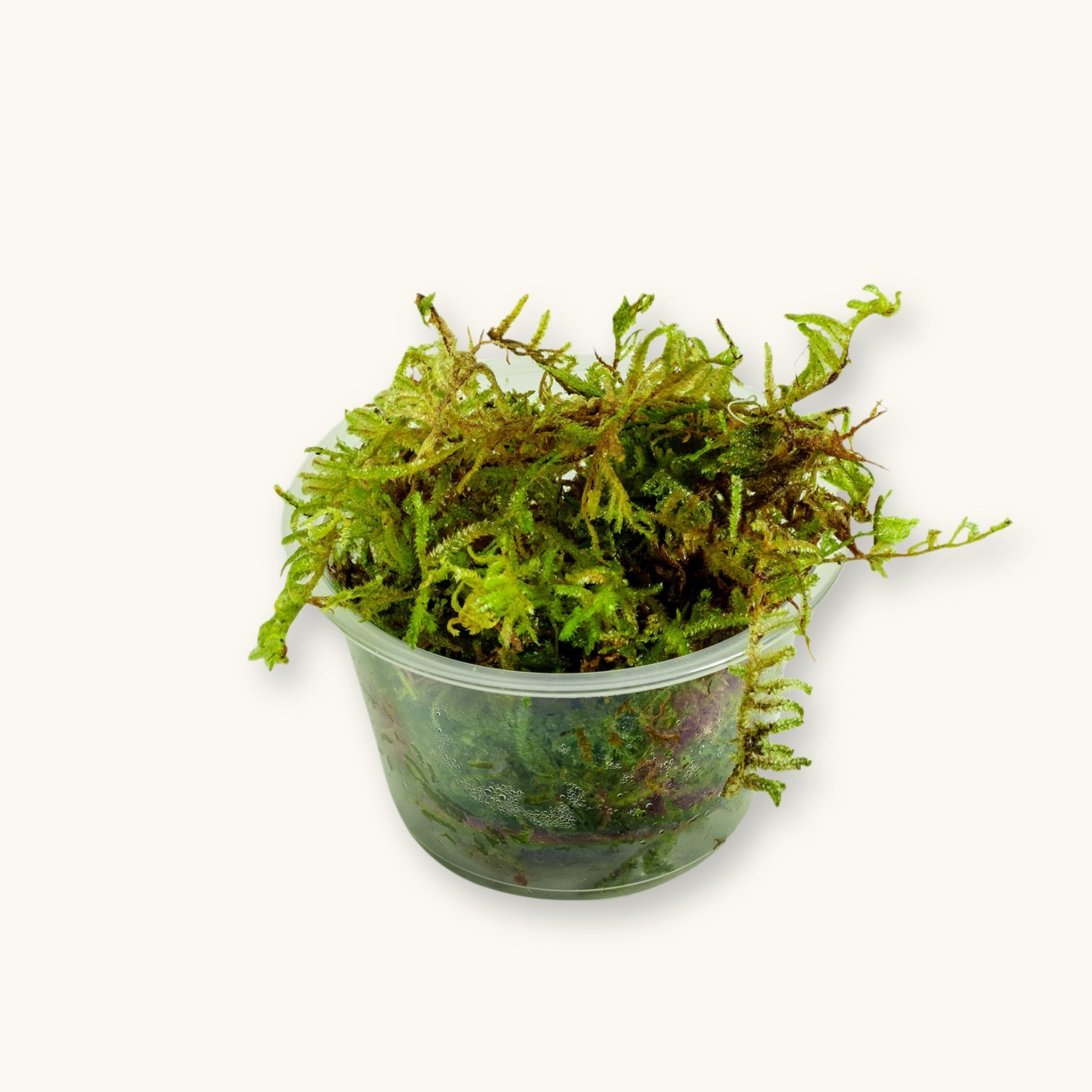
Christmas Moss | Vesicularia montagnei
Christmas Moss on the Surface:
Christmas Moss (Vesicularia montagnei) is a mat-forming moss native across the tropical forests of South and Southeast Asia, where it grows mainly emersed on wet stones, tree trunks, and shaded streambank soil rather than fully submerged. Fine rhizoids anchor each thread-like stem to hardscape, and its branching fronds build outward into a textured surface over time. In the Botanical Method Aquarium, blackwater aquarium, or bioactive vivarium, Christmas Moss adds structural surface area at and below the waterline, regulates humidity, and creates a grazing and refuge site for shrimp, fry, and beneficial microfauna.
Essential Details
- Care Level: Easy
- Growth Habit: Slow, creeping; branches outward from rhizoid attachment points rather than upward
- Light: Low to Medium
- CO2: Not Necessary
- Propagation: Fragmentation
- Tint Tolerance: Low to Medium
- Habitat Location: Tropical and subtropical Asia, from India and Sri Lanka through Southeast Asia to southern China and Japan
- Optimal For: Shrimp, betta fish, dwarf cichlids, and other species suited to biofilm grazing and fry cover in blackwater and low-tech planted aquariums
- Use with Caution: Rinse before introducing; may carry beneficial hitchhiking snails, snail eggs, or duckweed
- Size Range: Individual fronds branch into a mat reaching 1 to 3 inches thick as it matures
- Quantities: 4 oz portion cup
Christmas Moss for Aquariums & Vivariums
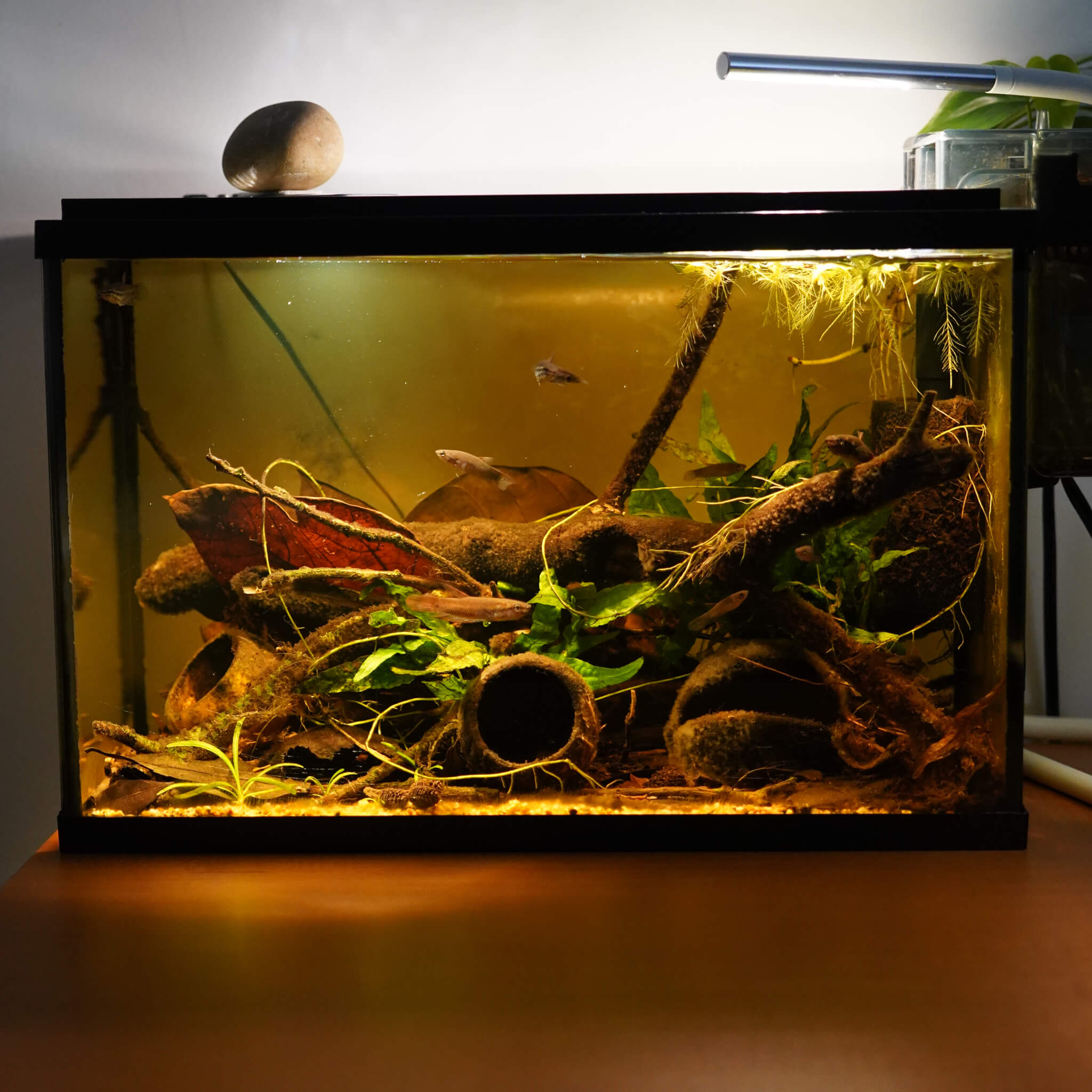
Christmas Moss attaches to hardscape or manzanita wood, encrusting it the way it would a stone or tree trunk in the wild. As it branches, biofilm colonizes the increasing surface area of each frond, adding habitat complexity wherever the moss is placed. This extracellular microbial community, what we call supplemental nutrition, becomes a grazing resource for shrimp, ostracods, and other microfauna.
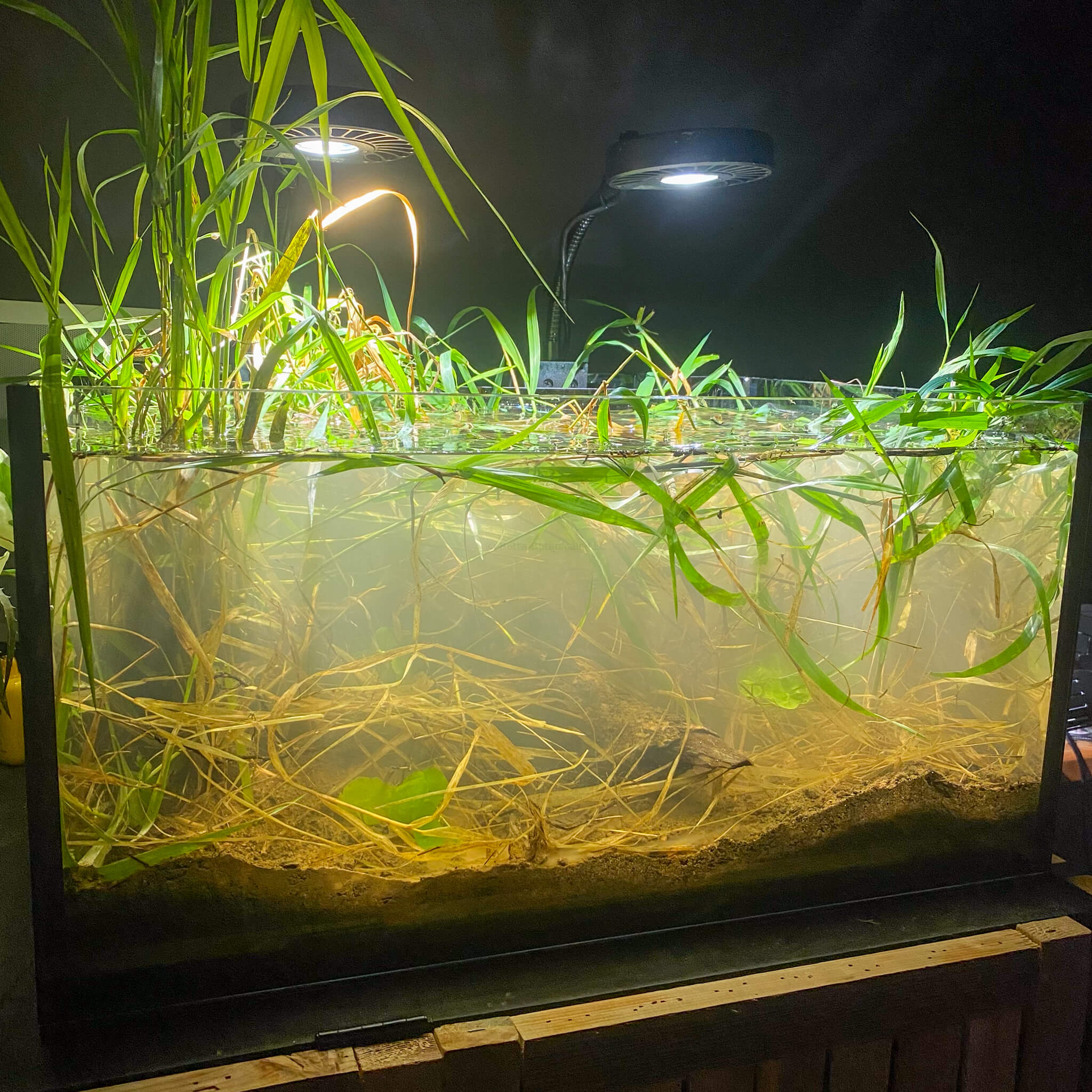
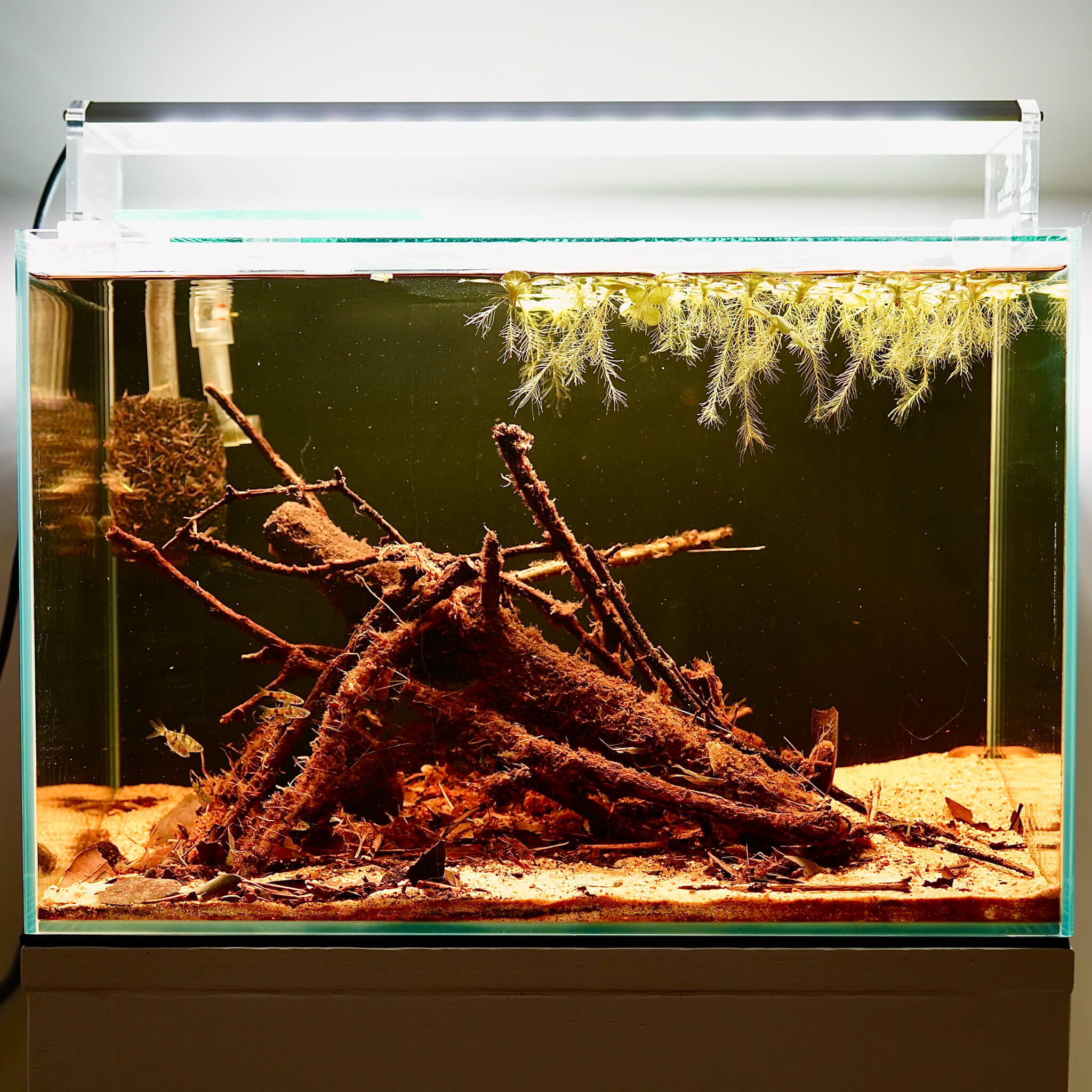
Christmas Moss differs from a floating plant like Red Root Floaters or Water Spangles in how tint affects it's growth. A floating plant sits at the surface, where light reaches it directly regardless of how dark the water below has become; Christmas Moss is typically attached below the waterline, so any tint in the water column stands between the moss and its light source. Floating plants have the aerial advantage. In a lightly tinted aquarium, this makes little difference, but as tint darkens toward the higher end of what botanicals and leaf litter can release, less usable light reaches the moss and growth slows. If you are keeping Christmas Moss in a high-tint Botanical Method aquarium, position it in the upper third of the water column or direct a point-source light at it rather than relying on ambient tank lighting alone.
Propagation is a matter of division. A healthy portion can be cut into smaller sections, and each section reattaches on its own once tied or glued to new hardscape and left undisturbed for several weeks while new rhizoids form. Christmas Moss tolerates a wide range of water hardness and does not require CO2 injection or root-feeding substrate, though it responds to both with denser branching. It grows equally well in still or gently circulated water, provided the moss is not buried in the substrate or moved before it has had time to attach.
Grown above the waterline in a vivarium or paludarium, Christmas Moss forms a low, spreading groundcover that isopods and springtails move through and graze on, and it tolerates the same misting and humidity cycles common to those enclosures. This ability to grow both submerged and fully emersed allows it to bridge the aquatic and terrestrial sections of your paludarium build.
Beneath the Leaves: Vesicularia montagnei in the Wild
Rather than living submerged, Vesicularia montagnei grows mainly emersed across its native range, extending into parts of Australia beyond the Asian tropics named above. It forms dense mats on the damp bark of tree trunks, on wet stones along streambanks, and across shaded forest soil where humidity stays high year-round. Where seasonal flooding reaches these lower banks, the moss tolerates temporary submersion without dying back, one of the traits that made it adaptable enough for aquarium cultivation despite its terrestrial-leaning wild habitat.
Where a botanical contributes as it breaks down, an aquatic plant is living and contributes as it grows. So let them grow. Mother Nature leads the way.
Sustainability Note:
Please select a heat/cold pack if necessary. Check your local weather before ordering to avoid any shipment holds or cancellations. All Plants may contain snails or snail eggs. We keep them in all of our aquariums for the benefits they provide. Our blackwater aquarium plants are provided in cooperation with PNW Bettas in adherence to their Shipping and DOA Policies. Your curated selection will arrive in their packaging separate from your botanical, wood & merch orders.
contrast the tint with greenery
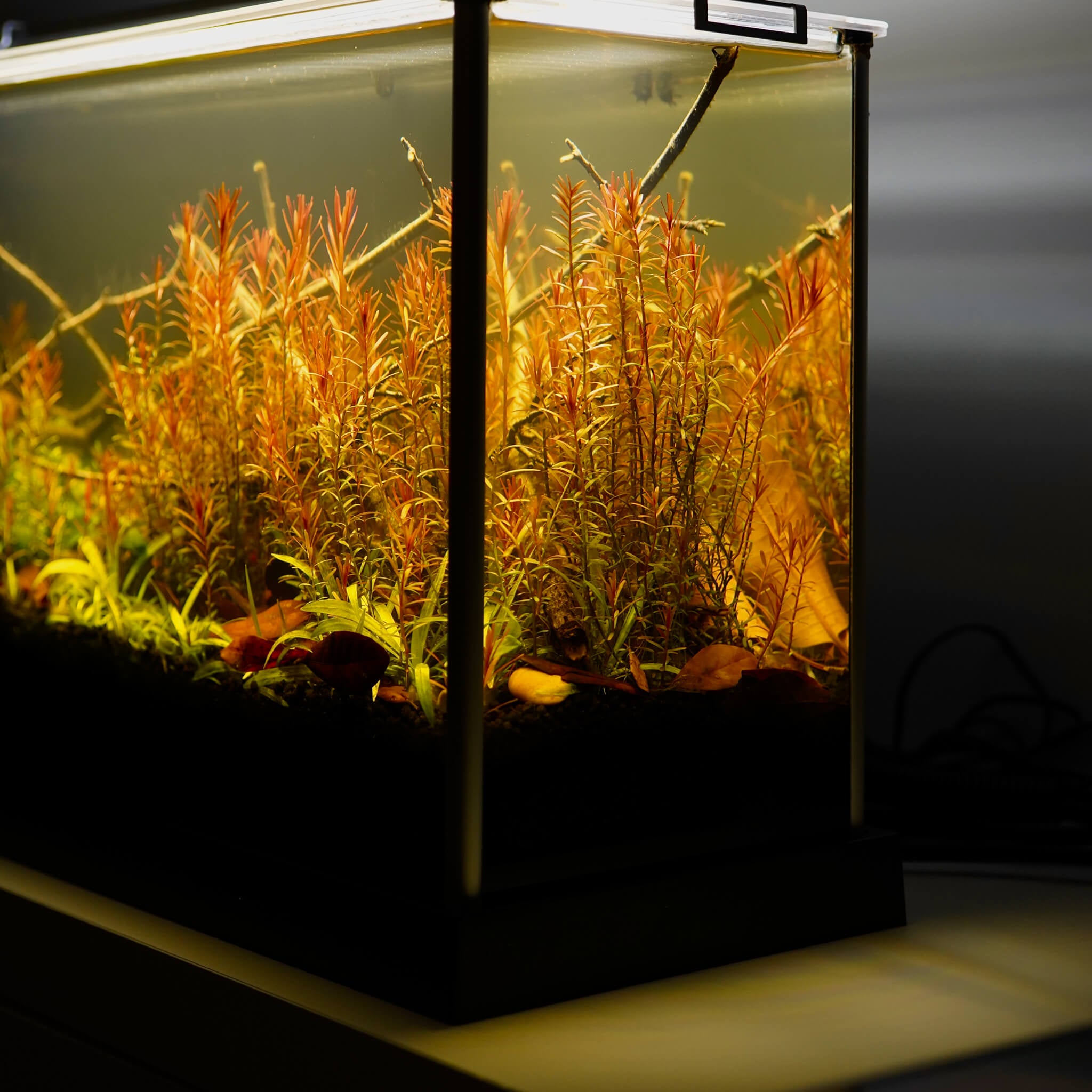
While the aesthetic appeal of tinted waters can be quite attractive to us, the recreation of nature—which includes both submerged and emersed plants—is the end goal. Flora helps to improve water conditions, feeding patterns, spawning displays, and territory building.
Aquatic Plant FAQs
DOA Policy
Please ensure that you add a heat pack or cold pack to your orders if temperatures in your area are above 90°F or below 40°F. Click for more info on our DOA Policy.
Are these plants duckweed and snail free?
All Plants may contain snails or snail eggs, small macroinvertebrates, and duckweed. We keep them in all of our tanks for the benefits they provide. We have experienced the presence of small snails, ostracods, daphnia, and beneficial detritus worms.
Are your plants only for tinted water conditions?
Nope! All of our plants will grow perfectly in untinted aquariums that have CO2 and aquasoils, or low-tech planted aquariums. Our selection, though, is optimized for emersed plant growth and low- to medium-tinted water environments.
What is your aquatic plant shipping schedule?
To ensure our aquatic plants ship under the best conditions, we are currently shipping our aquatic plants on Mondays. Please have your orders placed by 11:59 pm on Sundays. Aquatic plants usually arrive within 1-4 business days
How are your plants packaged?
All of our aquatic plants are shipped in sealed bags or cups, inside insulated mailers. Void fill is used to ensure plants stay secure during transit to your ecosystem. Heat & Cold Packs are available for purchase.
Are your plants just for bettas?
Nope! Our aquatic plants are safe for almost all aquariums, terrariums, vivariums, and paludariums. Many of our plants can be grown emersed in filter compartments, vivariums, or incorporated into wabikua.
What are Tannins?
Tannins are natural compounds released by leaves, seed pods, and bark as they decompose in water. They soften water, gently lower pH, and create the characteristic tea-stained tint found in blackwater habitats. But their role goes far beyond color—tannins fuel beneficial bacteria, fungi, and biofilms, which form the foundation of a healthy ecosystem. They also offer mild antifungal benefits and help reduce stress in fish by replicating the natural conditions they’ve evolved in. At their core, tannins are plant-derived antioxidants that connect your aquarium to the same processes at work in wild flooded forests and streams.