'Blackwater' Botanicals Variety Pack
Blackwater Variety Pack on the Surface:
Our Blackwater Variety Pack contains botanicals sourced from tropical forests across Southeast Asia, Central America, and South America, with the exception of Alder Cones, which we source locally here in the PNW. The botanicals in this blackwater pack are known for their acidity, and all are selected for their functional role in conditioning soft, acidic water and building the substrate layers characteristic of natural blackwater systems. The pack spans leaf types, seed pods, husk material, and frond fragments, creating a range of decomposition timelines within a single blackwater aquarium. Working in sequence, some break down quickly to seed the initial microbial activity in the aquarium, while others persist as long-term structural and chemical contributors to the ecosystem.
Essential Details
- Tannin Level: High
- Tint Color: Deep amber to dark brown
- Durability: Mixed — includes both durable structural materials and fast-decomposing botanicals
- Habitat Location: Inspired by equatorial blackwater systems of South America and Southeast Asia
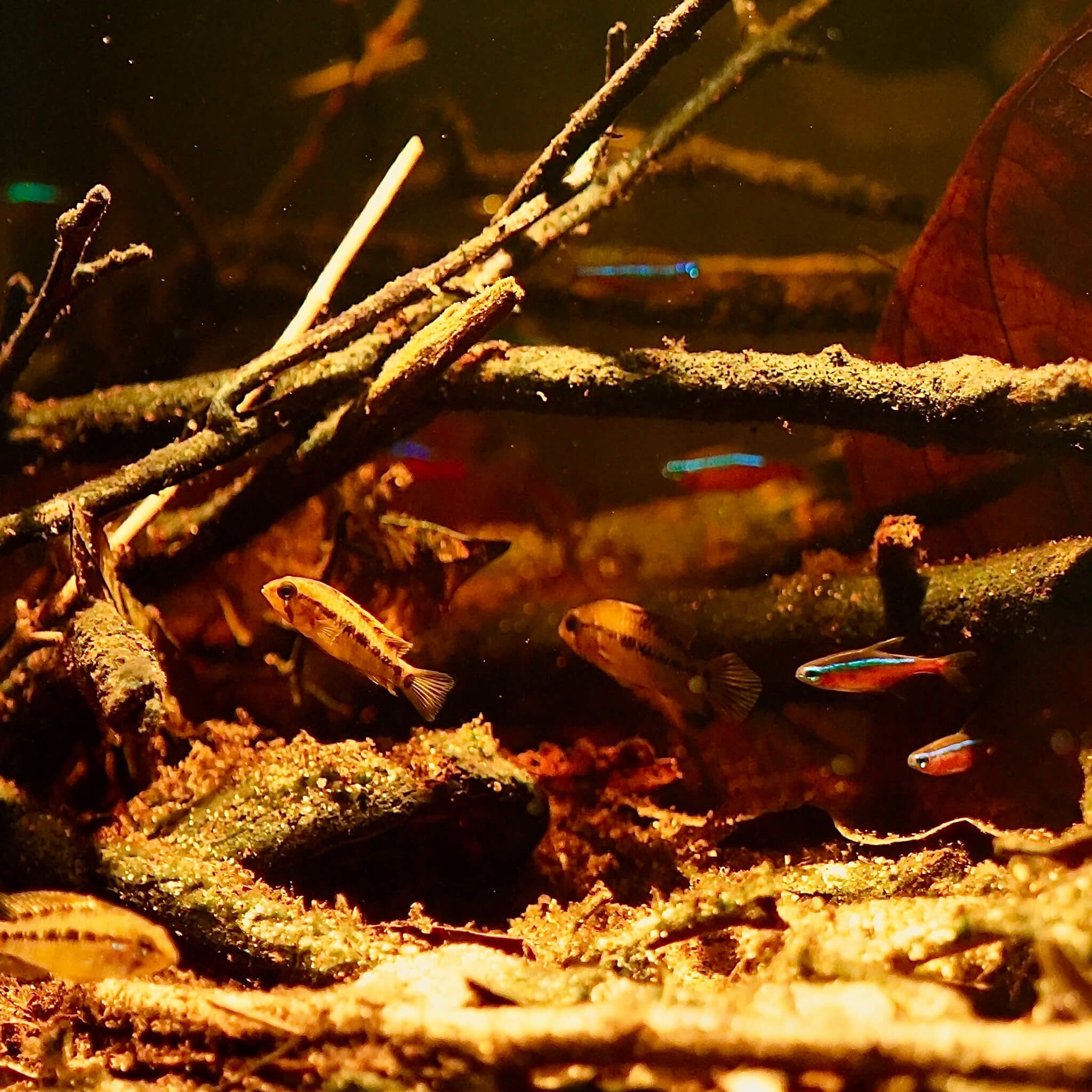
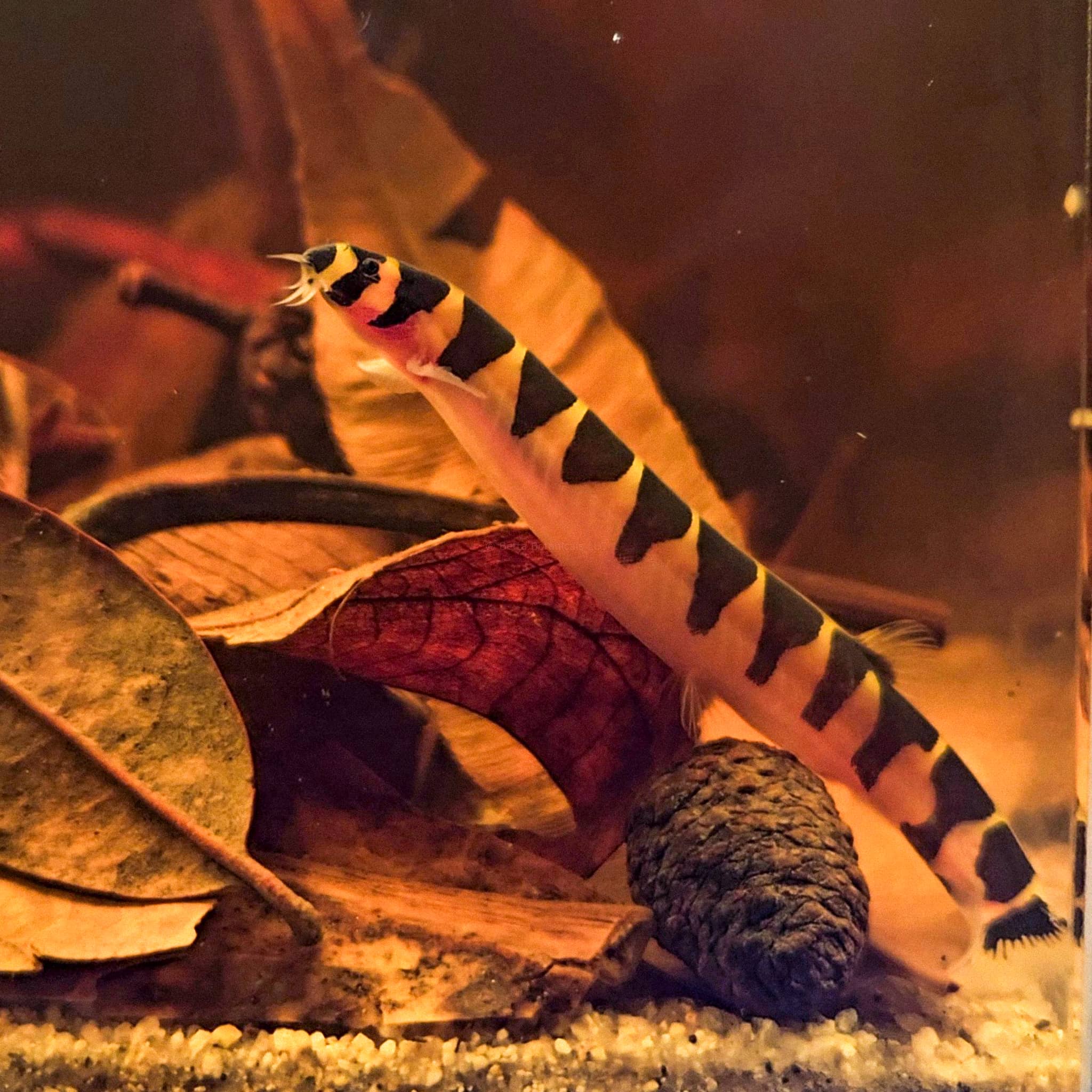
- Optimal For: Betta species, Apistogramma, tetras, rasboras, pencilfish, dwarf cichlids, and soft-water shrimp species
- Use with Caution: Monitor water chemistry when using with fish that require hard water or high pH. In soft or RO/DI water, pH modulation can be significant as humic substances accumulate. Alder Cones and Casuarina Needles are not recommended for goldfish or axolotls, which may ingest small botanicals.
- Size Range: Assorted from small needles and husk fragments to large leaf and pod material.
- Quantities: 5 Macaranga Leaves, 10 Jackfruit Leaves, 10 Guava Leaves, 1 Cup of Live Oak, 1 Cup of Coconut Husk Chunks, 2 Excelsa Palm Fronds, a small handful of Casuarina Needles, 1 Cacao Pod, and 1 handful of Alder Cones
Blackwater Variety Pack for Aquariums & Vivariums
Blackwater habitats do not form solely from the input of botanical materials. Blackwater is largely a product of geology. This variety pack draws from tropical forests across Southeast Asia, Central America, and South America, plus locally sourced Alder Cones from the PNW, because diversity of material produces diversity in ecological function. Guava and Jackfruit leaves break down into detritus quickly, seeding early microbial and fungal colonization within the substrate. Macaranga Leaves and Alder Cones are rich in tannins that passively release into the water column, gradually increasing the concentrations of humic and fulvic acids as decomposition progresses. Over time, those compounds shift the dissolved organic chemistry of soft water in a direction that reflects the blackwater habitats our fish will recognize.
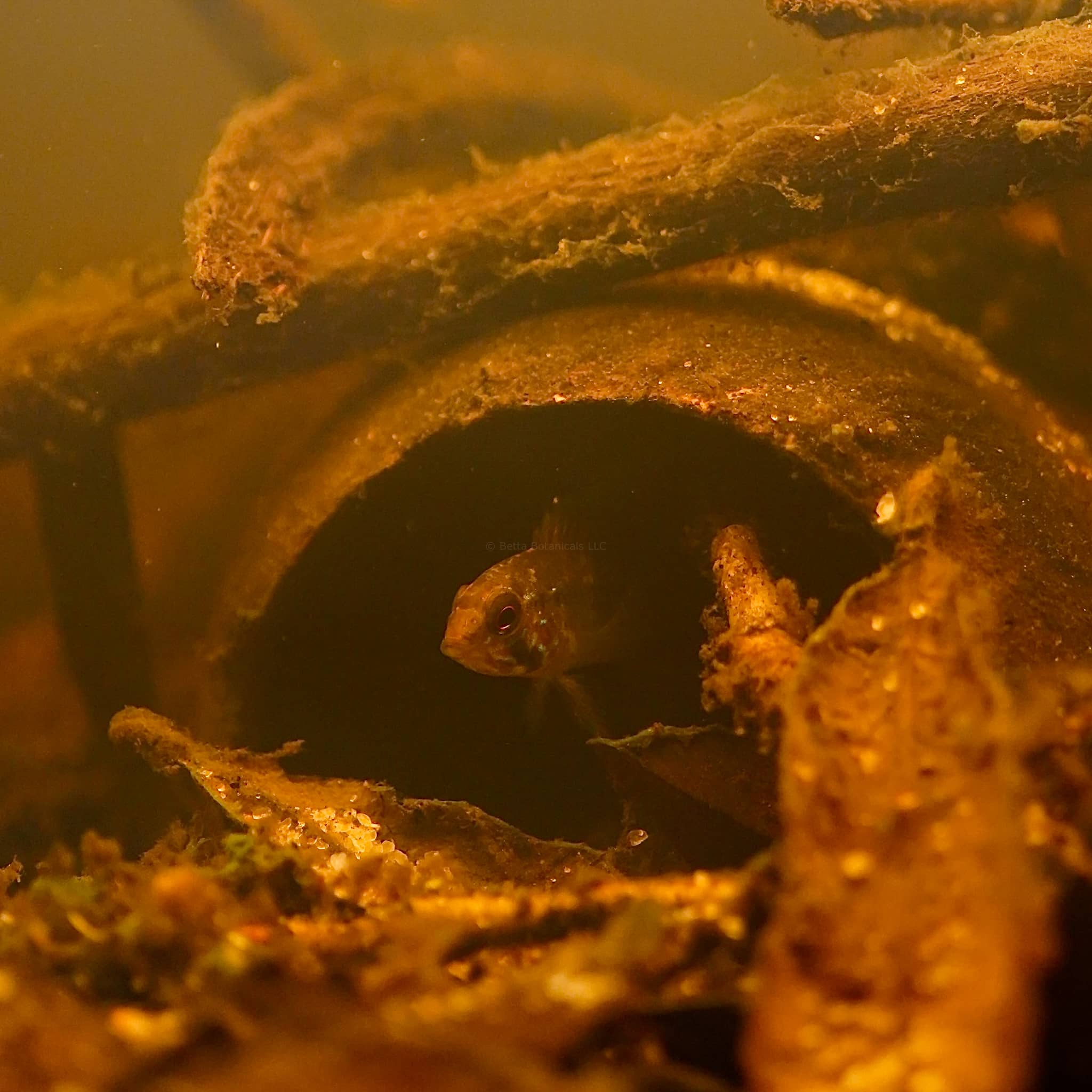
Coconut Husk Chunks contribute mild pH buffering through cation exchange, similar in principle to peat, while providing biofilm grazing sites. Excelsa Palm Fronds and Casuarina Needles add fine textures to the substrate layer, slowing water movement near the substrate for microfauna and fry to seek refuge in. The Cacao Pod provides a durable cave for territorial establishment, refuge, and potential spawning sites.
As these botanical materials break down into beneficial detritus, humic substances are passively leeched from their tissues, helping to create water conditions that are less hospitable to pathogens and more consistent with the immune and behavioral expectations of soft-water species. This is a process that develops over weeks and months.
Beneath the Leaves: Blackwater Habitats in the Wild
You cannot look at an aquarium and use the color of the water to characterize it as a blackwater aquarium. ‘Blackwater’ is a chemical signature produced by geology, rainfall, and decomposition with a decades-long timescale. In the igapó forests of the Amazon basin and the peat swamp forests of Southeast Asia, water moves slowly through soils and leaf litter that strip it of mineral buffering and load it with dissolved organics. The result is water with low conductivity, low pH, and a tannin-stained tint from accumulated humic substances — conditions that define the ecology of the species living there.
In those habitats, seasonal flooding pulls additional allochthonous material from the surrounding forest floor into the water column. Leaves, seed pods, bark, fronds, and fruit casings break down into detritus that sustains microbial food webs, supports fungal networks, and provides the substrate complexity that fish use for reproduction and territory. Our Blackwater Variety Pack helps you to participate in this same process. Each botanical enters the ecosystem, softens, and begins contributing to the layered ecology of the substrate. Mother Nature leads the way.
Sustainability Note:
This product's packaging is home compostable.
Just like the botanicals inside, it will break down naturally and return to the soil—because what supports your ecosystem should minimally impact our planet.
Not for human consumption. Preparation required.
This is a natural product — variation in color, shape, and texture is expected.
Home is getting more natural
While the aesthetic appeal of botanicals and tinted water can be quite attractive to us, the recreation of nature to emulate water conditions, feeding patterns, spawning displays, and territory building are the true benefits botanicals provide to our critters.
Botanical FAQs
Compostable Packaging Promise
Our packaging is designed to return safely to the Earth, just like the botanicals inside. Every bag is BPA- and Phthalate-free, GMO-free, and contains no animal products. Each meets ASTM D6400 composting standards, ensuring it can fully break down in a home compost bin.
What are the Fluffy White Growths on my Botanicals?
That’s biofilm and fungi—what we call the “goo phase.” It’s one of the clearest signs that your aquarium is alive and functioning. These growths wax and wane naturally as botanicals decompose. They’re harmless, even beneficial, and will disappear on their own once microbial populations stabilize.
Will botanicals lower the pH of my water?
That depends entirely on your source water. In very soft or RODI water, botanicals can gradually lower pH as tannins and humic substances accumulate. In medium to hard tap water, buffering capacity often resists these shifts, and you may not notice much change. At Betta Botanicals HQ, our very hard water (350+ ppm) shows almost no pH change unless we use botanicals like Alder Cones or Macaranga Leaves.
When should I replace leaves or pods in my tank?
We recommend allowing botanicals to fully break down into detritus, since this fuels microbial life and enriches the substrate. You can remove them once they stop tinting the water, but you’ll lose some of their ecological benefits. Each time you add new botanicals, follow proper preparation and observe your livestock until you learn your aquarium’s rhythm.
Are your products just for bettas?
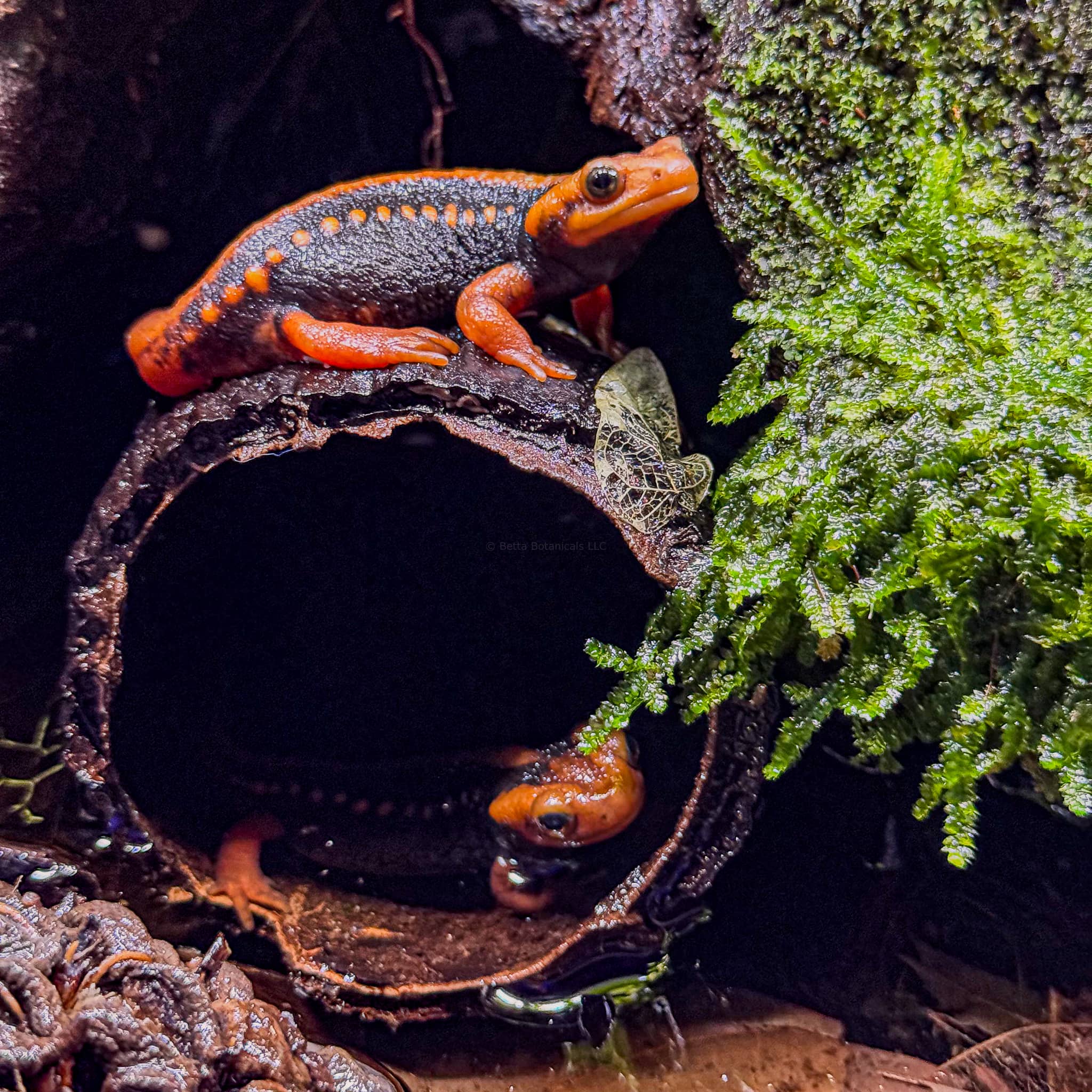
Nope. Our botanicals are safe for almost all aquariums, terrariums, vivariums, and paludariums. The only exceptions are goldfish and axolotls, which may ingest small pods like alder cones or casuarina cones. For those species, we recommend large leaves such as Indian Almond, Loquat, or Jackfruit.
What are Tannins?
Tannins are natural compounds released by leaves, seed pods, and bark as they decompose in water. They soften water, gently lower pH, and create the characteristic tea-stained tint found in blackwater habitats. But their role goes far beyond color—tannins fuel beneficial bacteria, fungi, and biofilms, which form the foundation of a healthy ecosystem. They also offer mild antifungal benefits and help reduce stress in fish by replicating the natural conditions they’ve evolved in. At their core, tannins are plant-derived antioxidants that connect your aquarium to the same processes at work in wild flooded forests and streams.